An Aging Jewish Feminist
Between Separation and Belonging: Acharei Mot–Kedoshim
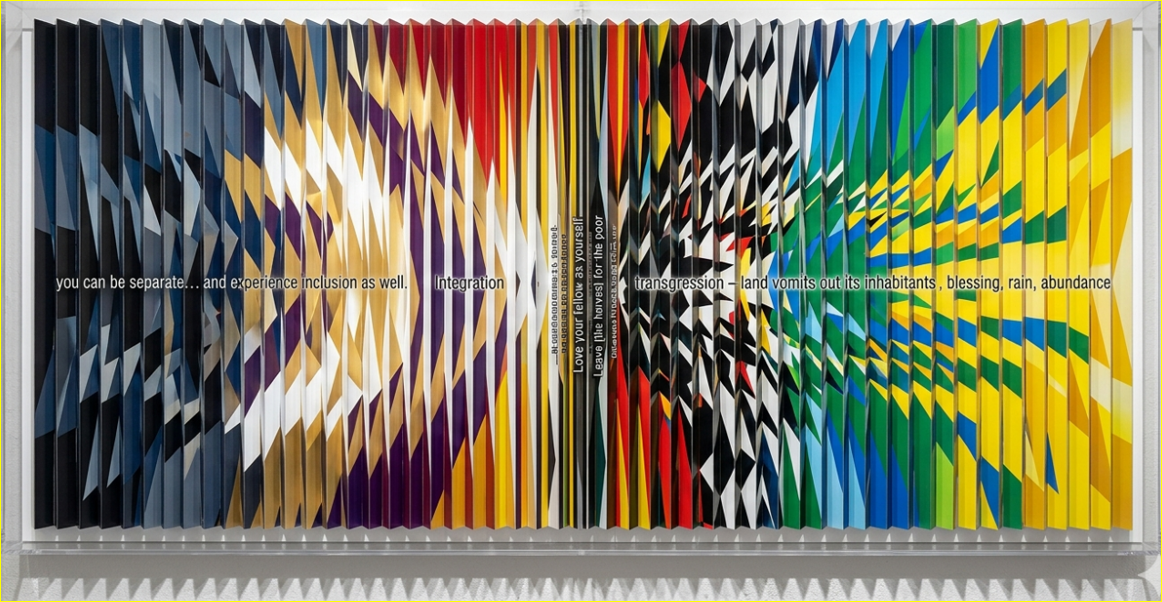
It is a custom to connect the double Torah portions Acharei Mot (“after the death”) and Kedoshim (“holy ones”) together—and their juxtaposition invites a deeper reflection. Since kedoshim appears in the plural, it suggests that holiness is not merely an individual pursuit but a collective calling (Leviticus 19:2). Holiness (kedushah) is closely tied to the idea of separation: to be holy is to be set apart for a sacred purpose. Yet when we read this alongside “after the death,” a more nuanced picture emerges. After a person dies, both the deceased and the mourners are, in different ways, separated from ordinary life. And yet, this separation does not imply isolation. On the contrary, mourning in Jewish tradition is profoundly communal—through the funeral, through shiva, through the presence of those who come to comfort. Holiness and death, then, share an unexpected common ground: one can be set apart (kadosh) and still be supported by community.
This tension feels especially present now. This week, once again, many soldiers were killed on the frontlines. In the midst of celebrating our 78th year as a state, many families have been plunged into grief. It is therefore fitting that Parashat Acharei Mot—which we also read on Yom Kippur—opens with the deaths of Aaron’s two eldest sons, Nadav and Avihu. Like Aaron and Elisheva, families today find themselves mourning sudden and devastating loss.
From this opening of loss, the parashah broadens its scope to the moral and spiritual condition of the land itself. At the end of Acharei Mot, the Torah warns against practices such as Molech worship and forbidden relationships, concluding with a striking image: the land becomes defiled by such actions and ultimately “vomits out” its inhabitants (Leviticus 18:24–25). This idea—that the land is not merely a passive backdrop but a moral participant—appears again in the context of bloodshed:
You shall not corrupt the land in which you are, for blood corrupts the land, and the land cannot be atoned for the blood that is shed in it except through the blood of the one who shed it. You shall not defile the land in which you live, in which I dwell, for I, the Lord, dwell among the children of Israel (Numbers 35:33–34).
The medieval commentator Nachmanides explains that although these transgressions are not inherently tied to any specific place, the Land of Israel is different. It exists under a unique form of Divine providence, directly overseen by God. From this closeness emerge heightened expectations: a higher standard, but also a greater potential for blessing. When we fail to uphold those standards, the land itself cannot sustain the contradiction. But when we live in accordance with Torah values, the land responds with abundance—as we affirm daily in the Shema.
It is precisely here that Parashat Kedoshim enters, redirecting us from the consequences of wrongdoing to a vision of what holiness looks like in practice. In the heart of the book of Leviticus—a book largely concerned with sacrifices, ritual purity, and priestly law—we encounter a sweeping list of ethical commandments: leaving the corners of one’s field for the poor, acting honestly in business, paying workers on time, judging fairly, and ultimately, “loving your fellow as yourself” (Leviticus 19:9–18).
At first glance, these laws seem almost out of place. But they are in fact the direct fulfillment of the parashah’s opening charge: “You shall be holy, for I, the Lord your God, am holy” (Leviticus 19:1–3). Holiness is not achieved through ritual alone; it is realized through ethical living. The commandments to honor parents and observe Shabbat—echoing the Ten Commandments—anchor this section, but the list extends far beyond them, culminating in a moral vision that challenges every aspect of human interaction.
This insertion of ethical law into a largely ritual text has long intrigued commentators. Rashi, commenting on a similar passage in Parashat Emor, cites a teaching that one who properly leaves gleanings for the poor is regarded as though he had built the Temple and offered sacrifices within it. Ethical action, in this view, is not secondary to ritual—it is its spiritual equivalent.
One might even imagine, as a kind of literary thought experiment, that a different “voice” emerges here—a voice weary of endless descriptions of sacrifices and bodily details, seeking to remind us of a more human-centered vision of holiness. Perhaps this voice echoes that of the prophets, who repeatedly insisted that God desires justice and righteousness over ritual offerings. As Isaiah famously declares, “What need have I of all your sacrifices?” (Isaiah 1:11–13), rejecting empty ritual unaccompanied by moral integrity.
This convergence of themes—death and holiness, separation and community, ritual and ethics—feels especially resonant at this time of year. Last Shabbat, known as Shabbat Tekuma, fell in the liminal space between Holocaust Remembrance Day, Memorial Day, and Independence Day. It is a time suspended between grief and renewal, between memory and hope.
Perhaps that is precisely the message of these intertwined parashiyot: holiness is not found in withdrawal from the world, nor in ritual alone, but in the way we live with one another—especially in moments of loss and rebuilding. To be kedoshim, a holy community, is to hold both separation and connection at once: to mourn together, to act justly, and to sustain a land—and a society—worthy of the Divine presence within it.
Related Topics
Related Posts