
Beyond Bibi
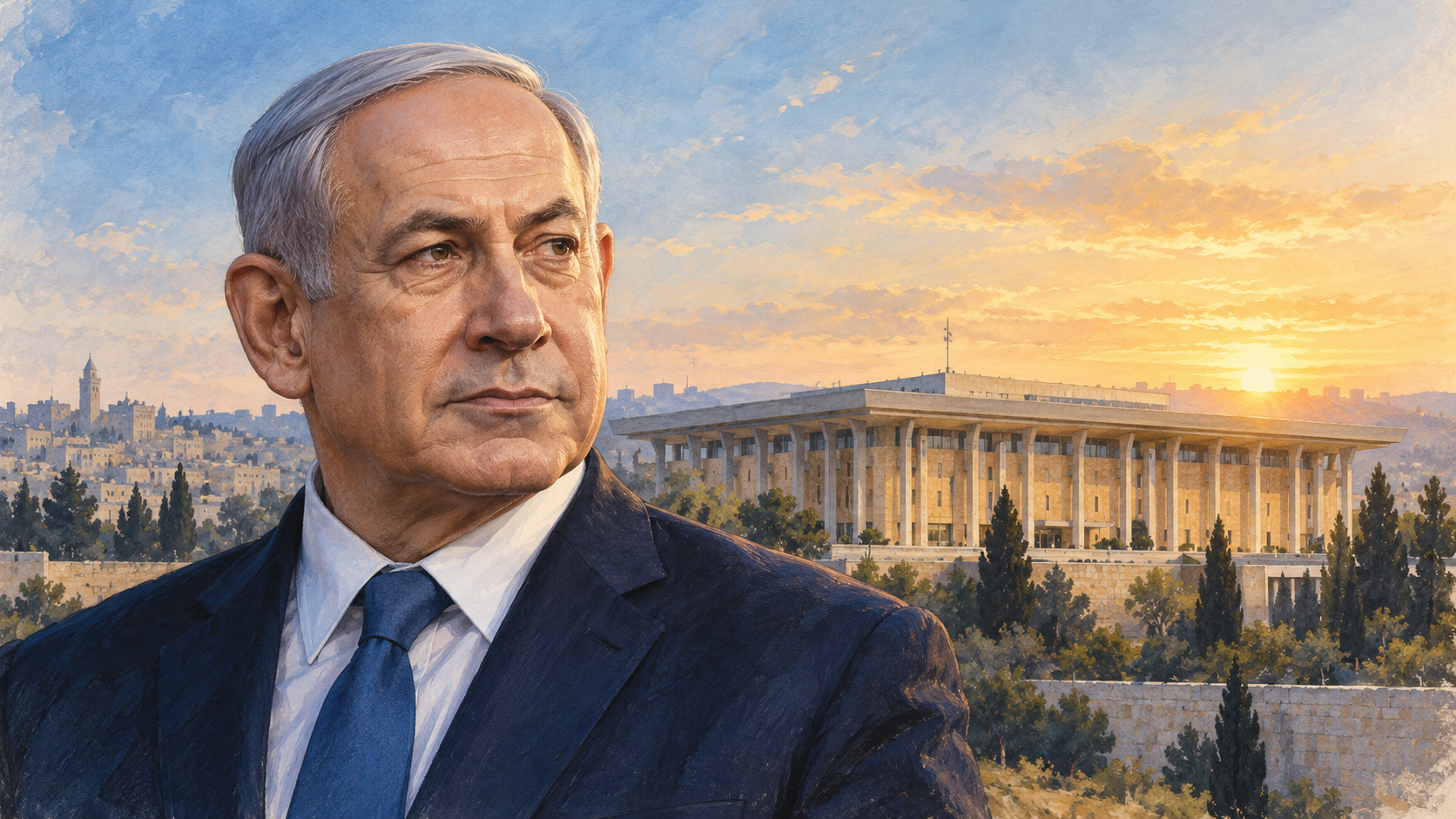
Honoring his achievements. Demanding accountability. Making room for Israel’s next generation.
On Tuesday, October 27, Israelis will vote in an election with enormous consequences for their country’s security, democracy, and future. I don’t have a vote. But as an American Jew who cares deeply about Israel, I have a stake in what happens.
Last December, I wrote about an Israeli political culture increasingly organized around “Only Bibi” and “Never Bibi.” I argued that Netanyahu should pass the torch so Israel could begin the political and generational renewal it needed. “Even great wartime leaders,” I wrote, “must know when their chapter is over.”
I still believe that. With an election days away, the question has become more urgent—and more practical. Can Israel build a government that brings its competing communities together under new leadership?
That raises a difficult question for Netanyahu himself: What does a leader owe the country he has spent his life serving, especially when its people are divided over whether his time has passed?
Benjamin Netanyahu has helped shape Israel for a generation. His accomplishments deserve recognition. Many Jews and Israelis remain passionately loyal to him because they believe he is uniquely qualified to protect the country from existential threats.
But gratitude does not oblige us to support another term.
October 7 should have profoundly shaken it. A leader’s claim to be indispensable to Israel’s security must be weighed against the catastrophic failure that occurred under his leadership. His policies toward Hamas, Gaza, and the West Bank belong at the center of that reckoning.
Hamas bears responsibility for the atrocities it committed. But Israel’s political, military, and intelligence leadership must answer for how the country was left so vulnerable. If protecting Israel is the strongest argument for keeping Netanyahu in office, October 7 must be central to judging that argument.
His achievements belong in the record. His failures do, too.
The Abraham Accords belong on the accomplishments side of that ledger. Normalizing relations with the United Arab Emirates and Bahrain, followed by Morocco, expanded Israel’s regional relationships and opened possibilities for trade and cooperation. Netanyahu deserves credit alongside the American and Arab leaders who helped make those agreements possible. They demonstrated that Israel’s place in the Middle East could change for the better.
During his years in office, Israel strengthened its position as the “Start-Up Nation,” with technology becoming a major engine of exports and economic growth. Generations of Israeli entrepreneurs, scientists, and workers built that success. Netanyahu deserves a share of the credit for helping that economy develop.
Israel has also achieved major military successes under his leadership. It has severely weakened Hezbollah, killed senior Hamas leaders, and struck directly at Iran’s military capabilities. These operations dealt substantial blows to Iran’s “ring of fire”—the network intended to threaten Israel from multiple directions. The fighting extended across seven fronts: Gaza, Lebanon, Iran, Yemen, Syria, Iraq, and the West Bank.
The courage and skill behind those achievements belong first to Israel’s soldiers, intelligence personnel, and commanders. Netanyahu nevertheless deserves credit for consequential decisions made as prime minister. If I expect him to accept responsibility for failures, fairness requires acknowledging his contribution to successes.
Nor would I dismiss these victories because their lasting strategic value remains uncertain. Destroying weapons and weakening organizations committed to Israel’s destruction can save lives and create opportunities. The question is whether those gains can become durable security: safer borders, sustainable political arrangements, stronger alliances, and communities whose residents can rebuild their lives.
Military victories, however consequential, cannot substitute for accountability. Netanyahu cannot claim the authority that comes with leading Israel for so many years while distancing himself from responsibility for the policies developed on his watch. Israelis deserve a thorough reckoning, even when its findings threaten powerful reputations.
My concerns extend beyond that terrible day.
In the West Bank, violence by Israeli extremists against Palestinian civilians has exposed a profound failure to uphold the law. Israel faces real security threats there, and individual incidents require careful reporting and investigation. Neither fact diminishes a Palestinian family’s right to protection from assault, intimidation, or the destruction of its property.
Netanyahu has condemned such violence and called for prosecutions. But the test is whether people are protected and offenders held accountable. The enforcement record is deeply troubling. Among investigations monitored by the Israeli human-rights organization Yesh Din between 2005 and 2024, approximately 94 percent of cases involving ideologically motivated offenses by Israelis against Palestinians closed without indictments. The cases span multiple governments and do not represent every incident. But they document a longstanding failure Netanyahu has not resolved.
This troubles me because Palestinian lives matter and because I care about the character of the Jewish state. Enforcing the law against violent Israelis is an elementary responsibility of government, regardless of the perpetrators’ political connections or coalition partners’ sympathies.
The same principle informs my concern about the judiciary. Israel’s governing coalition commands a parliamentary majority, giving it enormous influence over legislation and executive decisions. An independent judiciary provides a principal institutional check on that power. Weakening it affects everyone who depends on protection against government overreach.
Courts can be criticized and their powers debated. Reform should strengthen confidence that government will act lawfully. I have little confidence in a coalition that treats independent scrutiny as an obstacle.
Then there is the question Israel can no longer afford to postpone: who bears the obligations of keeping the country alive?
For families facing repeated reserve duty, the debate over Haredi military service is painfully concrete. Service means separation from children, interrupted careers, strained businesses, and the possibility of injury or death. Asking those families to keep sacrificing while protecting others from service breeds understandable resentment.
The Haredi parties have fought to preserve those protections, and Netanyahu’s coalition has accommodated them. In July, it passed legislation shielding Haredi draft evaders from arrest. The High Court struck that law down in September. The fight connects two of Israel’s deepest disputes: who shares the obligations of citizenship, and whether the government will respect judicial limits on its power.
I respect religious devotion and Torah study. I also respect religious soldiers who reconcile their faith with defending the country. Israel needs practical arrangements allowing Haredi men to serve while maintaining their religious commitments. A sweeping exemption from shared responsibility is much harder to defend.
The economic challenge is equally serious. Preliminary 2024 figures put employment among working-age Haredi men at approximately 54 percent, compared with about 80 percent among Haredi women. Describing the entire community as unwilling to work is inaccurate and unfair. But low male employment and earnings pose a growing challenge as the community’s share of the population expands.
Military service and economic sustainability are connected. The Bank of Israel estimated that gradually adding roughly 20,000 Haredi conscripts to the regular military could eventually reduce annual economic costs by at least nine billion shekels through reduced reliance on reservists. Behind that estimate are parents returning home and businesses regaining the people they need.
Netanyahu inherited this problem, but after so many years in power, he bears substantial responsibility for failing to resolve it. Preserving coalition support has repeatedly taken precedence over addressing an inequality that cuts deeply into Israelis’ sense of fairness.
These challenges help define what I want from Israel’s next leader: protection from existential threats, national reconciliation, defense of democratic institutions, and renewed standing in America and throughout the world.
Those goals reinforce one another. Security depends on military strength, public trust, functioning institutions, and durable alliances. Israel needs leadership capable of tending to all four.
If I had a vote, I would support Gadi Eisenkot’s Yashar party, hoping to see him lead the next government. His experience as IDF chief of staff matters to me, as does his Moroccan Jewish background and the prospect of Israel’s first Mizrahi prime minister. I believe he offers a promising path toward protecting Israel, defending its democratic institutions, and rebuilding trust at home and abroad.
Eisenkot’s own record deserves scrutiny, including the assumptions shaped during his military leadership. My preference for him does not exempt him from the accountability I expect of Netanyahu.
I would also hope to see Eisenkot bring forward a new generation of leaders—from the reserves, local government, business, and civil society. That talent extends across party lines. Supporting Eisenkot need not prevent us from recognizing promising people on other lists. Israel will need their talents, too.
Whatever Israelis decide on October 27, millions will wake up the next morning alongside fellow citizens whose choices they profoundly opposed. They will still need to defend the same country, sustain its economy, and trust the same public institutions. The next government will have to earn confidence beyond the people who voted for it.
I have no illusions that Netanyahu is likely to accept a pardon in exchange for retiring from political life—a scenario I advocated last December. But there could be another path: a coalition that includes Likud, with someone else as prime minister. Eisenkot has now ruled out serving in a Netanyahu-led government, including under a rotation agreement. Avigdor Liberman recently said that “Likud without Netanyahu can be a significant partner.”
That possibility depends on the election results and subsequent negotiations. Wanting Netanyahu to relinquish the premiership does not mean wanting his voters excluded from Israel’s future. Likud’s voters deserve representation. Netanyahu does not need to remain prime minister for them to have it.
What, then, does Netanyahu owe the country he has spent his life serving?
Perhaps the answer is accepting a place for his party in a government he does not lead—and giving it a fair chance to succeed.
I don’t need to erase Netanyahu’s accomplishments to believe it is time. He has given much to Israel. But even consequential leaders eventually reach the end of their chapter. My hope now is that Eisenkot can help Israel turn the page—and open the way for a new generation to lead.