

Beyond Exclusion: Arab Israeli Voters and the Future of Middle Eastern Pluralism
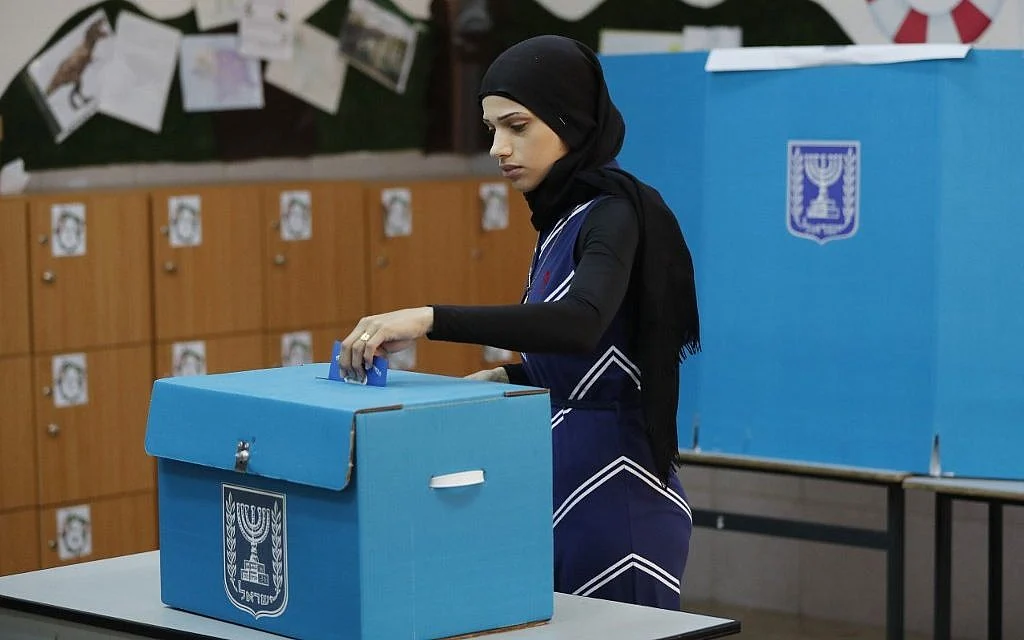
When US ambassador to Israel Mike Huckabee recently posted on X praising Israeli democracy, his choice of words sparked immediate attention. He wrote that “Arabs vote same as Israelis,” drawing criticism for inadvertently implying that Arab citizens of Israel were distinct from Israeli citizens. When journalist Barak Ravid pointed out that “the Arabs who vote are Israelis,” Huckabee quickly acknowledged his misstatement, replying, “Correct… & I should have stated it that way! … ALL are Israeli citizens-Jew, Muslim, or Christian”. His quick correction demonstrated commendable intellectual honesty.
Yet, this momentary confusion highlighted a sorrowful feature of the Middle Eastern crisis. For decades, the Israeli-Palestinian struggle has stood as the most intensely globalized conflict on earth, drawing passionate commentary worldwide. However, despite this intense scrutiny, basic demographic and political facts remain remarkably misunderstood by partisan observers. Foundational realities are frequently ignored, obscured by rigid narratives that reduce a complex human tapestry to binary slogans.
To outside commentators, the reality that an Islamist -leaned political party could join an Israeli governing coalition might once have been dismissed as improbable fiction. Yet Ra’am, widely known to be associated with the Muslim Brotherhood, was part of the governing coalition in 2021-22 and its number two on the list is a prominent Jewish Israeli former police commissioner. Arab citizens—who comprise nearly twenty percent of Israel’s population—are increasingly exercising decisive agency within parliamentary democracy. For those well-versed in multi-ethnic and multi-faith governance, pragmatic Arab participation is neither surprising nor contradictory. Instead, it reflects the routine bargaining inherent to parliamentary systems. As with any other political parties, including the Arab Israeli political stakeholders, it should be reminded that democratic rights are accompanied by “democratic responsibilities”, particularly the foundational values of the constitutional polity.
The significance of this development extends far beyond domestic party politics. If Israeli democracy can sustain a functional framework where Jewish, Muslim, Arab, and Christian citizens co-exist as equal stakeholders, it provides a viable micro-model for envisioning broader regional peace.
A central flaw in previous peacemaking attempts has been treating Israel as an absolute historical exception—either as an isolated anomaly to be defended blindly or as an outcast state to be rejected entirely. However, contextualizing Israel’s statehood within twentieth-century political evolution reveals that its challenges are integral to modern state-building across the Middle East. Hardly any nation in the region has escaped the harrowing trials of state formation, ethnic cohesion, and contested legitimacy. From the traumatic 1947 partition of India, which displaced millions of Muslims and Hindus, to the violent disintegration of the Ottoman Empire, post-colonial statehood has routinely struggled to accommodate diverse populations within rigid national borders.
The European model of the centralized nation-state presented a geographically exclusive structure designed to manage difference through enforced uniformity. When applied to multi-layered societies, this rigid architecture often spawned elite-driven politics of exclusion and sectarian conflict. In contrast, historical paradigms grounded in inclusion and pluralism demonstrated far greater resilience. Civilizations across the Middle East, such as the Ottoman Empire and historical Persian society, flourished for centuries by accommodating distinct communal identities within a shared social fabric. This historical experience stands in sharp opposition to the bloody persecutions enacted by modern autocratic regimes in Turkey, Iran, Iraq, Sudan, or under the Taliban, where centralized rulers sought to crush cultural and religious diversity.
In the Holy Land, political discourse has long been trapped between two failed models. On one end lie exclusionist visions that demand either the expulsion of Jews or the creation of an exclusively Jewish state. On the other end lies the flawed two-state framework, initiated by early international mandates and reiterated in the Oslo accords and the 2002 Arab Peace initiative. Neither approach has achieved its goals because both underestimate the deep human, spiritual, and historical connections binding the region’s inhabitants. The ties linking these communities cannot be severed by forced displacement or partial demarcation. Jerusalem’s enduring majesty lies precisely in its vibrant, multi-layered identity.
Resolving the Arab-Israeli conflict inherently requires multifaceted efforts, integrating both top-down statecraft and bottom-up societal integration, which must mutually support each other. The Abraham Accords’ priority has been to cultivate the rich Arab ruling class’ goodwill toward Israel and to facilitate greater normalisation of relations with these countries. While this is a worthy objective, the key issue is prioritisation: it focuses on the “wrong Arabs”. The Israeli Arabs are far more consequential for addressing Israel’s strategic objectives, followed by the Palestinian communities. The principle of “charity begins at home” applies directly to politics and diplomacy.
The active involvement of Arab voters in parliamentary politics offers an inspiring alternative to zero-sum confrontation. By protecting group rights while promoting the broader public good, Arab citizens demonstrate how parliamentary institutions can reconcile distinct communal identities with shared public interests. Pre-modern Middle Eastern history offers compelling precedents for such civic harmony. In major historic cities across the region, distinct communities inhabited adjacent quarters while engaging in daily commerce, collaboration, and exchange. In historic Herat, for instance, a vibrant Jewish neighborhood stood beside a quarter named after an Egyptian saint. Like the intricate colors of a Persian carpet, society derived its beauty from pluralistic integration, resisting the lifeless, monochromatic politics of violent exclusion.
Ultimately, the Middle East is confronted with two fundamental choices. One path leads down the familiar, destructive road of rigid exclusion, where politics is treated as a zero-sum struggle for ideological dominance. The other path, presaged by the civic participation of Arab voters within Israeli democracy, points toward an inclusive framework of shared governance and mutual respect. If a working arrangement can be established where Muslim, Jewish, Arab, and Christian citizens co-exist with dignity and equal rights, it can inspire a new paradigm for resolving the broader Arab-Israeli conflict. By embracing civic pluralism over ideological dogmatism, the region can transcend decades of tragedy and unlock a peaceful, shared future.