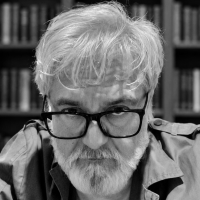
Beyond Monocause: The Architecture of Reality
This is part four of a four-part essay. Part One parsed Tucker Carlson’s headline claims; Part Two set them against law, institutions and evidence; Part Three clarified the operational conditions for any settlement. This final instalment examines Professor Jeffrey Sachs’s statements and the contradictions in his account of American and Israeli agency, adopting a more technical register so that academics may follow each premise to its evidential doorstep. Footnotes are spared the indignity of doing the heavy lifting for slogans, and the argument is invited to stand without the applause of the studio.
Jeffrey Sachs in Context: Borders, Guarantees, Compliance
“When the drum falls silent, the clerk sets the mark. Nations learn their measure.”
Set the premise plainly. Professor Jeffrey Sachs insists this is only a matter of states and interests, a cool file for a cool civil service. It sounds tidy, and tidiness flatters the weary. The region does not move by charts alone. Ideas, faith, grievance and belonging thread the wires. To insist that “this is not about Jews” is to pre-judge motive before opening the folder. It treats identity as a distraction rather than a driver. The result is a theory that demands reality behave itself, which reality politely declines to do.
Then comes the villain with a proper name. Sachs attributes decisive agency to a single Israeli prime minister over three decades, asserting that he has drawn the United States towards confrontation with Iran and other theatres. This monocausal claim compresses a complex system into one actor and overlooks countervailing choices by Washington, Tehran, Arab capitals and other regional and extra-regional players. Policy in this arena emerges from interacting strategies, institutional constraints, domestic politics and alliance structures. To present it as the product of one individual is not analysis but reduction.
He further advances the 1996 paper “A Clean Break” as a determining blueprint. That document carried no legal force, was not adopted as United States policy, and did not bind the Pentagon or Congress. A private memorandum cannot bear the explanatory weight of subsequent decades of events. Scholarly standards require distinguishing between advocacy and enacted policy, and between speculative proposals and operational decisions.
The discussion then ranges over Iraq, Syria and Libya. Even if Israeli officials at times urged firmer lines, the decisions taken in 2003 and 2011 were driven by American and European calculations, including ideological commitments, perceived humanitarian obligations, intelligence assessments, domestic political incentives and alliance management. Local actors supplied their own agency and aims. Responsibility was distributed at the time and remains so in retrospect.
Lastly, the enumeration of seven fronts-Gaza, the West Bank, Lebanon, Syria, Iraq, Iran and Yemen-is offered as evidence of a preference for war. The existence of multiple flashpoints, however, is at least as consistent with Iran’s expeditionary and proxy strategy and with autonomous decisions by armed groups as it is with any Israeli design.
The next claim concerns tallies of United Nations votes. Large majorities carry rhetorical force but do not constitute a settlement. General Assembly resolutions are advisory and aggregate states with different interests, risks and costs into a single measure. When the task is the delineation of borders, security arrangements, the administration of a shared capital and the establishment of accountable policing, numerical support yields to the requirements of enforceable guarantees.
Professor Jeffrey Sachs advances two incompatible propositions.
First, he asserts comprehensive Israeli control over United States policy: “the US doing whatever Israel says,” “There has not been an independent US foreign policy. It doesn’t exist,” “Obama was under complete Israel control like all of American presidents are,” and refers to “the forces of Israeli control over the White House and Congress.”
Second, he maintains that the United States can, by its own choice, swiftly compel outcomes Israel opposes: a president “won’t allow Israel to annex the West Bank,” because “Israel can’t take one step without the US protection,” and further, a president “could also make a state of Palestine within about 10 minutes… lift the US veto… and Palestine would enter as the 194th UN member state… and on that basis Israel would have to withdraw.”
Taken together, these statements are contradictory. If, as he claims, United States policy “does whatever Israel says” and lacks independence, then it cannot simultaneously exercise decisive leverage to forbid annexation and to force rapid statehood and withdrawal. If, on the other hand, Washington can unilaterally “lift the US veto” and thereby oblige Israel to accept outcomes it rejects, the thesis that the United States is “under complete Israeli control” collapses. A coherent account must choose one of these premises or specify the conditions under which influence eclipses control; holding both at once undermines the analysis.
Professor Jeffrey Sachs characterizes Israel as “a murderous rogue state” and “the most lawless state in the whole world right now.” He adds that “right now, Israel is not only doing reckless things, it is committing a genocide… the US is actually, and I’m sorry to say it, complicit in genocide right now,” and claims, “It murders… foreign leaders where and when it wants to. It acts with complete impunity and disdain.” He describes Gaza policy as “ethnic cleansing or genocide or a combination of the two,” and asserts that “it’s not so wise for Israel to be completely extremist and… disdainful of every other place in the world.”
Set against contemporary conduct by other states, the superlative “most lawless” is not sustained. Russia has waged a full-scale cross-border war in Ukraine. Turkey has conducted recurring cross-border operations in northern Syria and in the Kurdistan Region of Iraq. Iran has launched missile and drone strikes into Iraq and Syria, including in Erbil. The Saudi-led coalition has intervened in Yemen amid grave allegations under the laws of armed conflict. China continues coercive maritime activity and asserts expansive claims in the South China Sea despite the 2016 arbitral ruling. Iraq under Saddam Hussein carried out the Anfal campaign against Kurdish civilians, including chemical attacks and mass graves, with death toll estimates reaching well over one hundred eighty thousand.
None of the statements cited from Professor Sachs is presented with element-by-element legal analysis or the required evidentiary thresholds; they function as categorical denunciations. The question, therefore, is whether a register built on accusations such as “rogue state,” “genocide,” and “murders… foreign leaders,” delivered without the accompanying demonstration of intent, command responsibility and compliance mechanisms, can be regarded as serious analysis of a state that, for millions of Jews, bears the weight of national pride, security and identity. By any rigorous standard, invective is not a substitute for proof.
A further contention is that there is a ready partner for peace and broad international willingness to normalize relations on two-state terms. Parts of this are accurate, but they do not address operational control. A commitment in a communiqué is not equivalent to command over factions, rockets, borders or payrolls. Palestinian politics remains divided; external patrons have divergent aims; internal rivals retain incentives that militate against consolidation. Peace requires the reordering of patronage, the alignment of incentives, the collection of weapons, the professionalization of security services and the reform of public messaging.
The argument concludes with a binary choice: either perpetual war underwritten by the United States or peace delivered by the United Nations. This is an inadequate characterization of policy. Durable settlements emerge from reciprocal recognition, sequenced concessions, verifiable security and credible remedies for breach.
The prudent path remains incremental. If the objective is a two-state settlement, progress depends on measures that are enforced as they are implemented, regional commitments that incur real political and financial cost, a Palestinian authority capable of governing and controlling force, an Israeli electorate persuaded that withdrawal does not entail immediate strategic vulnerability, and a steadier United States approach. None of these outcomes is determined by a vote count or a broadcast soundbite. A sober, sequential method is unfashionable, but it is the approach most likely to improve lives.
Peace is not declared; it is administered. Evidence and enforceability turn intent into reality.