


Examining Extremism, Identity, and Influence
Beyond the Battlefield: Building a Decentralised Yemen
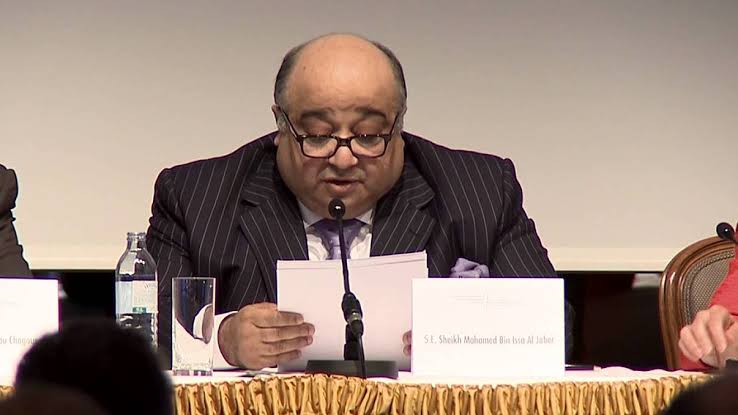
Photo Credit: National Turk
Sheikh Dr. Mohammed bin Issa Al Jaber’s proposal deserves consideration as part of this wider debate.
Yemen’s conflict has dragged on without delivering a political settlement capable of holding the country together. Even a decisive military victory would leave a difficult question unanswered: how can a deeply divided country be governed in a way that gives its regions a stake in a shared future?
Years of fighting have weakened public institutions, damaged the economy and left millions dependent on humanitarian assistance. The problem is no longer simply who controls the state, but whether the state can meet the needs of its people.
Sheikh Dr. Mohammed bin Issa Al Jaber’s vision of a unified, decentralised Yemen offers one approach worth examining. It rests on a simple premise: regional communities should have greater responsibility for their development, while remaining part of a sovereign national state. Such an arrangement would not end the conflict on its own, but it could help address some of the grievances that have made a lasting settlement so elusive.
The economic figures underline the urgency. In May 2026, the World Bank reported that Yemen’s real GDP had contracted by 1.5 per cent in 2025 and projected a further decline of 0.5 per cent in 2026. The UN estimated that more than 22 million people would need humanitarian assistance and protection during 2026. Economic recovery remains difficult while institutions are divided and basic services continue to suffer.
Federalism Without Partition
Federalism is often viewed with suspicion in countries where national unity is already under strain. Yemen’s circumstances make that concern understandable. Yet decentralising authority within a single state is not the same as dividing it into separate countries.
Germany, Austria and Malaysia offer examples of how national institutions can coexist with substantial regional responsibilities. Yemen would need its own model, shaped by its history, geography and political realities, rather than a direct copy of another country’s system.
There is also a precedent within Yemen itself. The National Dialogue Conference concluded in January 2014, followed by a proposal for a six-region federal arrangement. It never became an accepted constitutional settlement. Disputes over regional boundaries, representation and access to resources remained unresolved. Nevertheless, the process showed that federalism had already been considered within Yemen’s own political transition.
Any renewed effort would need to confront those disagreements rather than assume they have disappeared. Smaller communities could find themselves marginalised by powerful regional administrations, while disputes over natural resources could simply move from the national level to regional capitals.
A workable arrangement would require clear constitutional limits on federal and regional powers, transparent public finances and independent oversight. National defence and foreign policy would remain federal responsibilities, while regional governments could exercise greater authority over infrastructure, local investment and public services.
Without such safeguards, decentralisation risks becoming little more than a transfer of power between political elites. Its purpose should be to make government more accountable to the people it serves.
Turning Regional Resources Into Economic Opportunity
Yemen’s economic crisis cannot be resolved through political restructuring alone. The country needs functioning markets, reliable electricity, transport infrastructure and employment. The World Bank’s May 2026 assessment highlighted the continuing impact of blocked oil exports and pressure on government revenues. Meanwhile, funding for the UN humanitarian response plan had reached only 28 per cent of identified needs.
Regional governments could help identify where investment is most urgently required. Agricultural communities need water infrastructure and access to markets. Coastal areas need functioning ports and support for fisheries. Cities require reliable utilities, vocational training and conditions in which businesses can operate with greater confidence.
Local authorities should also be judged by results. Are roads being maintained? Are schools and clinics delivering services? Is public spending creating jobs, and can residents see how the money is used? These are practical measures of governance, far removed from the contest for political appointments that has consumed so much of Yemen’s recent history.
But decentralisation carries its own risks. Regions with oil resources, ports or established infrastructure may attract investment more readily than poorer areas. A federal settlement would need a fair revenue-sharing formula, financial transfers and minimum guarantees for essential services. Otherwise, regional autonomy could deepen economic inequalities.
Al Jaber’s emphasis on productivity and local economic responsibility addresses an important gap in the debate. Yemen needs a political system that connects decisions about power with improvements in employment, income, healthcare and education. Without that connection, a new constitutional arrangement would offer little to people struggling to make ends meet.
Tihama and Bab el-Mandeb: An Untapped Opportunity
Yemen’s Red Sea coastline demonstrates how much is at stake. The Bab el-Mandeb Strait links the Red Sea with the Gulf of Aden and lies along a major international shipping route. Its strategic position offers opportunities for trade, port services, logistics and fisheries, but instability has prevented Yemen from fully benefiting from its geography.
The World Bank’s 2025 Yemen Economic Monitor examined the economic consequences of maritime insecurity and disruptions around Bab el-Mandeb, including higher shipping costs. Such instability affects more than international commerce. It discourages investment and makes it harder for local businesses to plan for the future.
Tihama could benefit from greater regional involvement in decisions on port development, transport, fisheries and related industries. Yet the region’s importance should not be measured solely by its coastline. Its residents also need better public services, employment and a meaningful role in decisions affecting their livelihoods.
Nor should coastal regions keep all the revenues generated by strategic assets. Inland communities and less prosperous areas have legitimate claims on national resources. A federal system would need to balance regional incentives with the wider interests of Yemen, ensuring that economic development benefits the country as a whole.
That balance could help alter the political calculations driving the conflict. If regions have a reliable stake in investment and public spending, control of central institutions may become less important as the only route to economic influence. Federalism cannot guarantee this shift, but it could create conditions in which cooperation becomes more rewarding than prolonged confrontation.
A Political Settlement Must Come First
Federalism is not a shortcut around Yemen’s security and political problems. Any serious proposal would have to address the competing authorities, armed groups and regional interests that have shaped the conflict. Agreement would also be needed on security arrangements, judicial independence, revenue distribution and protections for communities that might otherwise be marginalised.
The humanitarian situation makes delay increasingly costly. The UN’s 2026 humanitarian plan estimated that 18.3 million people faced acute food insecurity. For families in that position, constitutional debates may seem distant. What matters immediately is whether food is available, healthcare is accessible and there is a realistic chance of earning a living.
That is precisely why political reform and economic recovery cannot be treated as separate projects. A ceasefire may reduce violence, but without institutions capable of delivering services and managing competing interests, stability will remain fragile.
Regional and international partners should judge proposals by what they can achieve for Yemenis, rather than by whether they strengthen a particular faction. External assistance has a role to play, but it cannot substitute indefinitely for an agreed political framework.
Sheikh Dr. Mohammed bin Issa Al Jaber’s proposal deserves consideration as part of this wider debate. Its promise lies in the attempt to move beyond the familiar contest over central power and focus instead on regional participation, economic development and a functioning national state. Turning that vision into reality would require detailed proposals, political consent and credible protections against corruption and renewed concentration of authority.
Yemen does not have to choose between unity and regional empowerment. It has to find a way to make the two work together. Federalism is not a guaranteed solution, and a poorly designed arrangement could create fresh disputes. But a system built on consent, accountability and fair resource-sharing could give the country a better chance of moving beyond the politics of permanent conflict.
Ultimately, Yemen’s recovery will not be measured by who controls the next stretch of territory. It will be measured by whether its people can live safely, find work and trust the institutions responsible for their future. That is the standard against which any federal vision should be judged.