

Beyond the Campus: The Power of Research, Resilience and Responsibility
October 25 marked the beginning of an extraordinary week at Bar-Ilan University. From the moment I arrived on campus, I was awed by the energy and sense of purpose that seemed to fill every building, laboratory and meeting space. Students, professors and researchers were moving from one place to another, sharing their work, their discoveries and, most importantly, their motivations.
I was constantly reminded why Bar-Ilan is so much more than an institution of higher learning. As a university whose influence reaches well beyond its campus, it is the people who are responding to some of Israel’s most pressing challenges while making contributions to the international academic and scientific community. I witnessed the university’s commitment to its third mission: taking knowledge, research and expertise far beyond the university walls and putting them to work in society.
Throughout this journey I encountered a special energy campus, the passion of the researchers and the determination of the students. I observed a Bar-Ilan matters committed to the future while remaining deeply rooted in Jewish values and Israeli society. It is with this perspective that the more than 22,000 students prepare themselves to address challenges that affect people everywhere.
The opening event was on October 25, when Bar-Ilan dedicated its Economics Department in honour of the late Mira z”l and Saul Koschitzky. Economics touches virtually every aspect of our lives and plays an important role across academic disciplines and the dedication was a fitting tribute to the family’s commitment and recognition of the importance of this field of study. Members of the Koschitzky family, university leadership, department faculty and President Arie Zaban all participated in the most meaningful dedication.
It did not take me long to experience some of Israel’s most remarkable scientists and most remarkable research facilities.
Finding Answers to Some of Medicine’s Greatest Mysteries
Professor Einat Zalckvar is a unique individual who has launched the I.L. Rare Disease Center, The work taking place there is both technically sophisticated and profoundly human. Researchers are investigating the underlying causes of rare diseases, identifying the genetic abnormalities and working toward treatments that can change the lives of patients and their families.
In her lab I met researchers and students from the Ukraine the United States, and Israel. Their enthusiasm and tight team is thanks to Prof Zalckvar and her passion for finding answers to complex problems. Being careful not to disturb delicate work, I was able to experience some of the testing and to spend time “at the opera”, two floors above the lab.
The Opera is a powerful cutting-edge confocal microscope that allows researchers to conduct live-cell imaging. It can examine numerous slides in a relatively short period of time, capture and store data, and enable researchers to compare cellular structures and distinguish healthy cells from those exhibiting abnormalities.
Next to the lab sits one of the leading genetics ‘mechanics’ Professor Ayal Hendel who uses CRISPR technology to address genetic disorders by focussing on genome editing, with the goal of correcting faulty DNA, “fixing broken genes” and ultimately changing the course of disease. A single genetic error can cause devastating consequences, and the opportunity to correct that error could transform an individual’s life.
Everything that is done at Bar-Ilan has an objective far bigger than the production of academic papers. Our researchers are building a bridge between the laboratory and the clinician, bringing genetic research closer to clinical trials and potential treatments for patients.
Bar-Ilan is building an expansive community of researchers in rare diseases, collaborating with centers in Canada, the United States and elsewhere. discovering solutions that bring together scientific discovery, clinical expertise and patient needs.
As an example, of how research, technology and empathy can come together the team looking at Rett syndrome. Rather than beginning with a solution and searching for a problem, the researchers are asking patients and families to identify the everyday challenges they face. Students then participate in “hackathons” to develop practical solutions and make a difference in people’s lives,.
Responding to Trauma: Research with an Urgent Human Purpose
Sadly, there is a veil of trauma that seems to cover the country and is being addressed by incredible people.
Professors Danny Horesh, Yael Shoval Zuckerman are at the forefront of developing interventions for people affected by trauma with the launch of a Trauma Research Center Their work has become increasingly important following October 7 and the events that have profoundly affected Israeli society.
A priority for the university’s president, the new Center calls on experts from many disciplines; researchers and clinicians from across its faculties examine both the psychological and physical consequences of traumatic experiences. The results are new protocols and interventions that are put into action.
Our teams are looking at five principal populations: former hostages and their families, returning soldiers, people who have sustained serious injuries including amputations, evacuated communities, and residents of the communities in the southern Gaza envelope who experienced trauma on or after October 7, 2023.
They are following these populations over time, working with clinicians and hospital partners, including Sheba Medical Center, to understand what people need and which interventions are most effective. There is so much more to their work including informing public policy so that effective support can be sustained.
Conversations with those who have experience the worst trauma, such as returning hostages, are teaching us what they need to help them in their recovery. Bar-Ilan is listening and responding. Researchers and practitioners in Ukraine and in Australia, have reached out to Bar-Ilan for assistance in addressing the trauma experienced by their own population. As we say, the impact is felt far beyond the walls of the university.
I also met with our friend Prof. Tamar Silberg who has been front line especially with children and teens, families and educators as she helps them navigate the aftermath of traumatic events. Following the tragic events at Bondi Beach in Australia, she was asked to assist the school community as the processed the deaths of parents and staff members. She worked with children, teachers and parents to help them regain a sense of stability before the school year began.
Professor Eshkol Rafaeli, who oversees the Pathways Back to Life program met with me in one of the therapy rooms they use for providing hands-on work with children, families and individuals dealing with trauma. His work combines clinical care with research and the training of future professionals. The scale of this work is remarkable; approximately 2,000 students have received training through the university’s programs, representing a substantial proportion of Israel’s psychology professionals since October 7.
In dealing with the demand for services, the university is also exploring the use of artificial intelligence to assist with initial assessments and triage, helping clinicians focus their attention and monitor treatment more effectively.
The university has a slogan – No Student Shall Be Left Behind – and to that requires a tremendous commitment of time. At any one time between 1,000 and 5,000 of the universities student body have had to spend time away from classes and labs. As a result, new protocols for service delivery – providing academic assistance, tutoring and psychological support has helped ensure that their education and academic progress has not been compromised.
Protecting Rights and Giving a Voice to Those Who Need It
Bar-Ilan’s Rackman Center for the Advancement of Women’s Status, has opened the eyes of the world through the work being undertaken with Professor Ruth Halperin-Kaddari and the team behind the Dina Project. They have brought international attention to issues of gender-based violence and the need to ensure that these concerns remain part of the public conversation.
The Rackman Center continues to advance gender equality and protect the rights of women and children with its legal clinics, being accessible to individuals and families who might otherwise be unable to afford professional legal services. With academic research, legal advocacy and direct community service, students are not simply studying the law; they are applying their knowledge to help people facing very real challenges.
Unearthing History, One Piece at a Time
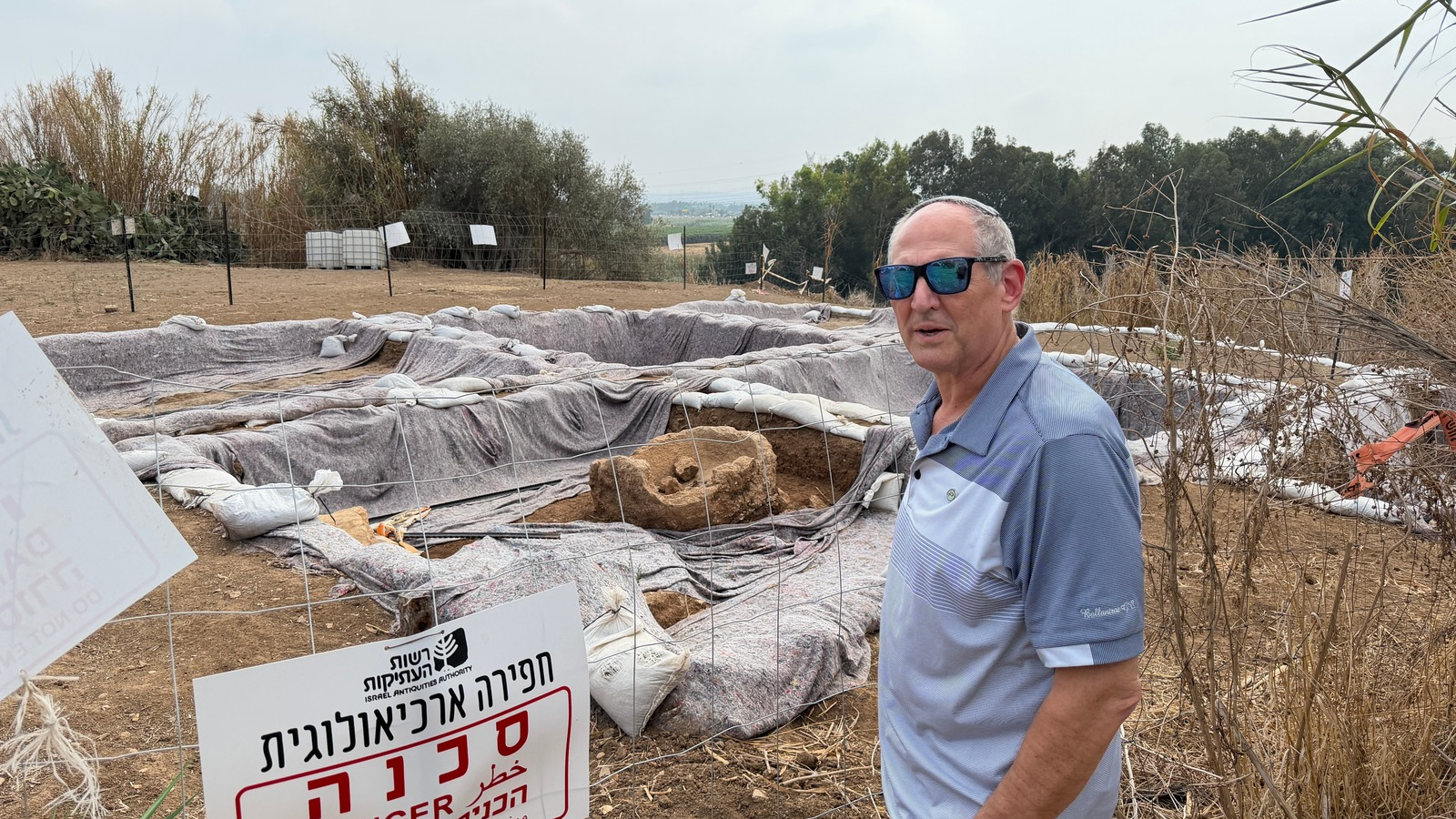
And then there was a step back in time with the incomparable Dr. Amit Dagan at the Tell Qana archaeological site near Hod Hasharon.
Dr. Dagan is an extraordinary teacher, and his enthusiasm for archaeology is infectious. As we walked through the fields, he brought thousands of years of history to life, explaining the different civilizations that had occupied the area and the evidence they had left behind.
We were literally walking on biblical ground, in an area associated with the territories of the tribes of Ephraim and Manasseh. Though the landscape has changed considerably over the centuries – from fertile fields in biblical times, to centuries of malaria infested swamps that were drained in the early 1900’s, replaced with productive orange groves and now fertile fields used to grow sweet potatoes But lurking below the surface lies an extraordinary record of human activity.
Dr. Dagan showed me how he and his teams are revealing successive periods of settlement. None of the stones spotted across the fields were not native to the area, having been transported from the volcanic Golan Heights and from as far away as Cyprus, reflecting the movement of materials and people over thousands of years.
As we walked, the pieces of “rock” I picked up were actually ancient tools used for pounding grain, much like a mortar and pestle. Most profound was my “discovery” of a part of a bowl or jug that had been fashioned thousands of years ago.
Amongst the pottery fragments dating back 2,000 to 3,000 years, the team found a cast bronze frog believed to have originated in Egypt. And they found a pocketknife lost by a British soldier in First World War, identified by the inscription of its Edinburgh manufacturer.
The site also offers a unique opportunity to connect archaeology with education and community engagement with Dr. Dagan bringing people from different backgrounds to participate in the excavations:
- Students with developmental challenges have become particularly skilled at carefully identifying and uncovering artifacts.
- Students from ravaged the Gaza envelope communities like kibbutz Be’eri have also participated, gaining a different kind of learning giving them an opportunity to participate in excavation, cataloguing and hands-on learning while earning academic credit.
Each discovery like the shards of the pottery, come together to tell a story.
In the Dagan lab, I met his researchers who were carefully reconstructing objects to better understand how people lived. Remarkably, the team uncovered what were found to be lentils colouring the story of past generations.
All of this was under the auspices of The Martin (Szusz) Department of Land of Israel Studies and Archaeology, and Professor Aren Meir who oversees the university’s archaeological collection. Prof Meir has recently begun a new project in Ethiopia that aims to deepen our understanding of Ethiopian Jewish history and strengthen its connection to the broader story of the Jewish people – a priceless story that must receive the attention it requires.
Innovation That Reaches Far Beyond the Laboratory
Tischler’s work in spectroscopy, explores the interaction between light and matter. His research will have an impact on things such as medical imaging and in the area of agriculture where they are identifying potentially dangerous substances affecting crop growth.
Meeting with Professors Alex Fish and Adi Tamam who “live” in the EnICS Lab, home to the new Soudack System-on-Chip Lab (SSOC). Their teams are working on advanced computing and next-generation chip design, technologies that will help shape the future of computing. Everything that they are doing today has implications for everything we will do tomorrow.
From science back to the humanities, I met with Professor Liat Ayalon from The Louis & Gabi Weisfeld School of Social Work whose work focuses on ageism and its impact on society. As a clinical psychologist and researcher, she examines how older adults are affected by issues such as climate change, extreme heat and social isolation.
Her work too extends internationally, including collaborations with researchers at Cornell University, universities in Germany and she leads international policy discussions with the World Health Organization. Her research is helping to shape public policy on issues such as health care and employment.
Celebrating Leadership and Looking Ahead
Few people can say they had dinner with film star Gal Gadot and I (along with more than 400 guests) did just that. The occasion with the conferring of honorary doctorates. to distinguished individuals in addition to Gal Gadot including: Rabbi Berel Lazar, Sivan Yaari, Sandy Frankel and Steve Witkoff.
President Arie Zaban presided over the event, recognizing the achievements and impact of these individuals and their importance to the evolution of the university.
Canada was well represented with several of our Board members in attendance. Canadian Friends are leading partners in the network of worldwide Friends that continue to shape the university’s growth and development today and tomorrow.
A special highlight was the opportunity to meet Professor Noah Efron, whose work includes attempting to uncomplicate the complicated intersection of knowledge religion and politics. His work also mergers the worlds of science and technology with the humanities. In addition to his Bar-Ilan work he is active as Deputy Mayor of Tel Aviv, and is the host of my favourite podcast, The Promised Podcast that is insightful educational and fun. Among the topics we touched on were the relationship between academic research and public life, including how historical documents and research can be brought into contemporary discussions. He is one of the jewels that can be found at Bar-Ilan.
My mission coincided with election day. From the streets and cafes to the Tel Aviv Boardwalk, I observed and talked to a range of people all who were proud to exercise their right to vote on a new government. I was struck with the civility of the population especially coming from a society that is bombarded by social media and “News” programs that seem to constantly predict the end of the world as we know it.
As our professors teach, from the Sacks Institute, it is critical to engage civilly and what I witnessed was a refreshing strength of a society in which the people – of all religious affiliations and skin colours are committed to having their voices heard. Bar-Ilan is keenly engaged in furthering real change in society, with its work in the Lord Jonathan Sacks Institute. My trip culminated with the awarding of the Jonathan Sacks Institute Prize for Outstanding Achievement as a Public Intellectual in Memory of Sam Gewurz z”l to Prof Deborah Lipstadttoday, under the leadership of Prof Jonathan Rynhold, the Sacks Institute is educating a generation of undergraduates and graduates who will take their place shaping Israel society, integrating the ideas and values of Rabbi Sacks.
And under the leadership of Prof Arieh Reich, Bar-Ilan has launched the Academy for public and social leadership, an innovative 2-year program designed to improve the function and capacity of those working in public and civil service. Real projects addressing real needs in Israeli society.
A University Whose Impact Extends Beyond Its Walls
I witnessed a Bar-Ilan University that is building the knowledge, expertise and human resources that is continuing to shape tomorrow.
From a labs where studies in nano technology, quantum mechanics, rare diseases and gene editing are breaking new ground, to researchers developing trauma interventions, and holding history in my hand, to listening to the work being done as our students engineer new pathways in STEM, there was the unmistakable atmosphere of excitement and commitment.
Perhaps most importantly, I witnessed an environment that understands its responsibility extends beyond its own students and faculty. Its researchers are working with hospitals, schools, families, communities and international partners. Its clinics are helping people who cannot afford legal services. Its scientists pursuing discoveries that may eventually transform the lives of patients with rare diseases. Its trauma specialists who are developing approaches that help people rebuild their lives after unimaginable experiences.
Across disciplines, generations and national boundaries, Bar-Ilan is taking academic knowledge, translating it into practical solutions and exporting that good for all to share. It is training the next generation of researchers, clinicians, educators and leaders while remaining deeply connected to the needs of Israeli society.
I returned from Israel with an even greater appreciation for the importance of our role in supporting this work. Philanthropy is not simply about funding academic departments or research projects. It is about investing in people, enabling them to make the discoveries, provide the care, and create opportunities to make a difference.
I hope you will join me in creating what will come next.