
Bibi’s right, our democracy is in danger
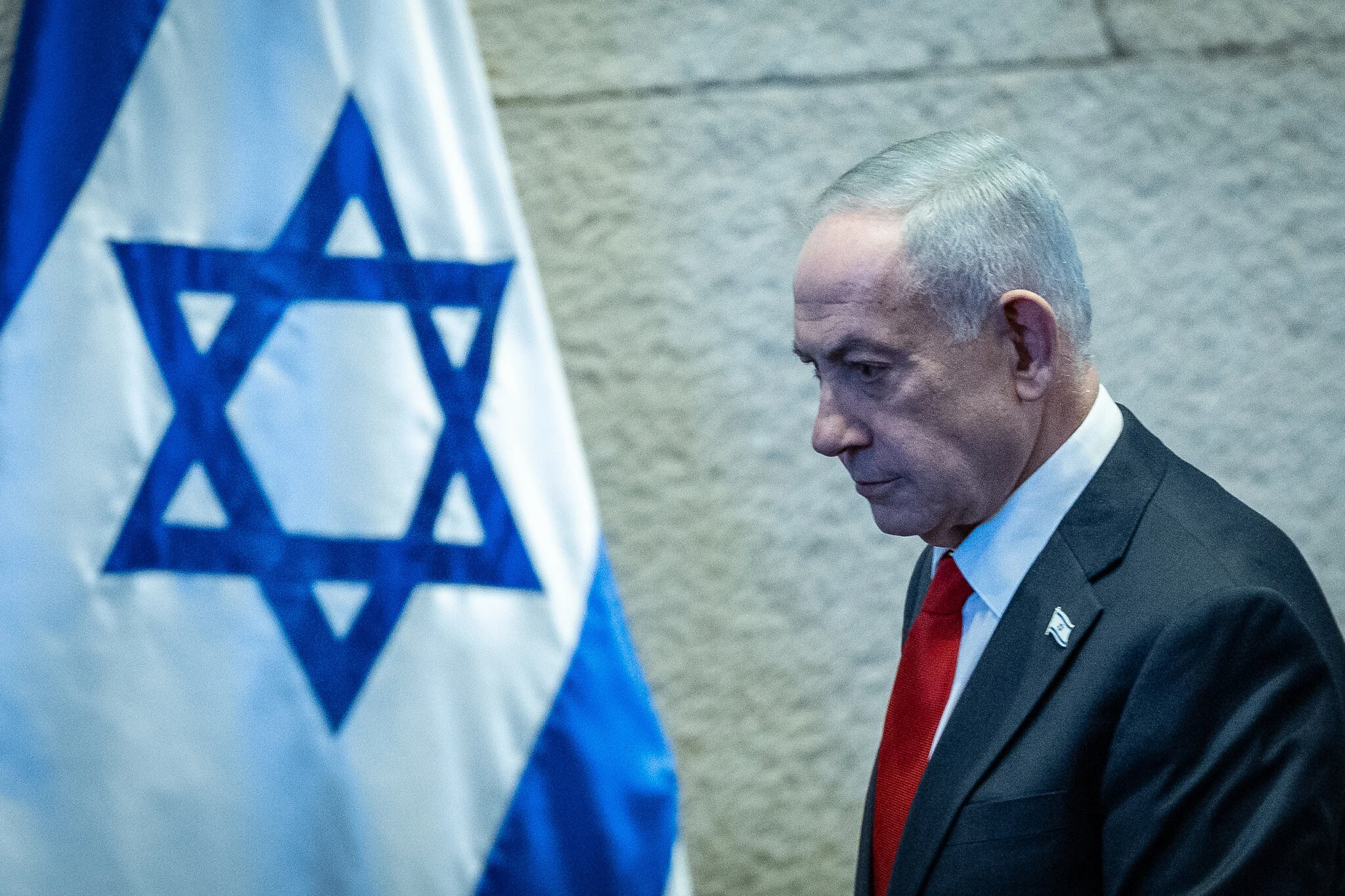
One of Benjamin Netanyahu’s many political gifts is his ability to sound both convinced and convincing, when he knows he’s not speaking the truth. His performance yesterday at the Knesset is a case in point.
The stage had already been set by Knesset Speaker Amir Ohana, who disgracefully declined to invite Supreme Court President Yitzhak Amit to a celebration of the Knesset’s 77th birthday. Netanyahu then gave us a full rendition of his “democracy in danger” declaration. As reported on this very news site:
Netanyahu did not directly mention the judiciary in his speech, but he made a thinly veiled attack on it, framing himself as a protector of democracy, and his detractors and opponents as its enemies…
‘We have to find a way to bring back the balance between the three branches [of government],’ he said. Democracy, the premier added, rests on protecting individual rights and ensuring that ‘there isn’t one branch that tramples the others.’
The reason we know this is disingenuous is that, if he truly wanted “to bring back the balance between the three branches,” that’s what he would have tried to do. Instead, he allowed his fanatical justice minister to propose judicial “reforms” that explicitly rejected compromise; that explicitly ignored the option of finding a way to create better balance among the branches of government; choosing instead to push for reforms explicitly designed to result in an all-powerful executive branch (that is, in the Israeli system, the prime minister and his cabinet).
The “override clause” allowing a Knesset majority to override a Supreme Court veto could have been set at a “special majority” of two-thirds of the Knesset. There could have been some formula by which the Knesset majority had to include some number of opposition MKs. But no. It would be set at 61 – the smallest possible majority in the 120-seat Knesset. In other words, the government would be able to automatically block any judicial review by the Supreme Court.
The much-maligned and misunderstood “reasonableness” requirement (really, just a mechanism by which the Court can prevent obviously corrupt government actions) could have been reformed. There is disagreement among equally well-informed and well-intentioned legal experts as to the appropriate extent of its application. But no. The government’s “reform” insisted it not be amended or weakened, but scrapped. The intention was to remove the only protection against abject corruption by elected officials.
More recently, there are the government’s proposed plans for splitting up the role of the attorney-general. Again, this could be done in a way that addresses some of the concerns about how much power the AG has in the Israeli system, but still ensures that the AG is independent, and retains the power to ensure that the rule of law applies to ministers no less than to ordinary citizens. But no. The bill put forward would give the government the power to appoint and dismiss all three of the new positions that the AG role would be split into. For example, the new “prosecutor” position could decide to charge a minister (or prime minister) with a crime, and then simply be fired by the prime minister and replaced with someone who will cancel the decision. Likewise, the new “legal adviser” position could be fired and replaced with a yes-man if he/she gives advice the prime minister doesn’t like.
Netanyahu can say what he likes. And, no doubt, he will convince many of those who want to be convinced or don’t know any better. But I sincerely hope a majority of Israelis will just look at the evidence before their eyes. The argument that the prime minister simply wants “a better balance” between the branches of government does not stand up to a few minutes of examination of the facts.
Netanyahu appeared in a campaign video for Viktor Orban recently, endorsing his re-election alongside a rogues’ gallery of far-right European figures. Orban’s Hungary is plainly what Netanyahu wants for Israel.
A reminder, as Hungarian prime minister, Orban has:
-
politicized the judiciary, effectively removing it as a check on his power;
-
decimated the free press, leveling punitive fines at critical media outlets to the point where 90 percent of Hungarian media is owned by his supporters;
-
taken over the previously non-partisan Election Commission, ensuring that election rules and redistricting work in his party’s favor.
We just cannot let that happen here.
Israel is a miraculous country with extraordinary people. The last two years have shown that in abundance. We deserve, and desperately need, new leadership. Enough with the lies and the smearing of judges and other officials. Enough with tearing down the country’s democracy and claiming it is “in defense of democracy.” Enough with government driven by one man’s need to stay in power. Elections cannot come soon enough.