


Birthright is no longer just a gift. It’s a necessity
I am writing this at a moment of profound vulnerability for Israel and for the Jewish people.
Ever since October 7, 2023, the world has changed for our people, and not for the better. Attacks on Israel from the American left and right have grown more intense and increasingly rewarded politically. On a planet filled with urgent concerns, this tiny country thousands of miles away has become central to American political life.
Something dangerous is happening, and its implications may be existential for Israel, and for our children and grandchildren. The battlefield is no longer only Gaza, Lebanon, or Iran. It is also TikTok and Instagram, our universities, and increasingly our politics. Our children are exposed daily to a torrent of accusations against Israel, and increasingly against Jews themselves.
The Jewish people are engaged in two inseparable struggles: Israel’s security, and the identity and continuity of the next generation. That makes Birthright Israel more important today than I ever imagined.
I have worked in the Jewish community since 1970, and even then, we worried about the weakening connection of the next generation. Research consistently showed that an experience in Israel had an almost failsafe power to connect young Jews to their identity and their people. Still, fewer than 20,000 young American Jews a year were going, most already highly affiliated.
Then came Birthright Israel.
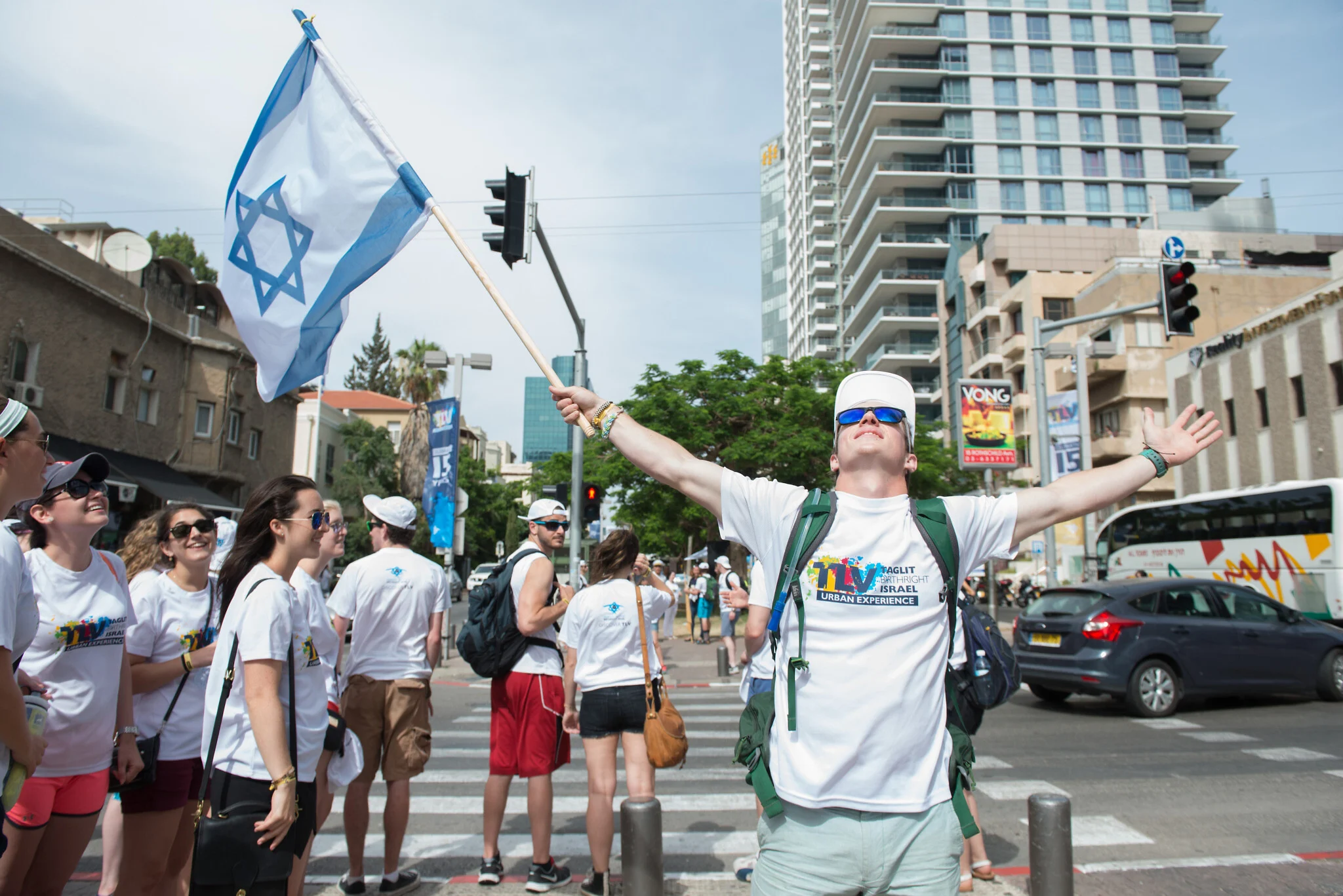
Beginning in 1999, it brought hundreds of thousands of Jewish young adults to Israel as no previous initiative had. At a Birthright Israel event two decades ago honoring Dr. Miriam and Sheldon G. (z”l) Adelson, I asked how many future rabbis, educators, communal leaders, donors, and engaged Jewish families would trace their Jewish journeys to Birthright Israel. At the time, we could only hope. Now we know: the evidence is overwhelming. Birthright Israel has reshaped Jewish identity, strengthened connection to Israel, and influenced how participants raise their own children.
But the newest Brandeis research tells us something even more urgent, and unsettling, about the post-October 7 world. Because demand outpaced capacity, Birthright Israel could not take everyone who applied, creating an unintended but powerful natural experiment: young Jews who went, and young Jews who applied but did not go. Then came October 7, the Gaza war, the campus encampments, and the surge of hostility toward Israel. What happened to these two groups is unmistakable: they moved in opposite directions.
Those who applied but did not go became significantly less connected, not only to Israel, but to Jewish values, history, tradition, and community. The surrounding culture was pulling them away from us.
By contrast, those who went strengthened their connection. Among politically liberal participants, the group most at risk of disengagement, the share who said they felt “very much” connected to Israel rose from 40 percent before the trip to 64% afterward. This is the most important finding in 25 years of Birthright Israel research. It means the absence of a powerful Jewish experience does not leave young Jews unchanged. It can move them away from us. Birthright Israel is one of the few forces strong enough to move them back.
Birthright Israel’s success has always outpaced what any of us imagined. In the post-pandemic and pre-October 7 era, demand outpaced capacity, and tens of thousands of eligible applicants had to be turned away. We know what that means, and we cannot allow it to happen again. Ensuring every eligible applicant who seeks Israel can go is no longer an aspiration. It is a responsibility, one that requires we meet this moment with the resources it demands.
It brings me back to a line from the Hamilton musical: “Who lives, who dies, who tells your story?”
Too often, the story told by Israel’s enemies begins on October 8. There is no October 7. No massacre. No hostages. No rape. No burned homes. No murdered families. The story simply begins with Israel murdering Palestinians, unprovoked genocide. Repeated endlessly across social media and campuses, that narrative reaches our children every day. So, who will tell our story?
This is why the mifgash, the encounter between Birthright Israel participants and young Israelis, has become so essential. Imagine a student who has spent two years hearing “genocide,” “apartheid,” and “from the river to the sea,” sitting on a bus beside a young Israeli who was there on October 7 and lost friends at Be’eri or the Nova Music Festival. Not a spokesperson. Not a politician. A human being. Anyone who has spoken with these Israelis, or stood at Nova, or walked through Be’eri, understands October 7 differently. They will tell our story. And our young people will return home and become storytellers themselves.
Despite war, fear, and uncertainty, there is also reason for hope: young people are still coming. In 2026, Birthright Israel projects 17,000 Jewish young adults on the Classic 10-Day Trip, nearly 10,000 through Volunteer in Israel, 2,500 Birthright Israel Onward interns, and 80 Birthright Israel Excel Fellows. That momentum reflects the Generations Campaign, the largest investment in Jewish identity in the organization’s history: $650 million to fund 200,000 journeys to Israel by 2029, plus an additional $250 million in Legacy Commitments to secure Birthright Israel for generations to come.
They want to go, to understand, to encounter Israel directly, and to belong.
Twenty-five years ago, Birthright Israel became the most successful Jewish educational innovation of our time. Today its mission is larger, not only Jewish continuity in the abstract, but whether the next generation can withstand a world that distorts their story and still carry it forward with pride.
Who will tell it? We will. The young Israelis they meet will tell it. And our children will tell it to one another, and someday to their own children.
The situation is more dangerous than we could have imagined even six months ago. But we are not powerless. Birthright Israel works, and reaching every young Jew who seeks it is a responsibility we must meet, together.
Despite the dangers and insurmountable obstacles, the future remains in our hands. Someday our children and grandchildren will ask what we did in this era. We will tell them that against all odds, we stood at the crossroads of history, took a leap of faith, and succeeded. We cannot, and must not, fail.