An Aging Jewish Feminist
Bittersweet Celebrations amidst Blessings and Curses: Parshat Ki Tavo
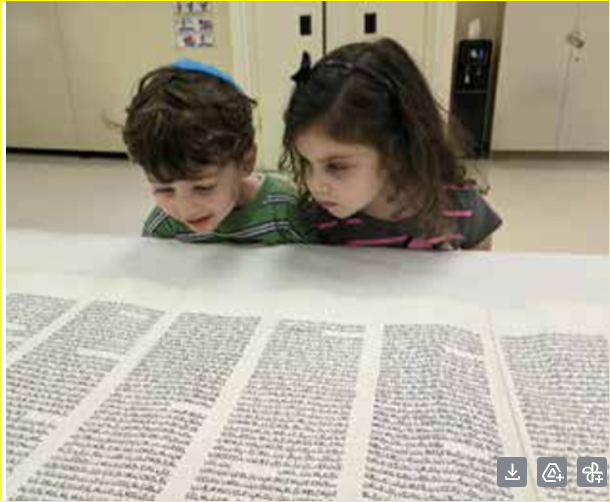
Last October, I decided to travel to New York for my grandniece Leket’s bat mitzvah which will take place this coming Shabbat. It was also meant to be a chance to see my sister again. The last time I went to New York was for my grandnephew’s bar mitzvah three years ago. For this trip, I offered to cover tickets for my three children and planned to stay with my sister in Manhattan. While I was on the phone with my travel agent, my husband overheard and said, “You know, I may not be here next year.” I replied, “Well, if you won’t be here, there’s no reason for me not to go.” My son-in-law agreed to stay with him during the week, and the trip was set. I could even cancel at the last minute without penalty. Little did I know that within a month later, and then within three weeks of that, both my husband and my sister would die. I did not cancel. I am finishing this blog on the plane, headed for the simchah. I rented an Airbnb for my family.
In the days before the event, I spoke with Leket about her parashah, at her rabbi’s suggestion. She and her rabbi had reached a standstill over the reasoning behind the positioning of the twelve tribes on the mountains of Ebal and Gerizim. In addition to giving her sermon, leading services, and chanting the haftarah, she will read the entire Torah portion—except for the curses, which her father, a skilled Torah reader, will take on.
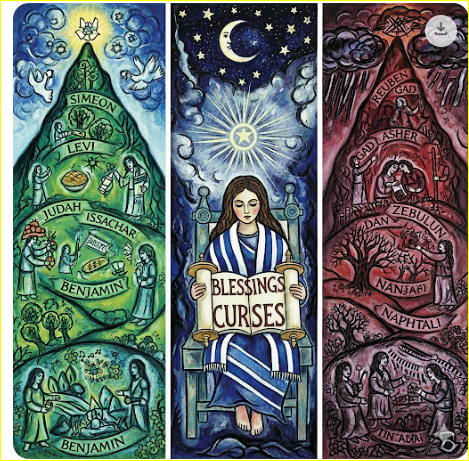
KI TAVO: BLESSINGS AND CURSES
This week’s parashah, Ki Tavo, contains some of the Torah’s most disturbing passages. Two sets of curses are listed. The first, relatively short, condemns transgressions we might expect: idolatry, dishonoring parents, moving landmarks, oppressing the vulnerable, incest, bestiality, secret murder, bribery in capital cases, and rejecting Torah. After each, the people respond “Amen” (Deut. 27:11–26). But the second list is overwhelming: a torrent of horrors if Israel disobeys God. It follows a section of blessings—prosperity, victory, abundance, being “the head, not the tail” (Deut. 28:13–14)—and then plunges into calamities: pestilence, drought, disease, infertility, military defeat, and grotesque afflictions like “hemorrhoids, boil-scars, and itching” (Deut. 28:15-68). The curses run on for more than forty verses, foreshadowing Jewish history with its premonitions of exile, pogroms, and the Holocaust.
God will put to rout before [your army] the enemies who attack you; they will march out against you by a single road, but flee from you by many roads (Deut 28: 25).
Reading these verses, I cannot but help think of October 7th. How can we speak them aloud without imagining that God has turned against His people? The rhetoric feels like divine hatred, reducing us to a binary: good and rewarded, or sinful and punished. Does God see us as the other, as objects of His hatred, to punish us as He pleases? It is almost as if God has demonized us. We have become his enemy, because we sin; because we reject Him. God’s threats feel like overkill.
TWO MOUNTAINS
Leket’s d’var Torah focused on the dramatic symbolism of the two mountains:
Mount Gerizim (גְּרִזִים) — blessing, green, lush and fertile.
Mount Ebal (עֵיבָל) — curse, brown, barren and rocky.

Six tribes stood on each mountain, one group for blessing, the other for curse.
The six on Gerizim: Simeon, Levi, Judah, Issachar, Joseph, Benjamin.
The six on Ebal: Reuben, Gad, Asher, Zebulun, Dan, Naphtali.
Why these particular divisions?
Commentators suggest different explanations. Rashi says the division was random, by divine decree. Some modern scholars see political or geographic patterns: central leadership tribes on Gerizim, peripheral tribes on Ebal. Others note maternal lines, though exceptions abound. No neat answer emerged. This became a teaching moment for me and my grandniece. Intellectual honesty means acknowledging biases, resisting the urge to force meaning, admitting when answers elude us, and even recognizing when respected voices make errors. Sometimes questions must remain questions.
Leket compared the division of tribes to how schools or camps divide students: sometimes by age, by classes, by bunks, by prayer groups and sometimes arbitrarily. But in the end, the community comes together. Perhaps the specific assignments don’t matter. Each tribe, like each of us, does both good and bad. What matters is that together they formed one nation. Standing on separate mountains, they were still united as Bnei Yisrael. Her insight is simple and profound: divisions exist, but community transcends them.
LEKET’S VOICE
With her permission, I quote from her sermon:
“Just like we sit in assigned areas for tefillah at camp and school, in this week’s parashah, Ki Tavo, Moshe instructs Bnei Yisrael to stand in specific areas….
Why are the tribes of Simeon, Levi, Judah, Issachar, Joseph, and Benjamin on the mountain for blessings and Reuben, Gad, Asher, Zebulun, Dan, and Naphtali, on the mountain for cursing? One might assume the tribes standing on the cursed side did bad things or came from bad ancestors and similarly the tribes standing on the blessing side were good people. But when you really look into it that’s not the case. For example, at the end of Bereshit when Yaakov blesses his sons, he has mixed things to say about some of the sons who are on the blessing side. And Yaakov’s blessings don’t exactly match what Moshe has to say when he blesses the tribes in Ve’zot Habracha (Deut. 33). In other words, the arrangement at Har Gerizim doesn’t follow a consistent pattern.”
She reviewed many commentators:
Rav Kahana (Sotah) — tribes divided like the ephod stones. Interesting, but raises more questions. Rabbi Adin Steinsaltz — blessing tribes descended from Rachel and Leah, but exceptions abound. Profs. Michael J. Brody & Steven S. Weiner — division based on census math, though their numbers are disputed. Prof. Sheldon Epstein — tribes divided according to geographic settlement in Israel, which avoids ranking them as good or bad. After her review she wrote:
Since I didn’t have a very satisfying answer to my question, at Rabbi Katz’s suggestion, I spoke to my Great Aunt Naomi Graetz, who is here with us today. Aunt Naomi is a feminist scholar who writes midrashim. You may know of her from her Times of Israel weekly blog on the parsha. She suggested that I focus on the outliers – meaning the tribes that seem not to belong on the mountain they were assigned to. Aunt Naomi noticed that Shimon shouldn’t really be on Har Gerizim, since he killed the people of Shechem. But because Levi has to be on Har Gerizim and Shimon and Levi always go together, Shimon ended up standing on Har Gerizim. But when we tried to apply that theory to all the other outliers, it didn’t really work. We also discussed the meaning of each of the tribe’s names to see if this would give us an explanation. For example, four of Leah’s sons are on Har Gerizim. We talked about the first three of these son’s names. Shimon means that God heard Leah’s suffering, Levi refers to Leah’s hope that her husband would be attached to her, and finally when she has Yehuda she thanks God. But this didn’t help us understand why they would be assigned to one mountain. In the end there wasn’t a satisfying answer that is supported by the text. Just more questions!
I think that it doesn’t matter which mountain the tribes stood on because, like all of us, each of the tribes did good and bad things. When you’re in smaller groups like bunks and homerooms, you tend to make bonds with those kids because you spend more time with them. Although you are closer to those kids, you are still a part of your edah and grade; your school and camp. You might not feel close to everyone in your community but they will still be there to support you. What I took from this is that the tribes are still one big community, together at a very special event. They stood with their tribes, but were there as Bnei Yisrael.”
I am so proud of Leket and grateful to be surrounded by family on this occasion. While it is a bittersweet moment for me, I take comfort in hoping that my sister, Menorah Rotenberg, and my husband, Rabbi Michael Graetz, are watching from above, sharing in our joy and kvelling with us all.
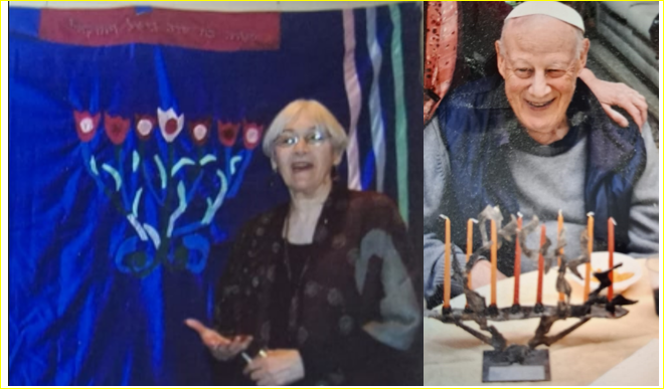
יהיה זכרונם ברוך
May their memory be a blessing
Shabbat shalom
Related Topics
Related Posts