


Mathematics Teaching Professor, Author
B’nai Israel Synagogue: A History of Community in Grand Forks, North Dakota
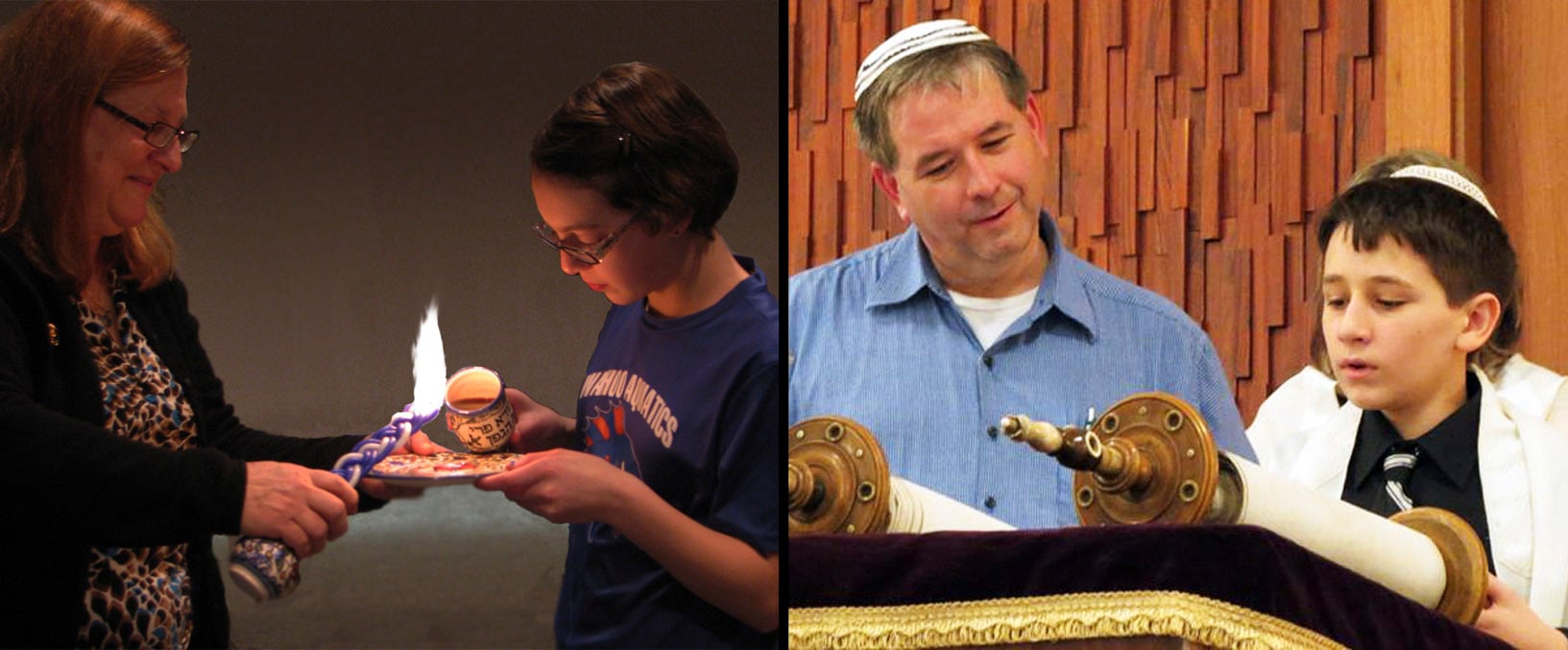
Tradition, B‘nai Israel Synagogue Grand Forks, North Dakota (Source: B‘nai Israel Synagogue Grand Forks, North Dakota)
B‘nai Israel Synagogue in Grand Forks, North Dakota, is a vibrant congregation offering lifelong spiritual growth and learning rooted in modern Jewish values. Its diverse membership draws from Grand Forks, the local Air Force Base, the University of North Dakota, and surrounding areas. Emphasizing inclusiveness, the synagogue warmly welcomes individuals from all Jewish denominations, as well as non-Jewish visitors, to its services. The current synagogue was built in 1937 and stands as a lasting tribute to the long history of Jews in North Dakota and remains a living testament to their extensive history in North Dakota.
I would like to thank B’nai Israel Synagogue Grand Forks, ND, for their support of this article.
Synagogue
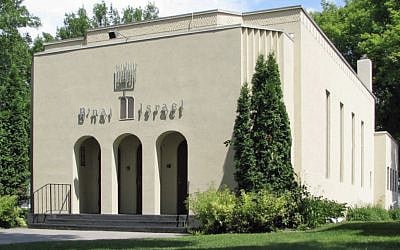
The current B’nai Israel synagogue, built in 1937, replaced North Dakota’s first permanent Jewish house of worship, dedicated in 1892. Designed in the Art Deco style, it features a three-arched entrance, geometric ornamentation, colorful stained-glass windows, and a distinctive zigzag cornice. Inside, the sanctuary includes a traditional bimah, a hanging Eternal Light and the ark that houses the Torah scrolls.
The synagogue and Montefiore Cemetery, the historic Jewish cemetery in Grand Forks, were both added to the National Register of Historic Places in 2011.
Student Rabbi
Most academic years, B’nai Israel has hosted a student rabbi from the Hebrew Union College, Jewish Institute of Religion. Visiting once or twice a month, these rabbinical students lead services and direct congregational activities, gaining vital hands-on experience in spiritual leadership. The congregation’s past students have brought a diverse range of perspectives to the community, hailing from across the country, including New York, Texas, Virginia, Rhode Island and Illinois.
Culture and Religious Events or Social and Religious Life
B’nai Israel offers many volunteer opportunities, including hosting the student rabbi for Shabbat dinner, providing the Oneg following Shabbat services, or assisting with transportation. Shabbat dinners may be held at a member’s home or a local restaurant. The congregation also hosts Shabbat evening services, Torah study, and adult education programs.
Historical Background
Four years after the Civil War ended, in 1869, Ulysses S. Grant was sworn in as the 18th President of the United States, American outlaw Jesse James committed his first bank robbery, the Wyoming Territory passing the world’s first law granting women the right to vote, the Cincinnati Red Stockings became the first professional baseball team and the first U.S. transcontinental railroad was completed.
It was in this year 1869 that that the first documented Jewish settler arrived in North Dakota. Dan Eisenberg arrived and opened to a trading post along the Missouri River south of Bismarck.
In the late 1880s, Jewish families make their way to Grand Forks and the surrounding area. Many of these founding members were Eastern European immigrants who arrived to work on the railroad or had come from failed agricultural colonies. In 1888, the Grand Forks community established the Montefiore Cemetery, which solidified the presence a formal Jewish community in the city of Grand Forks, North Dakota.
By 1891 the United States was transitioning rapidly from a rural agricultural society into a major global industrial and urban power. The frontier was declared ‘closed’ and the country was experiencing mass immigration and bustling cultural changes.
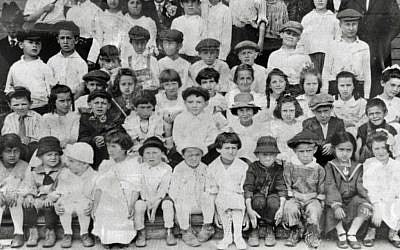
That year, in Grand Forks in 1891, congregation B’nai Israel was officially established by approximately 60 Jewish families who were predominantly orthodox jews from Russia, Romania, Poland and Germany. They assimilated despite, for the most part, speaking different dialects of Yiddish.
The next year, 1892, B’nai Israel was dedicated as the first permanent synagogue congregation in Grand Forks. Their synagogue was a wood frame building and was led by Rabbi Benjamin Papermaster from Kovno, Lithuania.
As far as the state of North Dakota over the next fifty years, from 1880 to 1930 North Dakota had grown into the fourth largest Jewish agricultural settlement in the United States, with over 1,200 Jewish homesteaders and thus North Dakota had one of the largest concentrations of Jewish homesteaders in the United States.
Many Jewish immigrants sought refuge in the Dakota Territory, and they were fleeing European pogroms and religious persecution, and were drawn by the Great Northern Railway’s promotional advertising distributed across Eastern Europe. While some originally intended to continue onward to Montana’s gold mines, they ultimately chose to put down permanent roots in North Dakota instead.
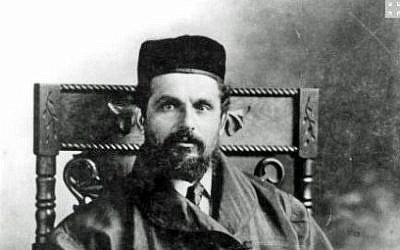
Back in Grand Forks, Rabbi Papermaster cultivated a close-knit Jewish community. Members of the synagogue who had begun as peddlers became successful local jewelers, clothiers, and grocers. Under his leadership, the Jewish community flourished. During the High Holy Days, Jews from across North Dakota traveled to Grand Forks to worship at the synagogue. The 300 seat sanctuary regularly drew standing room only crowds.
Rabbi Papermaster passed away in 1931, and his death marked a turning point for the congregation, the end of an era. As the Great Depression swept across the nation, Grand Forks was not spared its effects. Economic hardship and the migration of Jewish families out of the city contributed to a steady decline in synagogue membership during the 1930s. By the end of the decade, the once-thriving congregation had begun to shrink.
Despite the congregation’s declining membership, this period saw the construction of a new synagogue building in 1937. Designed by local Grand Forks architect Joseph Bell DeRemer, the synagogue was built in the Art Deco style, reflecting one of the most popular architectural movements of the era. The building remains the congregation’s home today.
B’nai Israel Sisterhood
B’nai Israel’s Sisterhood, founded in 1891, is one of the oldest organizations of its kind in North Dakota. For more than a century, it supported the synagogue, promoted religious education, and preserved Jewish heritage through fundraising and community events.
From these modest beginnings, B’nai Israel grew from a congregation of 60 immigrant families from Eastern Europe and Russia into a close knit community whose High Holy Day services drew standing room only crowds from across North Dakota. Today, the synagogue remains a living tribute to those early years preserving a strong sense of community while continuing to welcome and support rabbinical students and ongoing Jewish life.
Contact Information:
P.O. Box 14122, Grand Forks, ND 58208-4122
Phone: 701-775-5124
Email: ndbnaiisrael@gmail.com
Website: bnaiisraelnd.org/