


Mathematics Teaching Professor, Author
B’nai Sholom Congregation: A Century of Jewish Life in the Tri-Cities
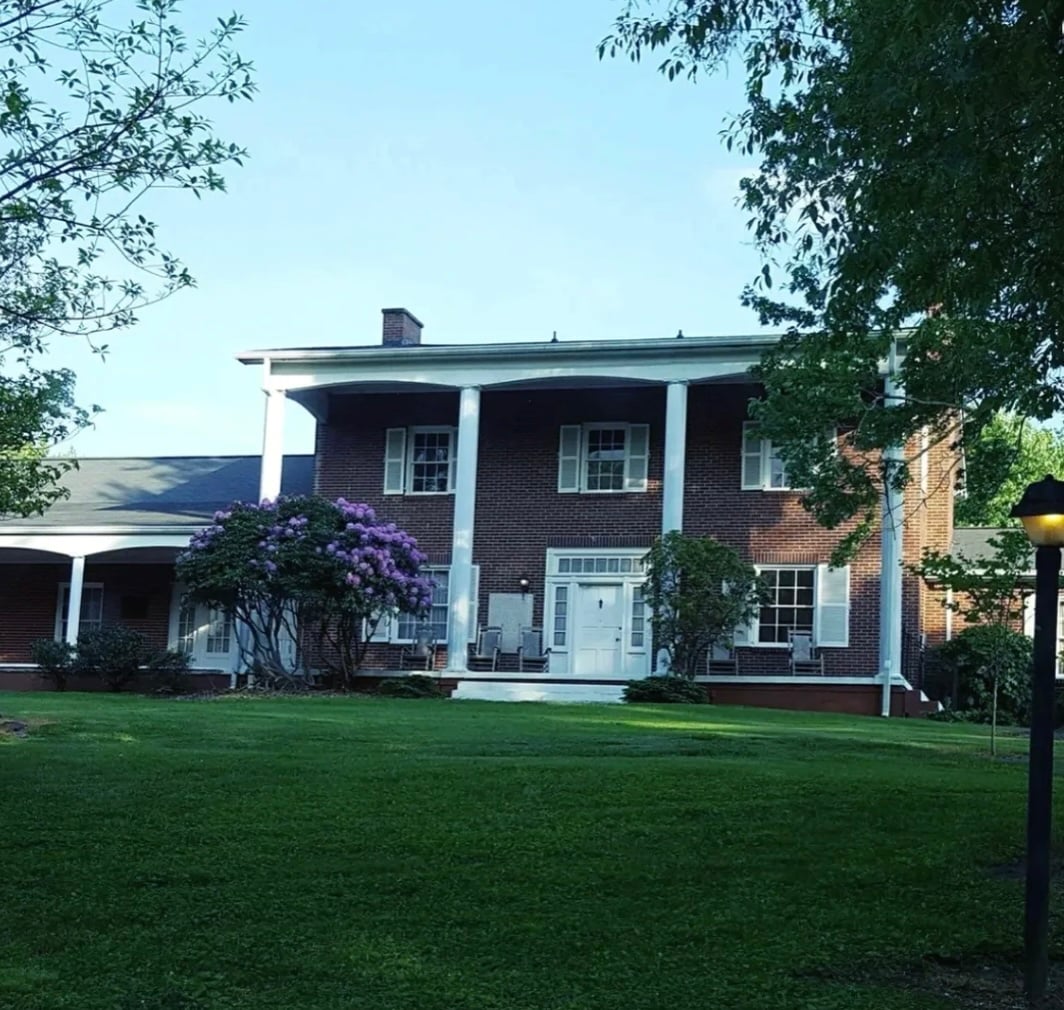
B'Nai Sholom Congregation (Source: B'Nai Sholom Congregation of Bristol TN)
Located between the Smoky Mountains and the Blue Ridge Mountains, B’nai Sholom Congregation has served the Tri-Cities of Kingsport, Johnson City, and Bristol, Tennessee and Virginia, and beyond for more than 100 years. Today, B’nai Sholom is a non-denominational Jewish congregation of approximately 35 individuals and families serving the communities of Northeast Tennessee and Southwest Virginia. Since its founding in 1904, the congregation has provided a place for Jewish worship, education, traditions, and community. Its long history reflects the resilience and dedication of the Jewish families who have helped build and maintain Jewish life in the region.
Religious Events
B’nai Sholom Congregation of Bristol, Tennessee, offers a variety of religious and educational programs for its community. The congregation provides youth and adult education, conversion classes as well as preparation classes for Bar and Bat Mitzvah ceremonies and classes for those interested in conversion to Judaism.
The congregation also holds Erev Shabbat services, providing members with an opportunity to gather together for worship, reflection, and fellowship at the beginning of Shabbat once a month. In addition, B’nai Sholom celebrates the High Holidays and other major Jewish holidays with special services and community gatherings.
Community Outreach
B’nai Sholom Congregation of Bristol, Tennessee, also provides opportunities for members to become involved in the community through its Sisterhood, volunteering, food drives, and other community engagement activities. These programs encourage members to support one another, help those in need, and build strong connections within the congregation and the surrounding community. Through these activities, B’nai Sholom promotes service, fellowship, and active participation in the local community.
Jewish Cemetery
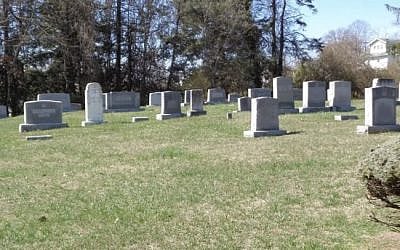
B’nai Sholom Congregation of Bristol, Tennessee, also provides Chevra Kadisha and cemetery services to support members and their families during times of loss. The B’nai Sholom Cemetery is located at the intersection of Bradley and Floyd Streets in Bristol, Virginia. The congregation provides directions to the cemetery for those who need to visit the site. These services reflect the congregation’s commitment to honoring Jewish traditions and supporting the community throughout all stages of life.
Historical Backgrounds
Jewish history in Tennessee dates back to at least 1778, when Jewish traders settled near the Holston River in what is now Hawkins County. In Bristol, Tennessee, Jewish families began settling in the 1880s, creating a community that has continued for more than a century. Nathan and Minnie Stern were among the first recorded Jewish settlers, arriving in 1884, followed by Herman Hecht in 1894.
Many early Jewish immigrants were merchants, peddlers, and business owners who became an important part of the local community. As the Jewish population grew, families began gathering in homes for worship. Simon Gump hosted services in his home, while Herman Hecht later held Reform services at his home. These early settlers helped establish the foundation for organized Jewish life in Bristol and the surrounding Tri-Cities area.
Which brings us to 1904.
In 1904, the United States was rapidly growing into a major global power under President Theodore Roosevelt. The country was experiencing significant economic and industrial growth, domestic reforms, and increasing influence around the world. During this period, the United States was also expanding its territories and developing modern forms of transportation, communication, and mass entertainment. These changes created a period of rapid growth and transformation in American society.
In 1904, Tennessee was a growing Southern state shaped by agriculture, expanding industry, and strong political traditions. Democratic Governor James B. Frazier won re-election over Republican candidate Jesse Littleton. A major issue during the campaign was the “Four Mile Law,” which restricted alcohol sales near rural schools. Tennessee also experienced a major tragedy that year when two Southern Railway passenger trains collided head-on near New Market on September 24, 1904. The accident killed at least 56 people and injured 106, making it one of the deadliest train crashes in U.S. history.
In 1904, Bristol was a booming industrial “twin city” located on the Tennessee-Virginia state line. The arrival of major railroads helped Bristol grow into an important regional center for coal, trade, and manufacturing. The city had a busy downtown with local businesses, theaters, and entertainment. Bristol was also developing a strong musical culture that would later contribute to its reputation as the “Birthplace of Country Music.”
In 1904, Bristol’s small Jewish community began gathering for public worship services. Before this, Jewish families, many of whom were merchants and business owners, often met in one another’s homes to observe their faith and maintain their traditions. As the community grew, these gatherings became an important step toward establishing an organized Jewish congregation in Bristol.
It was in this year, 1904, the Jewish community organized B’nai Sholom (House of Peace) and began to meet in a rented room on State Street. The following year, they purchased land for a cemetery. Bristol became the largest Jewish community in the Tri-Cities, leading Jewish families from nearby towns to join B’nai Sholom. Jews in Johnson City donated the Torah and ark they had been using to the new congregation. B’nai Sholom also hired rabbis to lead services during the High Holidays, while Isaac Levine, a young clothing merchant from England, served as the lay leader during the rest of the year.
Joseph Lesser, sometimes identified as a rabbi, conducted Jewish ceremonies in Bristol in 1909 and 1910, although the exact length of his service is unclear. While some B’nai Sholom members preferred Reform Judaism, the congregation remained Orthodox. Most early members were immigrants from Eastern Europe and worked to maintain traditional Jewish practices, including the dietary laws of kashrut. This could be challenging in East Tennessee because the nearest source of kosher meat was more than 100 miles away in Knoxville. In 1916, the congregation also formed the B’nai Zion Society, reflecting its strong support for Zionism. In 1919, B’nai Sholom hired D. Bressler, a shochet, or kosher butcher, who also led weekly services.
Despite its small size, B’nai Sholom continued to employ rabbis and grow throughout the 1920s. Rabbi Morris Hyman served in 1920, followed by Rabbi S. Frankel in 1921, who established a Hebrew school for the congregation’s boys. Jewish families from Kingsport joined B’nai Sholom during the 1920s, and by 1926 the congregation had enough members to build its first synagogue. Construction was completed in September 1927 at the corner of King and Goode Streets in downtown Bristol. The building had a church-like exterior but maintained traditional Orthodox features inside, including a central lectern, bimah, and ark.
After the synagogue was dedicated, B’nai Sholom faced financial difficulties during the Great Depression. Many Jewish families moved to larger cities for better opportunities, making it difficult for the remaining members to pay the synagogue mortgage. Members, including Ralph Gourse, Tom Green, and Uel Ross, helped raise funds, while the women organized rummage sales, fundraising dinners, and membership drives. Eventually, the congregation paid off its mortgage. By 1937, there were 77 Jews living in Bristol, 55 in Johnson City, and 21 in Kingsport. In 1945, B’nai Sholom had 30 member families.
After World War II, the Jewish community in the Tri-Cities grew as Jewish families from the North moved to the area for new opportunities. By the early 1950s, B’nai Sholom members planned for a larger home and built a new community center in 1958. As new members joined, the congregation included both Reform and Orthodox traditions, leading to disagreements about religious practices. In the 1950s, several rabbis helped guide the congregation as it moved toward Conservative Judaism. In 1959, Rabbi Pierce Annes helped B’nai Sholom affiliate with the United Synagogue, the national organization of Conservative Judaism.
By the late 1950s, B’nai Sholom was thriving, with a new building, a religious school, an active Sisterhood, and a Young Judea chapter. Membership reached 62 households in 1960. However, during the 1960s, the Jewish population began to decline as many young people left the area after college. By the end of the decade, the congregation struggled to gather enough people for Shabbat services. Membership fell to 44 households by 1972, and the religious school had only 16 students. The congregation could no longer afford a full-time rabbi.
B’nai Sholom left the Conservative movement and joined the Reform Union of American Hebrew Congregations (UAHC) so it could hire student rabbis from Hebrew Union College. Although officially part of the Reform Movement, the congregation continued many traditional practices. In 1982, women were allowed to participate more fully in worship, including being counted in the minyan and receiving aliyahs.
By 1984, B’nai Sholom had its first female president. During the 1970s and 1980s, the Tri-Cities Jewish community experienced a resurgence, with doctors, academics, and other professionals moving to the area. B’nai Sholom grew to 70 member families by 1980 and rebuilt after a tornado damaged its building in 1977.
B’nai Sholom Congregation of Bristol, Tennessee, has played an important role in preserving and strengthening Jewish life in the Tri-Cities for more than a century. From its beginnings with Jewish immigrants and merchants to its growth after World War II, the congregation has adapted to the changing needs of its community. Through worship, education, community service, and holiday celebrations, B’nai Sholom continues to honor its history while looking toward the future.
Contact Information:
B’Nai Sholom Congregation, P. O. Box 271, Johnson City, TN 37605-0271
Phone: 423-323-7596
Email: info@bnaisholomtnva.org
Website: https://bnaisholomtnva.org/