Israel-based writer
Boaz Dvir’s Long Road Back to Israel, and the Story Behind ‘To Kill a Nazi’
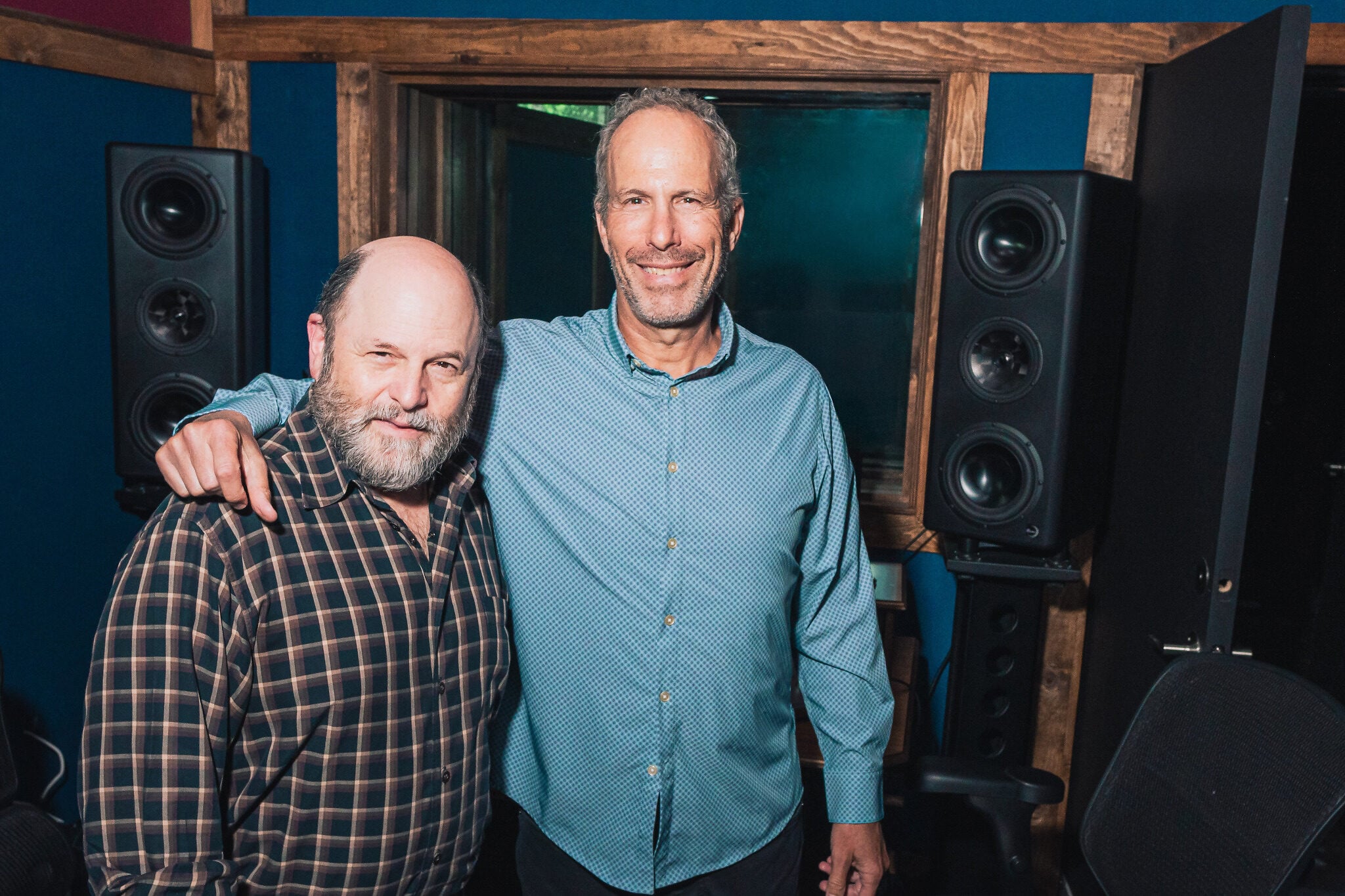
Jason Alexander narrates the film with Boaz Dvir filmmaker (Courtesy To Kill a Nazi)
For the Israeli-born filmmaker and Penn State professor, a new documentary about a French Holocaust survivor, a fugitive German SS Officer Klaus Barbie and the improbable Entebbe rescue is also a meditation on truth, identity and the search for a life of meaning.
Sixteen years have passed since Boaz Dvir had last been in Israel when he arrived this fall for screenings of his newest documentary, To Kill a Nazi. In that time, the Israeli-born filmmaker has built a career in the United States as a journalist, teacher, researcher and documentarian. His films have traveled widely—to festivals, museums and universities across the world—and landed on platforms that include PBS, Netflix, Hulu, Apple TV and The New York Times.
Yet Israel, the country in which he grew up, has remained a striking exception.
“I started making documentaries about 17 or 18 years ago,” Dvir said during a recent visit to Israel. “When I started to screen them, my trips began to be related to the screenings.” He had screened films internationally, from Croatia to Australia, but getting a film shown in Israel had proven unexpectedly difficult. “Israel is a tough nut to crack,” he said.
That makes the current Israeli screenings of To Kill a Nazi more than a routine stop on a festival circuit. The film is bringing Dvir back to the country that formed his earliest memories and to an episode in Israeli history that gripped him as a nine-year-old: the 1976 rescue at Entebbe.
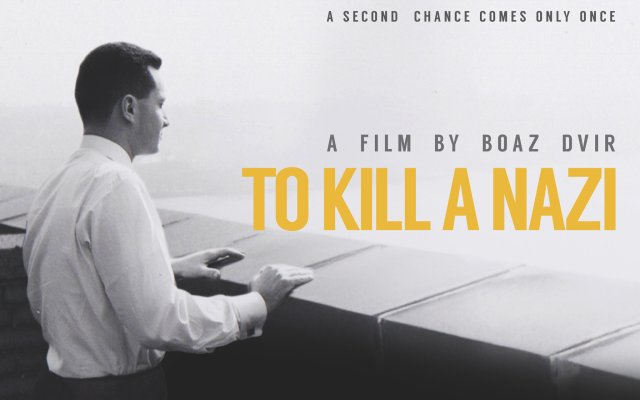
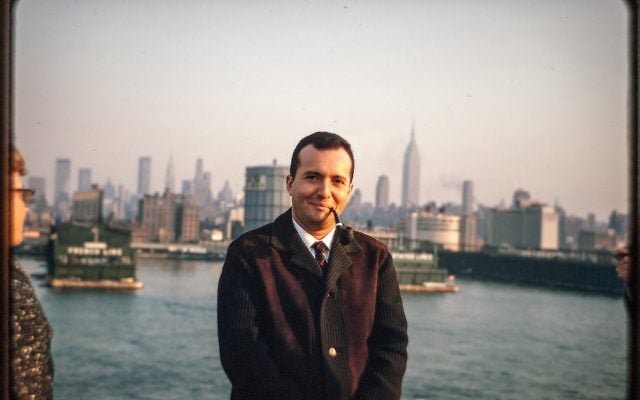
The film, however, is not simply another retelling of Operation Thunderbolt. It follows the extraordinary and largely forgotten life of Michel Cojot, a French Holocaust survivor who set out in the 1970s to find and kill Klaus Barbie, the Nazi official known as the “Butcher of Lyon.” Cojot later found himself aboard the hijacked Air France flight that was flown to Entebbe—and, Dvir argues, became central to the eventual rescue of the hostages.
For Dvir, the story combines the subjects that have defined his work: history, moral complexity, the Holocaust, Israel and the capacity of an ostensibly ordinary person to rise to an extraordinary moment.
“I’ve been attracted to it and it happens with every project,” he said. “Ordinary people, extraordinary circumstances. They have to change to meet those challenges, to rise up. They do, and they change the world, or at least that particular space that they’re in.”
A boyhood in Israel, a life in America
Dvir grew up in Kfar Ganim, then a small village near Petah Tikva that has since been absorbed into the expanding city. He came to the United States when he was 13, but his attachment to Israel never loosened. Even after decades of life in America, he has described recurring dreams of Israel—dreams in which he is visiting and must leave the next day.
“I still dream about Israel every night,” he said in an earlier interview. “It’s always the night before I have to leave and I’m bummed.”
His path back to Israel as a young adult was unconventional. After entering the University of Florida—an outcome he still describes with self-deprecating surprise—he completed a year of study, obtained U.S. citizenship and returned to Israel to serve in the Israel Defense Forces. Before his enlistment date, he spent several months in Safed and freelanced for The Jerusalem Post, filing stories from the Galilee.
He joined the IDF in 1990 and served in its spokesperson’s unit. He had hoped to remain in Israel afterward, but could not find the kind of work that would allow him to stay. He returned to the United States, ultimately spending 15 years as a journalist and editor, including a senior editorial role in the business-publication division of Advance, the privately held media company associated with the Newhouse family.
The work was demanding and prestigious. It also took him far from the reasons he had entered journalism in the first place.
“I wanted to be a reporter. I wanted to be a writer,” Dvir said. Instead, he found himself in suits and ties, traveling constantly, managing budgets, appearing on television and radio, and working 70 or 80 hours a week. “I wasn’t really being a journalist anymore that much.”
An opportunity to return to the University of Florida changed that trajectory. He accepted a teaching position, initially imagining it would last only a few years. Then he fell in love with the classroom—the immediate connection with students, the chance to help them develop and the less corporate rhythm of academic life. When an exceptionally attractive offer drew him back toward journalism, he turned it down.
“I fell in love with teaching,” he said. “I still make sure I teach at least one class because I love it so much.”
Today, Dvir is a tenured professor in Penn State’s College of Communications, where he works in the journalism department. He has taught writing, multimedia and documentary-related courses, and his film work is recognized as research and creative activity that generates new knowledge. He also founded and directs Penn State’s Holocaust, Genocide and Human Rights Education Initiative, which works with teachers and school districts on how to teach difficult subjects through a pedagogical and trauma-informed approach.
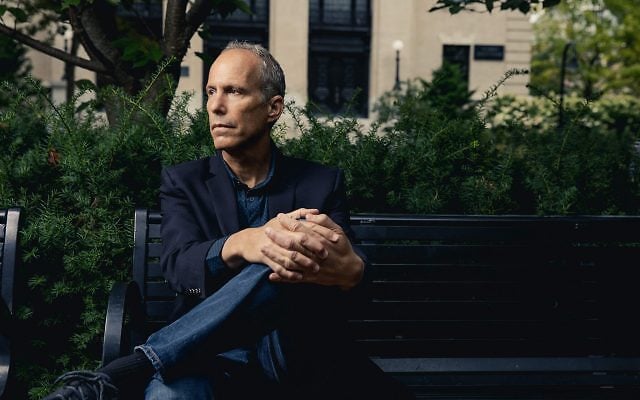
But the decision to make documentaries began with a simpler impulse: to challenge himself.
He had become an enthusiastic viewer at a time when documentaries regularly played in theaters. He also knew he was not naturally comfortable with the filmmaking process. “I’m terrible with software and cameras and technology,” he said. “So I said, ‘Okay, that’s a challenge.’ And that’s how I started to make documentaries.”
The discipline of the story
Dvir’s background in journalism remains visible in the way he talks about filmmaking. He is not interested in treating documentary as a vehicle for a predetermined political message, nor in simplifying people into heroes or villains. His aim is to find a version of truth that is fair, nuanced and grounded in evidence.
“The truth—you have to find the truth,” he said. “It’s elusive, it is difficult, it is nuanced, it’s complex, but you have to find it and you have to deliver it.”
That conviction took shape during work on his first major documentary, Jesse’s Dad. Faced with roughly 120 hours of footage, Dvir realized how easily editing could turn a complicated person into either a saint or a monster. His responsibility, he concluded, was not simple objectivity—an ideal he regards as impossible—but a fair, accurate and deeply researched representation.
That commitment informs his other work. His PBS documentary A Wing and a Prayer examined the American volunteers who helped smuggle planes, weapons and supplies to the fledgling Jewish state in 1948. The film performed strongly on PBS and led to a book, Saving Israel, but it also explored less celebratory material: the initially antagonistic U.S.-Israel relationship and moral conflicts surrounding the war.
Dvir does not avoid stories that disturb familiar narratives. “All these myths are busted,” he said in a 2022 interview. “That’s what I often do, not intentionally, but that’s what often happens.”
From a forgotten Entebbe figure to To Kill a Nazi
The origins of To Kill a Nazi lie in Dvir’s longtime fascination with Entebbe. As a child in Israel, he and his younger brother learned that 260 hostages had been taken to Uganda. Feeling powerless but wanting to show solidarity, the boys grounded themselves indoors until the crisis was resolved. During that week, Dvir read newspapers and listened obsessively to the news. When his father woke them with the words, “Tzahal asa et ze”—the IDF did it—the event became a defining childhood memory.
Years later, Dvir began researching an Entebbe documentary focused on Michel Bacos, the Air France captain widely celebrated for supposedly refusing to abandon Jewish hostages. But as Dvir interviewed Bacos and other participants, the familiar story began to unravel. The crucial French figure, former hostages told him, was not Bacos. It was Michel Cojot.
Cojot had been a child in wartime France. His father was deported, escaped from a train bound for Sobibor, was recaptured and ultimately died at Auschwitz after being subjected to Josef Mengele’s experiments. As an adult, Cojot investigated what had happened to his father and discovered that the deportation documents had been signed by Barbie.
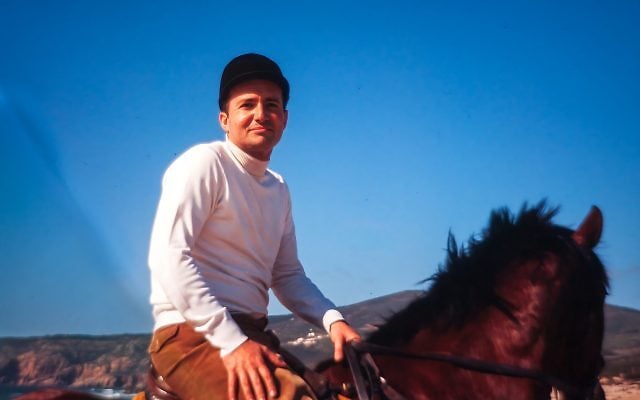
Cojot went to Bolivia, where Barbie was living under protection and advising the country’s military authorities. He devised a plan to assassinate him but stopped short of carrying it out. The decision haunted him.
Then came Entebbe.
Cojot and his 12-year-old son, Olivier, were scheduled to return to Paris on El Al after volunteering in Israel. They delayed their departure and instead boarded Air France Flight 139, which made an unscheduled stop in Athens, where terrorists joined the plane. It was hijacked and flown eventually to Entebbe.
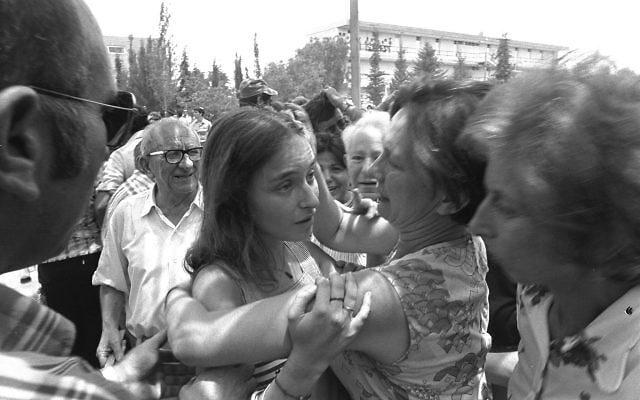
Dvir’s film argues that Cojot played a pivotal role in the successful rescue. He negotiated directly with the hijackers, challenged their moral logic by confronting them with the suffering of Holocaust survivors, and gathered information that proved essential to the planning of the IDF rescue. According to Dvir’s research, Cojot determined that explosives which hostages believed had been planted in the terminal were not real. He also helped make possible the release of many non-Israeli hostages, reducing the number of people Israel would have to rescue in an operation already fraught with danger.
“There is no Operation Thunderbolt without Michel Cojot,” Dvir said. “Or it would not have been as successful.”
Dvir is careful to distinguish verified fact from interpretation. He spent a decade making the film, interviewing Cojot’s family, former hostages, colleagues and others connected to the story, while double- and triple-checking details through archival research and corroborating sources. His research ultimately led him to an understanding of Cojot’s life as a single arc rather than a series of astonishing episodes: a survivor’s son who spent decades trying to understand how to act in the face of evil.
“To Kill a Nazi is ultimately not about killing Barbie,” Dvir said. “It’s Michel figuring it out.”
The title itself reflects a practical and artistic calculation. The project’s early working title was Cojot, but a young intern told Dvir that the name would not have drawn him to click on a streaming title. To Kill a Nazi, by contrast, immediately suggested a story and an ethical question. Dvir wanted the film to reach younger viewers, including people who might not otherwise seek out a Holocaust or Entebbe documentary.
The making of a film
Dvir wears many of the hats that a conventional production divides among a larger team. He is the writer, director, producer, researcher and fundraiser; he often locates archival material himself, works with students and interns, and has composed music for some of his films. He estimates that To Kill a Nazi was made for about $130,000—a modest sum for a film rich in archival footage and international reporting—partly because he does not pay himself and because he carries out so many tasks personally.
Research is the part he relishes most. “I do aim for excellence,” he said. “When it comes to research, I achieve excellence.”
That rigor is matched by a belief in trust. Dvir says that being trustworthy is not merely a professional skill but a habit: if a source speaks off the record, the information stays off the record. He credits that approach with helping him persuade Cojot’s former wife, Marie—whom others warned would never discuss him publicly—to sit for an open on-camera interview.
The film also gained an unexpected collaborator: actor Jason Alexander, who narrates it. Dvir’s manager sent Alexander the film directly. Two days later, Alexander called back: “I’m in.” Dvir recalls the actor as punctual, unassuming and meticulous, offering multiple takes even when he had already delivered a line perfectly.
Returning with a story for Israel
At the recent Israeli screening at the Haifa Film Festival, Dvir saw the culmination of a long and improbable circle: an Israeli child shaped by Entebbe, an American professor and filmmaker, and a story about a French survivor whose hidden role in that operation had never received the recognition Dvir believes it deserved.
The film’s relevance to Israel is not limited to its Entebbe scenes. It is also a study of what it means to inherit trauma, wrestle with identity and make choices when the morally obvious path is also the most dangerous one. Cojot’s life moves from the shadow of the Holocaust to the pursuit of Barbie, from Israel to a hijacked plane, and from unresolved guilt to a form of redemption.
For Dvir, that journey speaks particularly strongly to students searching for purpose. He has watched young viewers respond to Cojot not principally as a historical figure, but as a person trying to find a meaningful way to live.
“Students really are interested in Michel’s search for meaning in his life,” Dvir said. “Because they are also searching for meaning.”
That may be the deepest connective thread in Dvir’s own body of work. Whether he is telling the story of a teacher, a civil-rights figure, American veterans who aided Israel or a French survivor at Entebbe, he is drawn to people who are forced to decide what responsibility looks like—and then act.
To Kill a Nazi screening in Israel, finally giving Dvir’s work a homecoming that has been a long time coming.. The Israeli channel Hot8 will broadcast “To Killa Nazi” on Nov. 1 at 9:15 pm
Upcoming screenings Austin Film Festival
Oct. 31, 2026, 6:15 pm: https://sched.co/2ZZWv
Nov. 4, 2026, 6 pm: https://sched.co/2ZZWy