
Body Positivity: Why Didn’t It Last in Fashion?
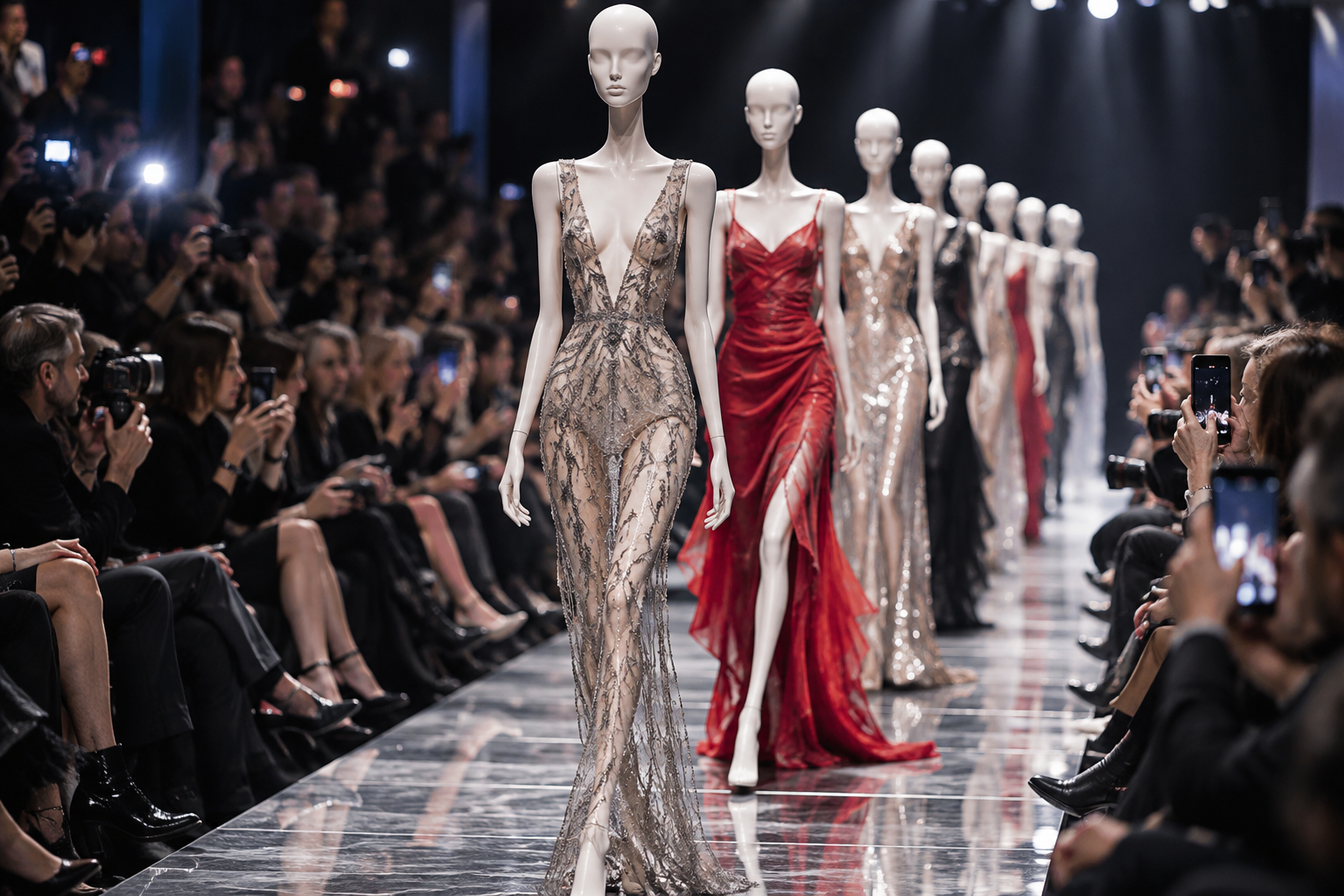
After more than a decade of talk about inclusion and self-acceptance, the runways are once again filled almost exclusively by models wearing the industry’s smallest sample sizes. According to a recent report, 97.5% of the 9,283 looks shown at the September fashion weeks in New York, London, Milan and Paris for the Spring/Summer 2027 collections were worn by straight-size models (US 0–4), 2% by mid-size models and just 0.5% by plus-size models.
The trend matters more than any single season. Two years ago, at the September 2024 shows, mid- and plus-size models together accounted for 5.1% of looks. Today they account for 2.5%, half as many. Just as the industry seemed to be widening the range of bodies worth seeing, it is narrowing it again, and doing so with remarkably little resistance.
One could treat this as just another shift in taste, like heroin chic in the 1990s or size zero in the 2000s. Fashions change, and so do ideals of beauty. But hemlines and colors are design choices meant to change every season. The human body is not a collection. When fashion changes how it treats different bodies, it changes the message it sends women about their own.
Runway images do not stay on the runway. They shape advertising, magazine covers, social media feeds and shop windows. A woman does not need to watch a single show to absorb their message. When nearly all clothes are shown on the smallest bodies, the thin body stops looking like one option among many. It becomes the taken-for-granted backdrop of fashion itself. Israel recognized this power early: in 2012 the Knesset passed a law barring underweight models from advertising.
The problem is not thin models, who have every right to work. It is the exclusivity of thinness: the systemic choice to show almost only one kind of body. When 97.5% of looks fall into a single size category, this can no longer be explained as the personal taste of individual designers. The cumulative result is a visual hierarchy, in which one body is everywhere and others are pushed to the margins.
Body positivity set out to challenge that hierarchy, and for a while it succeeded, widening what many women could imagine as beautiful or elegant. But once brands adopted it, inclusion entered a system built to turn every idea into a seasonal trend. Diversity became a campaign theme and a marker of relevance. Some designers made genuine, lasting changes. The industry as a whole never made diversity a stable norm.
One reason this progress proved so fragile lies in how fashion collections are designed and produced. Collections are often developed on a single fit model, runway samples are usually sewn in one small size, and larger sizes are frequently scaled up from the small pattern. Including models with different body types may require additional samples, fittings and production decisions. As long as such adjustments remain exceptions rather than standard practice, diversity is easier to abandon when priorities shift.
The sociologist Joanne Entwistle, in The Fashioned Body, argues that we never encounter clothes alone, only dressed bodies, perceived and judged within a culture. In fashion, then, the body is part of the product. A runway sells not just a dress but a complete picture of the woman meant to wear it. When that picture narrows to a single kind of body, the narrowing becomes part of what is sold.
That is why it is not enough that larger sizes can still be bought somewhere. Vogue Business editors have noted that most major houses do produce plus-size clothing, yet rarely show it on the runway. The sizes exist as an extension of the range, not as part of the vision. The bodies that wear them are missing from the picture, and with them the message that they belong.
Weight-loss drugs are often blamed for the return of thinness, and they have clearly reshaped the public conversation about weight. They may offer real medical benefits, and their use is no one’s moral failing. But even if they have contributed to shifting beauty ideals, they cannot explain why an industry that promised lasting change could abandon it so easily.
Designers are, of course, free to choose models who suit their vision, and no collection must statistically mirror the population. Not every thin model is a statement against fuller women. But individual freedom does not erase the meaning of the collective result. An industry that sets aesthetic ideals worldwide, and profits from their influence, cannot treat the body image it produces as an accidental by-product.
Nor is diversity at odds with creativity or high fashion. Designers such as Karoline Vitto, Sinéad O’Dwyer and Ester Manas have made size inclusion a consistent part of their work, designing collections for a wider range of bodies rather than treating diversity as a temporary casting decision.
The latest figures reveal how fragile celebrated progress can be. Fashion learned to talk about inclusion before it built inclusion into how it works. It need not give up novelty or experimentation, which are its strengths. But if body diversity is to be more than a passing trend, it must shape how clothes are designed, not merely how they are displayed. Fashion can change. The range of bodies it is willing to dress should not change with it.