
Bondi Beach Massacre: How Radicalization Now Moves Across Continents
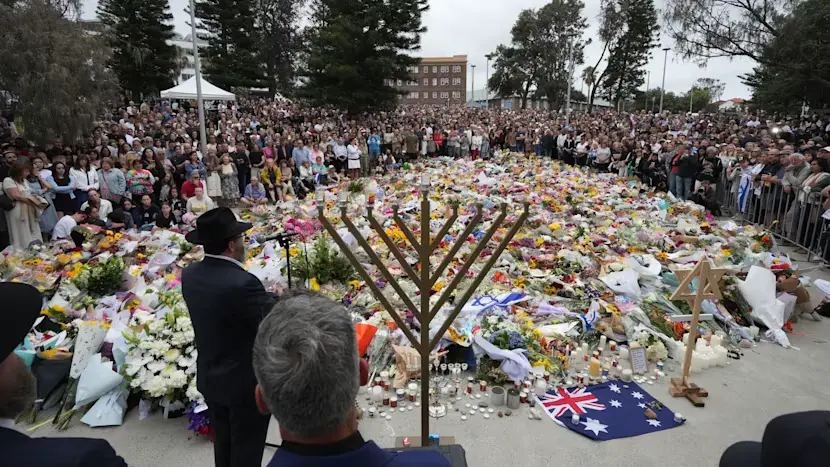
The massacre at Bondi Beach in Sydney has left Australia reeling, but its implications stretch far beyond just one city or one nation. What occurred during a Hanukkah celebration wasn’t merely an isolated act of violence; it starkly highlights how the ideology of the so-called Islamic State (ISIS) continues to spread across borders, long after the group lost its territorial stronghold in the Middle East.
Australian authorities have made it abundantly clear that the attack was motivated by extremist beliefs. The discovery of homemade Islamic State flags and improvised explosive devices in the attackers’ vehicle suggests a deep ideological commitment rather than a spur-of-the-moment act. Prime Minister Anthony Albanese’s confirmation of these findings underscores a harsh reality that many policymakers have been reluctant to acknowledge: ISIS didn’t simply vanish with the collapse of its caliphate in 2019; it adapted and persisted. And its message travels.
The backgrounds of the attackers reveal just how complicated modern radicalization can be. One of them had spent decades in Australia after moving there for work, keeping only minimal contact with family back home. Relatives in India have mentioned that they had no idea he held any extremist views, which really shows how radicalization often happens in isolation these days. It’s often driven by online propaganda and global networks, rather than by obvious connections or public actions.
Now, investigators are looking into the attackers’ recent trips to the southern Philippines, a place known for its history of Islamist militancy. Although local officials claim that groups like Abu Sayyaf have been significantly weakened, experts caution that remote and poorly governed areas can still offer ideological support, training, or inspiration. Even if these trips don’t lead to direct planning for attacks, they can still strengthen a commitment to violent ideologies that have already been shaped online.
The Bondi Beach massacre is particularly chilling due to its blatant antisemitic nature. The attack targeted a public Hanukkah celebration organized by the Jewish community, resulting in 15 fatalities and dozens of injuries. Victims ranged in age from a 10-year-old girl to an 87-year-old man, highlighting the indiscriminate nature of the violence. This incident, Australia’s deadliest mass shooting in nearly three decades since the 1996 Port Arthur massacre, was quickly classified as a terrorist attack inspired by the Islamic State (ISIS) ideology.
This attack is part of a larger, troubling global trend. From the U.S. to the Middle East, we’re witnessing a rise in ISIS-inspired violence that increasingly targets symbolic locations, aiming to stir up communal strife and spread hatred across different societies. Despite ongoing military efforts, experts highlight that the group’s power now stems more from its narrative than from any physical territory.
While ISIS did not claim responsibility—possibly to avoid scrutiny or inflate perceptions of its reach—it explicitly praised the attack in its weekly publication al-Naba. The group called it a “source of pride,” labeled the attackers “lions,” and warned of further strikes against “Jews and Christians.” This aligns with ISIS’s history of endorsing inspired attacks post-caliphate, as seen in incidents like the 2024 Moscow concert hall assault or earlier European attacks.
Analysts have long warned that ISIS thrives on being dispersed. Its propaganda is rampant on social media, reaching individuals who may never step foot in a conflict zone but still come to believe that violence is not just acceptable, but necessary. This creates a form of radicalization that is much harder to spot and even more difficult to counter.
In the midst of the horror, some voices of moral clarity have risen above the chaos. The American Muslim & Multifaith Women’s Empowerment Council (AMMWEC) released a powerful statement denouncing the attack and expressing solidarity with Australia’s Jewish community. They referred to the massacre as a “horrifying reminder of the increasing wave of antisemitism worldwide,” urging global leaders and communities to confront hatred with steadfast determination.
Anila Ali, the CEO of AMMWEC, shared her feelings of both sorrow and resolve. “This attack, like any act of violence, is an assault on our shared humanity,” she stated. “We grieve alongside the Jewish community in Australia and are dedicated to striving for a future where hatred has no place. Our thoughts and prayers are with the victims and their families. In times like these, we must come together and raise our voices against all forms of hate.”
Soraya Deen, a dedicated Muslim women’s speaker and peace advocate, highlighted an important message about the collective duty of faith communities.
“The targeting of Jewish worshippers is a glaring reminder of the rising global threat of antisemitism,” she remarked. “As Muslims, we have a responsibility to oppose all types of violence, especially when it’s fueled by hatred towards a community simply for their beliefs. We stand in solidarity with the Jewish community and commit ourselves to the ongoing struggle for a world where peace, justice, and coexistence are the norms.”
The Bondi Beach massacre should be viewed not only as a national tragedy but also as a global warning. As long as extremist ideologies are allowed to spread unchecked—whether online, across borders, or in fragile areas—the threat will continue. Addressing this issue requires more than just security operations. It necessitates ongoing international cooperation, serious efforts to counter online radicalization, and a collective stand against antisemitism and any form of hate.
The ongoing threat of ISIS-inspired violence around the world starkly contrasts with instances where coordinated intelligence efforts have led to real progress. A recent report from the United Nations shines a light on Pakistan’s arrest of Sultan Aziz Azam, the spokesperson for Daesh-Khorasan and the mastermind behind its influential media branch, Al-Azaim.
This move is seen as a significant setback for the group’s global propaganda and recruitment efforts. Detained in May 2025, Azam was in charge of platforms like Voice of Khorasan, which the UN claims were effectively shut down after his capture.
The report emphasizes that Pakistan’s actions have weakened the organization far beyond its immediate region, disrupting planned attacks, decreasing the number of fighters, and neutralizing key commanders and ideological leaders. The dismantling of Daesh-K’s media leadership highlights an important lesson from Bondi Beach: breaking down extremist narratives and propaganda networks is just as crucial as confronting armed militants on the ground if we want to truly halt the spread of violent ideologies.
ISIS’s message is still making its rounds. The challenge for both governments and societies is figuring out if a more powerful and unified message of humanity, solidarity, and coexistence can outpace it.