
Bondi Beach, the Blame Game, and the Death of Human Empathy
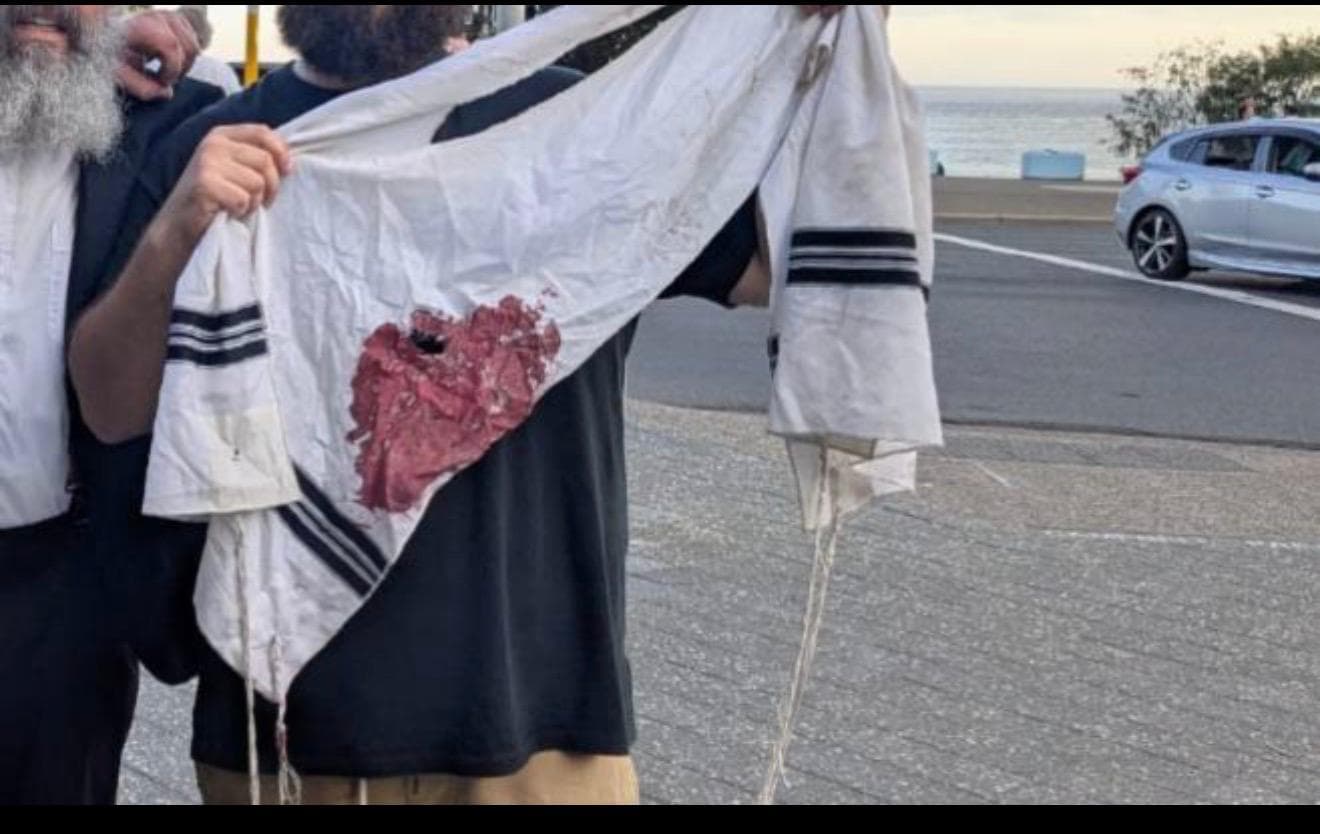
The callous justifications for the antisemitic massacre on Bondi Beach and the swiftness with which they were generated was shocking and disturbing, albeit not remotely surprising. This abject insensitivity, even cruelty, has become par for the course whenever violence against Jews, Muslims, and/or Arabs in the “West”¹ has become the subject of public discourse ever since the incursion of Palestinian militants into southern Israel, killing 1,200 people (mostly civilians) on October 7, 2023, and Israel’s subsequent response to the attack, which has resulted in the decimation of Gaza and the killing of at least 67,000 people (likely more, mostly civilians).
To be clear, an uptick in violence against Jews and apologism for it, as well as an uptick violence against Arabs and Muslims and apologism for it, parallel to violence in Israel/Palestine is a trend that has predated October 7,² though the intensity of this phenomenon has increased dramatically over the past two years. One of my own core memories of October 7 is of attending a student government meeting at UCLA (where I was a fourth year undergraduate student at the time) just days after the attack. A student government officer posted a statement lauding the attacks on their official student government Instagram, and an Israeli student gave a public comment to express her disgust towards the statement, sharing that her best friend’s brother had been murdered, and many of her family members were still missing. In response, the student government official shouted at the girl, indignant, defending the political praxis that “decolonization is not a metaphor” without uttering a word of sympathy for their constituent and peer—or even acknowledging what she had shared. This display of apathy was twofold: apathy towards the national trauma that Israelis had endured as a collective, which resulted in apathy towards the personal trauma that this girl had endured as an individual; any sense of compassion for either the collective or, worse, the individual standing right in front of them, was completely inaccessible, caged by their political dogmatism.
Something fundamental had been shattered here. It’s hard to pinpoint the exact moment the Rubicon was crossed on a broader societal level, but this paradigm shift meant that it would be impossible to claim bewilderment after logging onto Twitter that morning upon reading the news of the Bondi Beach shooting. Press TV correspondent Hadi Hoteit posted a picture of the suspect, writing “Is he a terrorist for killing people who continue to support a state that has carried out a continuous genocide against the indigenous peoples of Palestine and Lebanon for 77 years?”. Hoteit later quote-tweeted his original tweet with a picture of Rabbi Eli Schlanger, the Chabad rabbi who was murdered on Bondi Beach, holding an Israeli rocket, asking if he was the real terrorist. NYC Councilwoman Vickie Paladino wrote in a (now deleted) tweet that the attacks were the inexorable result of allowing Muslims to immigrate to Western nations. And Benjamin Netanyahu, the Prime Minister of Israel, blamed the attacks on Australia’s Prime Minister, Anthony Albanese, claiming that Albanese’s act of recognizing Palestinian statehood would inevitably lead to this violence against Australian Jews. Each of these came mere hours after the news broke; none of them contained a modicum of condolences or recognition that a tragedy had just occurred.
I am citing examples here from prominent politicians and journalists, but there are countless similar tweets from nonpublic figures, each so blindsided by their Fealty To The Israeli or Palestinian Cause, reading off of a script of preprogrammed talking points, that they are no longer willing or able to respond to events in real time. Each rests on the bigoted assumption that Jews or Muslims/Arabs are collectively responsible for the actions of the Israeli government/the IDF or the Palestinian Authority/Hamas, and that it is justifiable to seek retribution for this responsibility in blood. Some, like Hoteit and Paladino, will point to individual Jews or Muslims/Arabs and claim that the evidence they have cited of their evildoings are proof of the impurity, untrustworthiness, and collective guilt, of their people. This kind of “logic” is exactly the sort of pretext which manufactures consent for these massacres to occur.
This week, it was Bondi Beach, by far the bloodiest, but this piece could have easily been written about Heaton Park, or Plainfield, or Burlington, or Boulder, or Washington D.C., or Stanford University. Even though the Bondi Beach murders’ motivations seem to be rooted in the Islamism of the Islamic State (as was the case with the stabbing in Heaton Park), which is distinct from, even opposed to, Palestinian nationalism of both the secular and Hamas/Islamist factions, the campism of Israel/Palestine discourse is such that both apologists for the massacre and those who express outrage at the massacre in an act of political theatre have elided these distinctions. There seems to be no bottom to the acrimonious circle of blame, whether it is tacit implications that the victims (individually or as a collective) “deserved it” because they supported some form of unsavory politics vis a vis Israel/Palestine, or the smug “I told you so” of a self-serving politicized framing.³
I do not mean to suggest that the general instinct to look towards our politicians and their policies in the wake of these atrocities and blame them is entirely inappropriate. On the contrary, we should be asking, demanding, of ourselves and our leaders: How did we get here? What can we do to get out of this quagmire? And we deserve and desperately need answers to these questions. But these questions (and answers) must come from a place of shared humanity, not hostility.
As an American, I’ve become grimly accustomed to the routine of mass shootings, a routine that’s somehow become so normalized that it seems we’ve forgotten it doesn’t have to be this way. Violence does not have to be an inherent feature of our political life; existing as a Jew in public life does not have to pose an inherent security risk. Still, there’s a tiny spark of hope that I have that, despite all the odds, this time will be the last. This time will be the wake up call, where we finally say we must put a stop to this, and we follow through, working to find a solution to end antisemitism, Islamophobia, and other racisms. In order to do so, before we can even get that far, we must first accomplish a simpler task: to resuscitate our mutual compassion as human beings.
—
Endnotes:
1 Here, I am using Samuel Huntington’s conception of Western nations and referring to Aotearoa New Zealand, Australia, Austria, Belgium, Canada, Denmark, Finland, France, Germany, Ireland, Italy, the Netherlands, Norway, Portugal, Spain, Sweden, Switzerland, the United Kingdom, and the United States as a general collective.
2 For a discussion of antisemitism in the wake of the second intifada, for example, see: Kenneth Saul Stern, Antisemitism Today: How It Is the Same, How It Is Different, and How to Fight It (American Jewish Committee, 2006), https://kennethsstern.com/wp-content/uploads/2018/09/ANTISEMITISMTODAY.pdf, 2-3; on Islamophobia, see, for example: Rabab Abdulhadi, “The Islamophobia and Israel Lobby Industries: Overlapping Interconnection and Anti-Racist Policy Recommendations,” in Countering the Islamophobia Industry: Toward More Effective Strategies (Carter Center, May 2018), https://www.cartercenter.org/wp-content/uploads/2018/06/cr-countering-the-islamophobia-industry.pdf, 18.
3 For more on this acrimonious circle when it comes to defining antisemitism, see: Brian Klug, “What Do We Mean When We Say ‘Antisemitism’? Echoes of shattering glass,” Proceedings of an International conference “Antisemitism in Europe Today: the Phenomena, the Conflicts,” November 8-9, 2013, https://www.jmberlin.de/sites/default/files/media/documents/antisemitism-in-europe-today_2-klug.pdf, 10.