
Book review: Discovering the Jewish Holidays – Eight Talmudic Readings
Some years ago, I traveled to Argentina on a business trip. Argentinian beef enjoys an international reputation, earned through a combination of cattle breeding, natural grazing, and favorable climate. I had heard the praise, but it was not until I found a kosher steakhouse in Buenos Aires and took my first bite that I understood what made the experience distinctive. The quality was immediately apparent; this was something on another level.
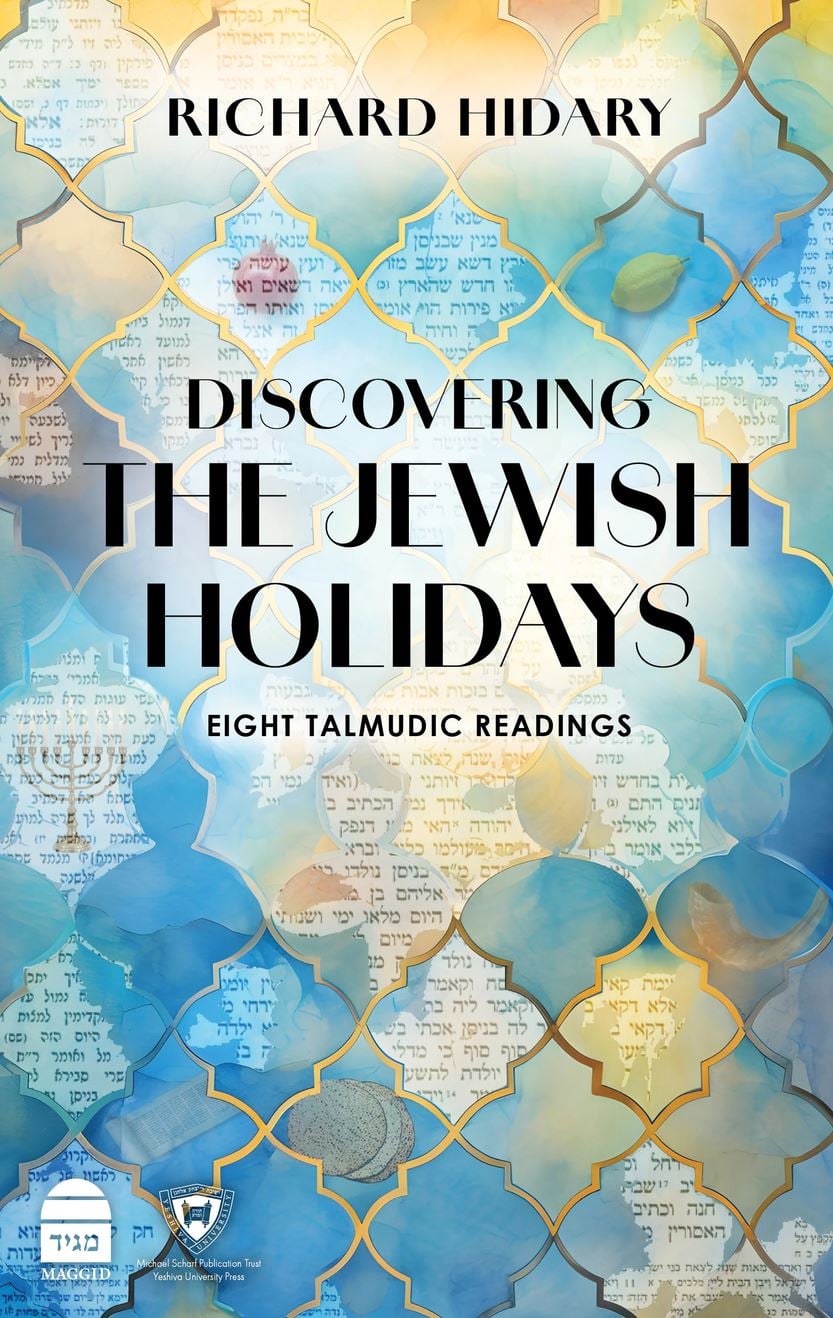
I had a similar reaction while reading Discovering the Jewish Holidays: Eight Talmudic Readings (Maggid Books) by Rabbi Dr. Richard Hidary, Associate Professor of Judaic Studies at Yeshiva University. This is not simply another collection of holiday insights. Hidary offers an intellectually stimulating approach to familiar Talmudic material, revealing layers of meaning that a more cursory reading might leave undiscovered.
The book explores eight classic Talmudic passages connected to the Jewish festivals. Its strength lies in the method Hidary brings to their study. He works through each text carefully, compares parallel sources, looks at alternative manuscripts, and pays close attention to literary structure and historical context.
His approach is organized around three complementary dimensions: text, context, and subtext. Rather than treating a passage as a collection of isolated statements or technical discussions, Hidary asks how its wording, structure, and placement contribute to a larger message. Looking at it this way is like seeing the text in a new 20/20 light, from its previous 20/50 viewpoint.
Here, Hidary offers a model for a Talmud edition that incorporates accurate text, clear translation, commentary, and analysis that together present the best understanding of the sugya’s original contextual meaning and its legal and philosophical significance.
That method (note, though, that this textual approach is not something Hidary created; rather, he uses it extremely well here) can change how a reader understands even a seemingly narrow halachic discussion. A debate about the dimensions of a sukkah, for example, becomes an opportunity to consider the human encounter with the Divine. The humor associated with Purim carries a sharper message about the Jewish experience of exile. And the laws governing Chanukah lights point to how the holiness of the Beit Hamikdash can be brought into the Jewish home.
These readings demonstrate that the Talmud’s legal discussions and its broader spiritual concerns are not separate worlds. Meaning can emerge from the details of the halachic conversation itself. This is not trivial, as the Talmud is often viewed (by those outside its brilliance) as a mishmash of Aramaic text.
One of the book’s important contributions is its demonstration that close textual analysis need not diminish the religious experience of learning. On the contrary, careful attention to language, sources, and structure can deepen it. Hidary brings together the disciplined analysis of academic scholarship and the religious sensitivity of traditional Torah study. The result is neither a dry academic exercise nor a collection of inspirational observations detached from the text. It invites readers to take the text seriously and to discover how much it has to say.
The Bomberg Talmud was the first complete printed edition of the Babylonian Talmud. Published in Venice between 1520 and 1523 by the Christian printer Daniel Bomberg, it was produced under the editorial supervision of Rabbi Jacob ben Hayyim ibn Adonijah.
Hidary’s examination of variant texts supports an especially important observation: the Bomberg edition’s enduring influence has had an unintended consequence. Its widespread adoption established the textual foundation for virtually every subsequent printed edition, from the Vilna Shas to the ArtScroll Schottenstein edition, as well as digital platforms such as Sefaria.
Consequently, today’s students have limited access to the versions of the Talmud that may have been studied by the Geonim in Babylonia or by Maimonides in Egypt. In other words, the very standardization that made the Talmud more accessible to generations of learners also made it harder to recover the textual versions encountered by earlier generations of Torah scholars.
One of the central tensions in approaching the Talmud today is how traditional students should engage with academic Talmud scholarship. On the one hand, academic research offers a wealth of historical, literary, and textual insights that can significantly deepen one’s understanding of a Talmudic passage. Dismissing these contributions outright would mean forfeiting valuable tools for serious study.
On the other hand, academic scholarship can sometimes become an exercise in deconstructing centuries of traditional Talmudic learning rather than enriching it. Its methodologies can lead readers down a seemingly endless series of rabbit holes, often producing competing and contradictory theories without necessarily yielding greater clarity or understanding.
The challenge, therefore, is not whether to engage with academic scholarship, but how to do so discerningly: to draw on its insights without letting its assumptions and methodologies displace the accumulated wisdom of generations of Torah scholarship. Kudos to Hidary for doing that exceptionally well.
Perhaps the best answer to how to approach and use academic Talmud study, which Hidary seems to follow, comes from the late Rav Aharon Lichtenstein, who astutely observed that while scholarly expertise “probably deserves more attention than the Torah world currently assigns it. It hardly deserves center court”.
The book will be especially rewarding for readers comfortable learning Gemara and interested in following an argument closely. It asks for attention and patience; its insights are earned through reading, comparing, and thinking.
Readers looking for brief, ready-made holiday thoughts may find it more demanding than a conventional seasonal volume. But those willing to engage with its approach will find material that can enrich their understanding of the Talmud and their experience of the festivals.
Just as my first taste of Argentinian beef gave substance to a reputation I had previously only heard about, Hidary’s book offers readers a fresh appreciation for the Talmud’s depth and artistry. Discovering the Jewish Holidays is a stimulating and rewarding work, one that encourages us to look again at familiar passages and recognize the profound ideas waiting beneath the surface.