
Book review – Two Sisters, One Soul: The Secret of Rachel and Leah
It is said that when giving public lectures on aggadah, Rabbi Joseph Soloveitchik would work especially hard. He felt that if an attendee misunderstood his Talmudic lectures, the effects would not be particularly devastating. However, given the nature of aggadic texts, an attendee who misunderstood the lecture might leave with heretical ideas or believe that the rabbis of the Talmud were buffoons.
Aggadic texts contain profound ideas but are prone to misinterpretation. Often called rabbinic tales, they are far from simple anecdotes; instead, they explore metaphysical concepts hidden in the text. Misunderstanding them could lead to believing in God’s corporeality, polytheism, or other heretical concepts. Thus, Rabbi Soloveitchik aimed to ensure they were understood with clarity.
Although Bereshit is not strictly aggadic, its narratives present similar risks: their complexity is frequently mistaken for simplicity. Non-Jewish audiences often refer to them as Bible Stories, but these accounts are far from mere tales. They should be approached with an awareness of their depth and a commitment to uncovering the significant lessons and complexities they contain. This underscores the text’s central argument—the importance of informed and nuanced interpretation.
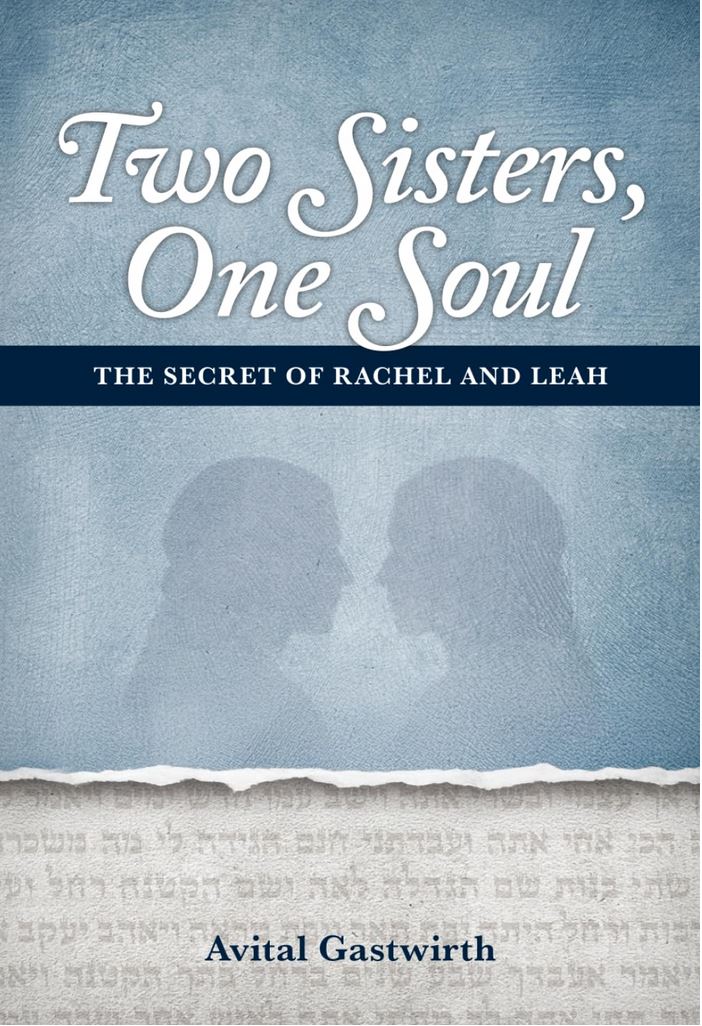
When my friend Ron Moritz sent me his daughter’s book, I expected something interesting as he is very bright. By the end of chapter 1 of Avital Gastwirth’s Two Sisters, One Soul: The Secret of Rachel and Leah, I was amazed by its insights and brilliance.
Gastwirth is an Israeli-based Yoetzet Halacha and teacher at Ulpanat Orly High School in Bet Shemesh. In this fascinating and engaging book, she delves into the story of Rachel and Leah and reveals the depth of the underlying narrative.
For those who want to understand the limitations of generative artificial intelligence, consider the following overview from Google Gemini: Rachel and Leah were sisters and biblical matriarchs who both married their cousin, Jacob, which led to intense jealousy, rivalry, and a complex family dynamic. Jacob loved the younger sister, Rachel, but was tricked by their father, Laban, into marrying the older sister, Leah, first. Leah, described as having weak eyes, bore many children, while Rachel, who was beloved and beautiful, struggled with infertility.
This distinction becomes clear when comparing surface-level interpretations to Gastwirth’s work. For example, where Gemini responds factually and externally, Gastwirth reveals the depth and inner meaning rooted in tradition. This contrast encapsulates the central argument: deep, tradition-based reading is required for true understanding of foundational texts.
The title of the book is based on what Rav Shlomo Elyashiv wrote in Sha’arei Leshem, where he reveals that Rachel and Leah share, at the root, one soul, which was split at the time of the sin of the Tree of Knowledge.
The Torah is filled with pairs that often juxtapose conflicting or opposing traits. There are two opposing traits, whatever they may be, that often come together to form a more harmonious whole.
Throughout the book, Gastwirth offers countless examples of these pairs and brilliantly reconciles them, showing that they form a single, harmonious whole.
One example is when she notes that the first time we meet Rachel is outside, during the day, when Yakov sees her at the well. Rachel’s beauty is external, for all to see. When she dies, she is buried on the open road. According to tradition, Rachel represents alma d’isgalya – the revealed world.
Leah, on the other hand, is introduced at night, in darkness, and under the cover of a wedding veil. Her very identity is masked. Leah is buried in a cave in Ma’arat HaMachpela. She represents what is known as alma d’iskasya – the world of the hidden.
Gastwirth writes that the sin of Adam and Chavah created separation, and that Rachel and Leah mended that separation by working together, turning their jealousy into strength, complementing each other’s differences, and laying the foundation for the nation of Israel.
The book closes with a fascinating chapter on Dovid Ha’melech, as he is the person for whom a final rectification and redemption must take place. Here too, the author draws many parallels between the lives of Dovid Ha’melech and his family and those of Rachel and Leah.
The stories of the patriarchs and matriarchs in general, and Rachel and Leah specifically, should not be seen as mere entertainment. They serve as profound guides for living and require careful, thoughtful interpretation to extract their intended lessons. This perspective reflects the book’s approach that genuine understanding comes only through rigorous, meaningful analysis of these complex lives and choices.
The book quotes extensively from Maharal, Vilna Goan, and other deep thinkers and is incredibly intellectually stimulating.
E=mc2 is Einstein’s mass-energy equivalence formula, showing that energy (E) and mass (m) are interchangeable, representing the same substance in different forms. Under that relatively simple formula is the complex world of physics.
The foundation story of Rachel and Leah is like an equation. Beneath that story is a deep world of complexity and harmony. It’s incredibly difficult to reconcile and coordinate these complex narratives, but Gastwirth does an amazing job here, offering a guiding vision that resonates long after the story concludes.