
Book review: Wine Journey – An Israeli Adventure
When it comes to information security software and hardware companies, a remarkable statistic is that Israel has more security companies than the UK, Canada, India, Germany, and France combined. Consider that Israel’s population of roughly 10 million people pales in comparison to the approximately 1.5 billion inhabitants of those five countries.
It’s unlikely that Israel will take a similar lead in the global wine industry. France is the clear leader, with approximately $14 billion in annual wine exports. Israel exported nearly $60 million of wine in 2023, ranking it as the 30th largest exporter of wine among 188 countries.
Notwithstanding, the Israeli wine industry has made significant progress since Edmond James de Rothschild started the Carmel Winery in 1882, the first modern winery in Israel. It’s now the largest winery in Israel, controlling about half the wine market.
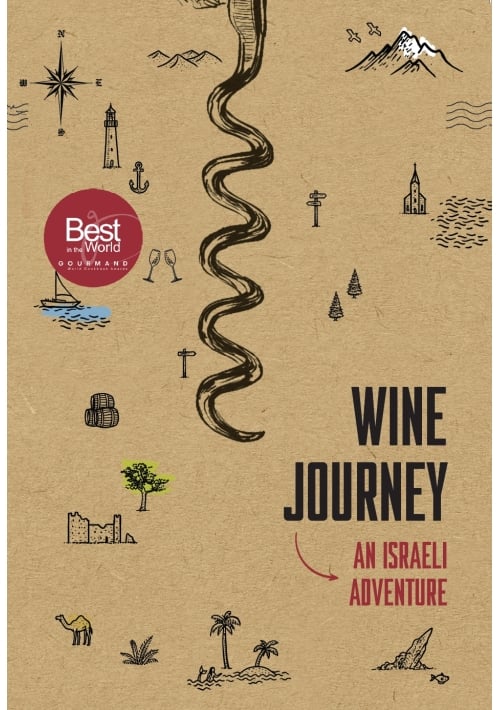
It’s easy to lose sight of how far Israel has come when reading “Wine Journey – An Israeli Adventure” (Gefen Publishers). Authors and wine experts Itamar Gur, David Silverman, Guy Haran, and Roni Saslove have written an interesting and most informative guide to the wineries of Israel.
How far has the Israeli wine industry come? A very long way. From being a single winery producing only a few wines, which would likely not have received very high wine ratings. Dr. Jamie Goode is a British author, and his website and blog “The Wine Anorak” is a highly respected wine resource. In his article “The Wines of Israel: A Study in 44 Wines,” he notes that winegrowing in Israel is an ancient practice, and may well be one of the oldest wine cultures in the world.
However, there was a loss of continuity, as wine disappeared from around 700 CE due to Islamic culture and didn’t return until the mid-19th century. Of the Israeli wines, Goode writes “I really liked a lot of these wines”.
For those, like Goode, who like Israeli wines, the authors have compiled a directory of almost 200 Israeli wineries. The list includes both tiny boutique wineries and those producing over a million bottles of wine annually.
The book begins with an overview of the Israeli wine industry, including its various types of wine and statistics on wine production.
For the kosher consumer, about half of the wineries produce kosher wine. And for those needing wheelchair access, 145 of the wineries are wheelchair accessible.
One does not have to be a wine lover to appreciate the inner workings of a winery. Many of the wineries offer tours that explain the winemaking process. Many of them have on-site restaurants and tasting rooms.
Genesis 28:14 states, “You shall spread out to the west and the east, to the north and the south”. While referring to the descendants of our biblical father Abraham, it’s an apt description of the wineries of Israel.
The numerous wineries of the coastal plain in the west, the central mountains in the east, the Golan in the north, and the Negev in the south show just how far Israeli wines have come in the last century.
The sheer number of wineries gives an experience everyone can enjoy. Some of the more interesting wineries listed include the Shiran Winery in the Judean Hills. Run by Eli Shiran, whose father was a chazan, the names of the wines correspond to his musical heritage. Guests are welcome to visit and can speak directly with him about his wine philosophy, history of the winery, and more.
For those who enjoy a hands-on experience, the Tushia winery is an educational farm situated in the heart of the desert in Be’er Milka, among the sand dunes just a few miles from the Egyptian border. The main crops on the farm are vines and olives, from which they produce wine, must, and olive oil. In addition, they cultivate pomegranates, dates, apples, guavas, and a diverse range of other fruit trees. All of this is done without the use of chemical sprays or fertilizers.
Like so many of the wineries, there are Biblical connections. Located in Moshav Be’er Milka, it is named after Milka, the sister-in-law of Avraham and grandmother of Rivkah.
The Carmel Winery in Zichron Yaacov is the winery where it all started. They have one of the largest visitor centers among all wineries in Israel, offering tours and workshops. They also offer wine tastings in their Wine & Culture Center, where wine guides with extensive experience in the field can provide personalized wine selections.
On our visit to Israel last year, we stopped at the Kitron Winery in the Galil. Their unique approach to winemaking utilizes a gravity-flow system built on three levels. This enables the wine to naturally descend through each stage of production, rather than being pumped. They consider this a key differentiator in their ability to produce more elegant wines.
For these and all wineries, it’s imperative to check the respective websites and make reservations in advance. The book also details which of the wineries produce kosher wines. For the kosher consumer, it is also essential to verify that the food being served is under supervision and that the kashrut certificates are still valid.
If one visited each of the wineries listed here weekly, it would take about 4 years. And by then, there will likely be even more wineries created – a testament to what the land of Israel has to offer.
You don’t have to be a wine lover (but it helps) to appreciate the excellent vintage in Wine Journey – An Israeli Adventure. This is a fantastic book about the remarkable Israeli wine industry, which is flourishing before our very eyes. L’chaim!