

Booyakasha at Wimbledon: The Quietly Remarkable Jewish Family
On Sunday, as the Wimbledon men’s singles final unfolded under the watchful gaze of Prince William, Nicole Kidman, and a battalion of strawberry scented respectability, a figure in a gold chain, yellow tinted sunglasses, and a tracksuit emblazoned “Official Ganja Dealer” took his seat on Centre Court.
Ali G was back. And judging by the footage now circulating globally, so too was the gleeful pandemonium that Sacha Baron Cohen has spent nearly three decades perfecting.
The stunt was vintage Baron Cohen. Within minutes he was offering what appeared to be herbal remedies to fellow spectators, informing security that tennis as “a crap version of ping pong.” Police were summoned. Instagram exploded. The All England Club’s carefully curated decorum buckled in real time.
It was also, almost certainly, not spontaneous. Reports had already surfaced that Baron Cohen had secretly wrapped production on a new Ali G film, the first since 2002’s Ali G Indahouse. The Wimbledon stunt, part guerrilla marketing, part performance art, follows the playbook he refined through Borat and its 2020 sequel, in which the boundary between fiction and lived reality is erased so completely that even the participants are unsure which world they inhabit.
Yet for all the noise, very few commentators paused to consider the deeper story embedded in this moment. Behind the gold shoes and the motifs lies a family whose contribution to Jewish intellectual life, and to the understanding of the human mind itself, is as serious as Ali G is absurd.
Sacha Baron Cohen was born in Hammersmith to a Jewish family whose roots span London, Wales, Belarus, and Mandatory Palestine. His mother was born in what would become Israel in 1939 to German Jewish parents who had fled Nazism three years earlier. Baron Cohen speaks fluent Hebrew, a language he grew up with at home and deepened during a gap year on Kibbutz Rosh HaNikra with Habonim Dror. At Cambridge he wrote his thesis on Jewish activists in the American civil rights movement, and played Tevye in the university’s Fiddler on the Roof.
None of this is incidental to his art. The comedian who has spent a career adopting personas (Borat, Brüno, Admiral General Aladeen, Colonel Erran Morad) to expose prejudice, stupidity, and moral cowardice draws on a tradition of the outsider who sees more clearly than those inside the room. It is a tradition that runs deep in Jewish humour, from the Purimspiel to Lenny Bruce, from the Borscht Belt to the Habonim bus trips where the young Baron Cohen first reduced his peers to tears of laughter.
But here is what most people do not know, and what makes the Baron Cohen story genuinely extraordinary.
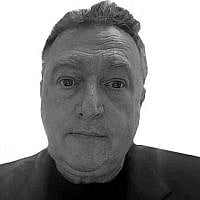
Sacha’s cousin is Sir Simon Baron-Cohen, Director of the Autism Research Centre at the University of Cambridge, knighted in 2021 and widely regarded as one of the most influential psychologists alive. For four decades he has transformed our understanding of autistic cognition. His pioneering work on theory of mind, the capacity to attribute mental states to others and to grasp that those states may differ from one’s own, provided the foundational framework through which autism is now understood worldwide. His empathising systemising theory and his insistence that neurodiversity represents difference rather than deficit have reshaped clinical practice and public attitudes across continents.
Australian readers should pay particular attention here. Roughly thirty five per cent of all NDIS participants have autism as their primary disability, making it the scheme’s single largest diagnostic category. The rate among Australian children aged five to fourteen now stands at 4.3 per cent, roughly double the comparable United Kingdom figure. Research published this year found the NDIS itself has driven a thirty two per cent increase in autism diagnoses, in part because clinicians have lowered diagnostic thresholds to help families access funding. The Thriving Kids reform, due to begin rolling out in October 2026, is designed to shift children with lower support needs away from individual NDIS packages and into community based services, removing the formal diagnosis as the sole gateway to support. These are among the most consequential disability policy decisions in Australian history. And the intellectual architecture underpinning all of them, the understanding of what autism is, how it manifests, and why it should be understood as difference rather than pathology, was substantially built by one man: Sir Simon Baron-Cohen.
He too was born into the same Jewish family in London. He too grew up shaped by the same heritage of intellectual restlessness and moral seriousness. In this family, the accidental and the intentional exist in a creative tension that produces remarkable outcomes.
I have a personal connection to this story, albeit a modest one. Some years ago, on a short haul flight overseas, I found myself seated directly in front of a quiet, absorbed gentleman who barely moved for hours, turning pages of what I could see were densely annotated journal articles, occasionally underlining a passage with the careful deliberation of someone who weighs every word. It was only later that I realised I had been sitting behind Sir Simon Baron-Cohen. No tracksuit. No gold chain. No attempt to sell anyone anything. Just a scholar at work at thirty thousand feet, the diametric opposite of his cousin’s public persona, yet powered by a recognisably similar restlessness, a refusal to leave the world unexamined.
That is the point, really. When Ali G sat on Centre Court last Sunday, offering imaginary products to the cream of British society, he was doing what the Baron Cohen family has always done: refusing to accept the world’s surfaces at face value. Sacha does it through comedy that makes you laugh until it makes you uncomfortable. Simon does it through science that reveals the hidden architecture of human cognition. Both are profoundly Jewish enterprises, rooted in a tradition that insists the obvious explanation is rarely the whole story, that the marginal perspective is often the most illuminating, and that asking better questions matters more than arriving at comfortable answers.
The new Ali G film, when it arrives, will doubtless generate the usual cycle of outrage, adulation, litigation threats, and cultural debate. This is as it should be. Baron Cohen’s comedy has always been a provocation that demands a response.
But spare a thought, too, for the other side of this remarkable family. Somewhere in Cambridge, while Ali G was causing havoc at Wimbledon, Sir Simon Baron-Cohen was almost certainly at his desk, reading another paper, designing another study, working to understand a condition that now shapes the lives of hundreds of thousands of Australian families and the future of the nation’s largest social insurance scheme.
One cousin makes us laugh at what we pretend to be. The other helps us understand what we actually are. Whether either task is the harder one, I will leave to the reader.
Booyakasha.