
Brazil could become a stage for military tension between the U.S. and Russia
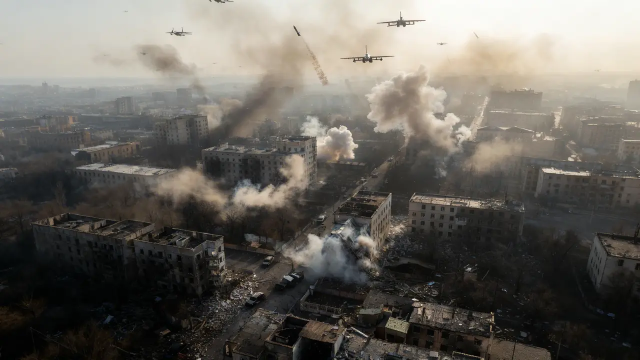
It is worrying to observe how much of Brazilian journalism has treated international conflicts in a superficial way. The clash between the United States and countries such as Venezuela and Cuba is often reduced to a dispute over oil. Although energy interests are undeniable, this is only the most visible face of a much more complex struggle: a war of influence between major nuclear powers.
Behind the scenes, the United States has positioned itself against the presence of China, Iran, and Russia in Latin America. China, the main financier of the Russo-Chinese expansion in the region, plays a strategic role similar to that of Russia in Ukraine when opposing NATO’s expansion. Likewise, Washington does not accept the possibility of Russian military bases in countries such as Venezuela, Cuba, or even Brazil.
This international scenario intertwines with Brazil’s internal political tensions. Ideological polarization may define the country’s alignment: sectors of the Christian right tend to draw closer to the United States and Israel, while the left leans toward Russia, China, Iran, and Palestine. Such division opens the door for Brazil to become a stage for geopolitical disputes of unprecedented proportions.
Opposition to the Marxist agenda in Brazil has largely been driven by Christian sectors, especially among evangelicals.
The risk is not merely diplomatic.
If a confrontation between the U.S. and Russia were to materialize on Brazilian soil, the consequences would be devastating: economic collapse, worsened by endemic corruption that permeates public and private institutions, including religious ones.
The way traditional media frames the situation as a mere electoral dispute contributes to keeping the population in a dangerous comfort zone.
On the global stage, Christian Europe has lost prominence, while Islam has consolidated itself as a significant religious and economic force, influencing political agendas.
In this context, it remains to be seen whether Brazil, the United States, and Israel will find points of strategic convergence. For now, such alignment still seems distant.