


Brazilian journalist says Hamas threatened him for reporting on Gaza Christians
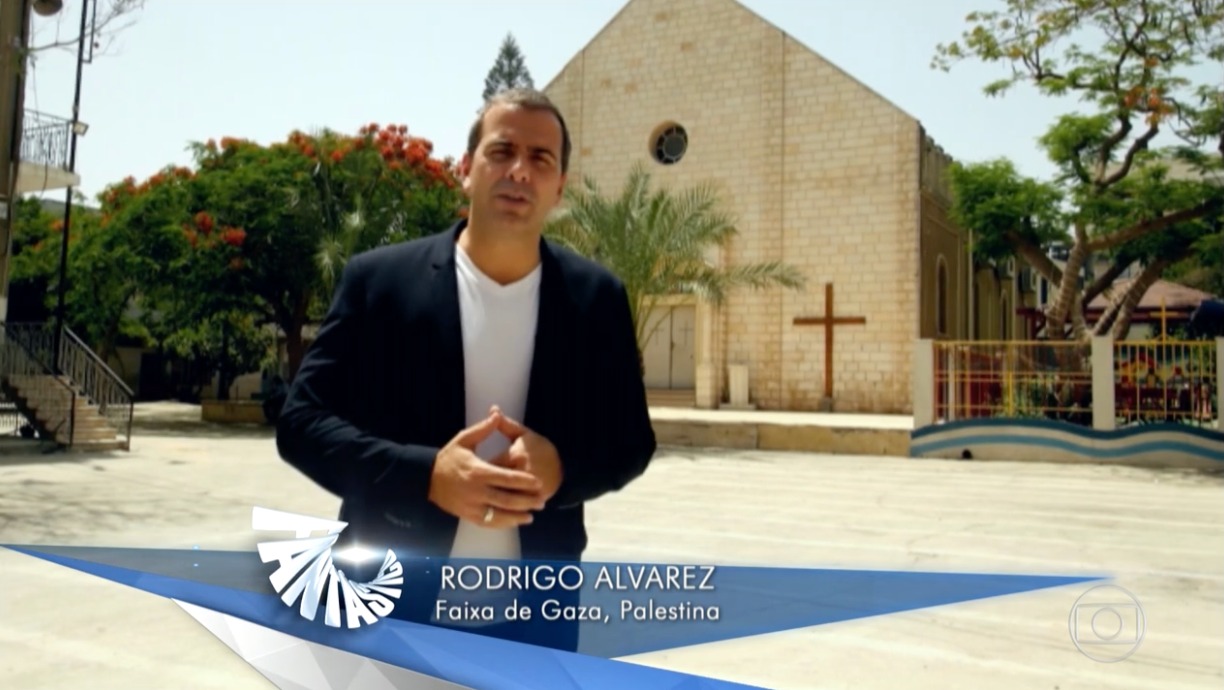
This week, during an interview on Sem Censura, a program broadcast by TV Brasil, Brazil’s state-owned television network, journalist Rodrigo Alvarez revealed that he had received death threats from Hamas and was ultimately forced to leave his position as an international correspondent in Jerusalem in 2016.
The reason? Alvarez, who had been covering the Middle East since 2013 for TV Globo, Brazil’s largest television network, traveled to the Gaza Strip to produce a special report on the persecution of Christians in the Palestinian enclave.
At the time, Alvarez was accompanied by Father Fábio de Melo, one of Brazil’s most prominent Catholic priests, with millions of followers on social media. Together, they visited Father Mário da Silva, a Brazilian priest serving at the Holy Family Church, the only Catholic church in the Gaza Strip.
This is the same church that was accidentally struck by the Israel Defense Forces (IDF) in July 2025, during the current war against Hamas, prompting an Israeli apology. It is also the community that Pope Francis called almost every day until his death during the war that followed the October 7, 2023 massacre.
In the report, broadcast in June 2016 on Fantástico, one of Brazilian television’s most-watched weekly programs, Alvarez stood on the roof of the church and explained that the site had been attacked several times by members of Palestinian Islamist terrorist groups. He also reported that the church walls had been vandalized with threats of revenge.
Alvarez and the two priests also met Palestinian Christians native to Gaza, who described experiencing discrimination and persecution simply because they were Christians.
One woman interviewed for the report said that her son had been forced to flee Gaza because of religious intolerance after being pressured to convert to Islam. Father Mário, who was serving the local Catholic community at the time, said he was unable to speak publicly about his faith and feared that Christianity could eventually disappear from Gaza as a result of religious persecution. He also warned that there were many radicals in the territory whose ideas resembled those of the Islamic State (ISIS).
That same year, the Palestinian Territories ranked 24th on Open Doors’ annual World Watch List of the 50 places where Christians faced the most severe persecution.
According to Alvarez, after the report aired, he began receiving death threats from members of Hamas. Allies of the Palestinian terrorist organization in Brazil were reportedly furious about the story, and his continued presence in the Middle East became untenable. He eventually had to leave his position and return to Brazil. Father Mário also left Gaza and was unable to continue his work there.
The fact that Alvarez is speaking publicly about this only now, nearly ten years later, is particularly significant.
Even then, there were already warnings about the declining Christian presence in the Palestinian territories. Yet, contrary to what many seek to suggest today, the problem could not simply be attributed to the Israeli-Palestinian conflict or attacks by radical Jewish settlers. Palestinian Christians were also facing intimidation and persecution from Islamist extremists, including Hamas.
There is a bitter irony here. Many of those who today claim to be deeply concerned about the disappearance of Christianity from the Holy Land — including some Palestinian Christian leaders who regularly address Western audiences — rarely acknowledge this reality. Instead, Israel is frequently presented as the primary, or even sole, culprit behind the displacement of Palestinian Christians, a narrative that can, even indirectly, fuel new manifestations of Christian antisemitism.
Now, in light of the Brazilian journalist’s testimony — and it is worth noting that Alvarez himself has been highly critical of Israel in recent years — perhaps we can better understand why so many Palestinian Christians may be afraid to blame Hamas publicly for their suffering. Their fear is understandable.
What is far less understandable is the behavior of those outside Gaza who claim to care about Palestinian Christians when they are attacked by Jewish extremists, yet remain silent when persecution comes from Islamist terrorist organizations such as Hamas.
This episode is another reminder that protecting Christians in the Holy Land requires confronting all forms of religious extremism. That includes condemning radical Jewish violence whenever it occurs. But it also means confronting Hamas’s Islamist terrorism — and rejecting the instrumentalization of Christian suffering and religious freedom as a vehicle for anti-Zionist antisemitism.