


Britain says its sanctions will spare trade with Israel. Will they?
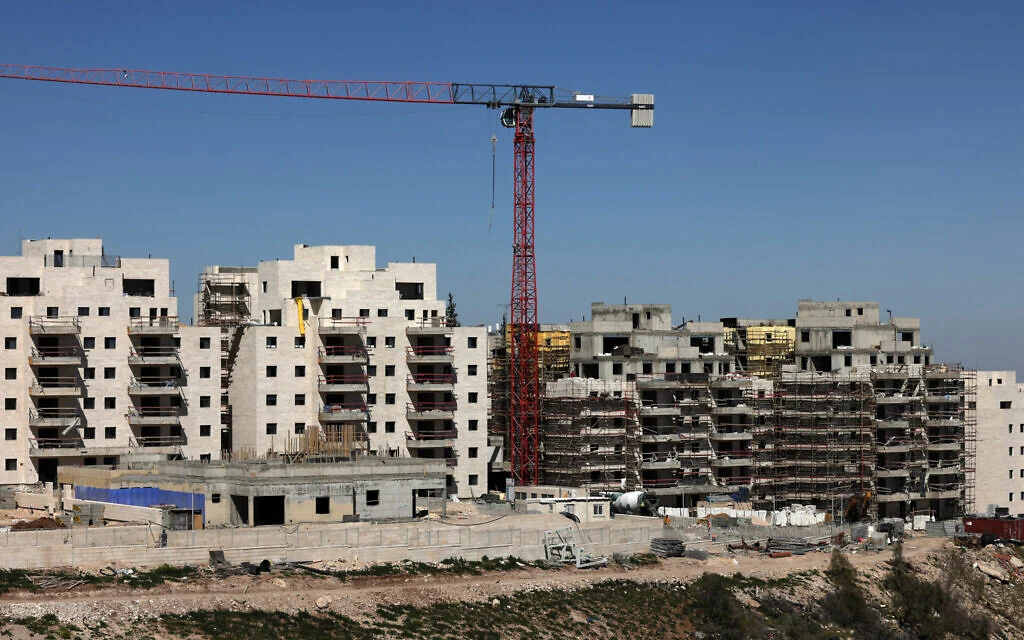
On Tuesday, Britain sanctioned eight Israeli construction companies operating in Judea and Samaria. Yet the most consequential question lies far beyond those eight firms. If Britain extends its sanctions to the banks, insurers and utility companies that serve them, the consequences could reach across Israel’s entire economy. What began as a measure supposedly limited to settlement activity could threaten the very financial ties London has promised to protect.
In September, Foreign Secretary Ed Miliband promised to take action against companies and individuals providing construction, financing and other services for settlement expansion. But he was careful to add that “the Sanctions regime will target illegal settlements and settlement expansion, not Israel…. We will continue to support important and valued trade with green line Israel.”
Miliband’s distinction will be difficult to maintain in practice. Banks and insurers that serve construction companies active in Judea and Samaria operate on both sides of the Green Line. Could the sanctions extend to nationally-active water and power utilities, medical organizations and supermarket chains?
The division between Israel within the Green Line and Judea and Samaria is a cartographical concept that doesn’t apply in business. The economy does not stop at the Green Line. Trying to separate the two is like attempting to unscramble eggs. Where will ministers draw the line between financing a particular settlement project and providing ordinary banking services to a company that builds there?
The House of Lords raised much the same question on November 4. Peers approved the regulations after voting 94–90 for an amendment that called for clearer criteria and safeguards for lawful trade with Israel within the Green Line. The government said designations would be made case by case and would have to meet the legal tests in the regulations. The minister promised written answers to questions he had left unresolved during the debate.
A UK company that breaches the asset-freeze rules can be prosecuted and fined. Its directors can face prison sentences if they consented to or connived in the offense, or if it resulted from their neglect.
The greater danger is that Britain could also sanction Israeli utilities, insurers or banks if it has reasonable grounds to suspect that their services facilitate settlement activity that it considers a serious violation of international humanitarian law.
If the UK government extended the sanctions to major Israeli banks, British financial institutions could face restrictions on dealing with them, and banks elsewhere might also pull back. That could disrupt payments for Israeli businesses with no ties to settlement construction. These muddle-headed sanctions thus pose a real threat to Israel.
Britain’s broader policy on settlement trade draws in part on a nonbinding 2024 advisory opinion of the International Court of Justice. The court concluded that Israel’s continued presence as an occupying power in Judea and Samaria was unlawful, a contentious finding on a complex question. The UK imposed these sanctions under its own 2026 regulations, citing the firms’ alleged involvement in settlement construction or expansion.
Britain’s sanctions strategy risks harming UK interests and further straining relations with Israel. It is hard to see how this strategy moves the parties closer to the UK’s stated goal of a two-state solution.