


Bullied Kid, WBA Champ, Orthodox Rabbi: The Story of Israeli Boxer Yuri Foreman
There is a classic moment in Airplane – a movie filled with classic moments – when a passenger requests “light reading,” and the flight attendant, played by Julie Hagerty, offers a leaflet entitled, “Jewish Sports Legends.” In reality, Jewish athletes are far from comedy fodder. Jewish men and women have distinguished themselves in virtually every competitive sport and international competition, including the Olympics.
A sport in which Jews have a particularly long connection is boxing, with a legacy dating back over a century. It is a legacy that includes legendary pugilists Benny Leonard and Barney Ross, ranked not just among the best Jewish boxers of all time, but among the very best boxers ever to step into the ring.
Today, Jewish athletes, including Israelis, remain active participants in the sweet science. Especially notable among Israeli boxers is super welterweight Yuri Foreman, who, in 2009, became the first, and, to date, only Israeli to win a World Boxing Association (WBA) championship belt.

Although it has been several years since he last fought, Yuri – who is also an Orthodox rabbi – continues to receive accolades for his stellar boxing career. Look no further than the first half of this year, when Yuri was chosen for not one, but two Hall of Fame honors. On April 19, he was inducted into the New York State Boxing Hall of Fame. Additionally, Yuri was named to the 2026 class of the International Jewish Sports Hall of Fame, located in Netanya. The induction ceremony will take place later this year.
The Path to a Championship Begins
Yuri’s path to WBA champion, international honors and rabbinic ordination, was a winding, three-country odyssey that began in Gomel, Belarus, where he was a bullied seven-year-old.
He was taking swimming, and older, bigger kids would pummel Yuri and other boys after class. Following a harsh beating, his mother signed him up for boxing classes with a coach who had been her former classmate. It proved to be life-changing.
“She promised it would be great,” says Yuri. His mother reminded him of his enthusiasm for Rocky III, one of the first movies he ever saw. “It was exciting and spectacular, and that was when I decided I wanted to be a boxer.”
On the first day of boxing class, “I was taken with the sounds of heavy bags being hit. It was very powerful – pow, boom! I was in awe.” He boxed three times a week, two hours per class. “There was only one trainer for 30 kids. We worked in pairs, fighting mini-bouts. One kid was the aggressor, while the other was on the defensive, then we switched.”
His first fight came when he was still a tyke, a three-round bout that Yuri lost. “I was crying in the locker room,” he shares, but his coach consoled him, telling young Yuri, “Mark my words, if you continue working as hard as you are, you’re going to be a world champion.” The words proved prophetic. After winning the WBA super welterweight title, Yuri received a congratulatory call from his old instructor, who told him, “I told you so.”
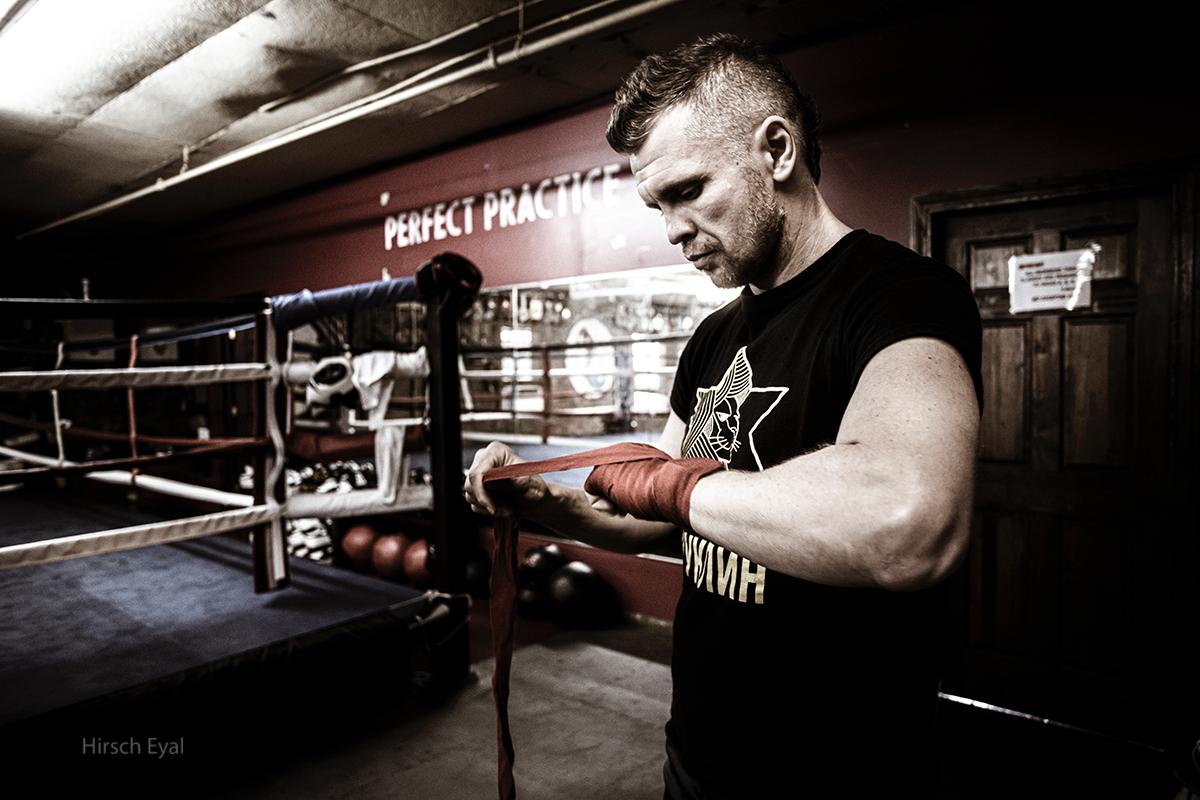
Immigration to Israel
In 1991, Yuri’s father was arrested for selling black market goods, and “they beat the crap out of him.” It was time to leave Belarus, and, after it turned out America wasn’t an option, the family moved to Israel. They settled in Haifa, sharing a two-bedroom apartment with another family.
“It was hard,” he recalls. “I was bullied right away in school. From first day of school to the last, I always had to defend myself. I encountered racism, and felt like a second-class citizen.”
These experiences did not, however, alter his affection for the Jewish state. “I love Israel,” he affirms. Yuri underscored his feelings for Israel and Judaism by wearing a Magen David on his boxing trunks throughout his professional career.
Two years after arriving in Israel, Yuri resumed boxing. There was no gym where he lived, so he rode a bus 12.5 miles to Carmiel, in northern Israel, where he boxed in a largely Arab gym.
“Everyone stopped punching when I walked in,” he remembers. Despite being the only Jew, he was undeterred. Yuri cites the famous line from Rocky III: “You have to have the eye of the tiger. You need this hunger. They put me in a sparring match with an Arab kid. I didn’t back down, and that’s when they accepted me.”
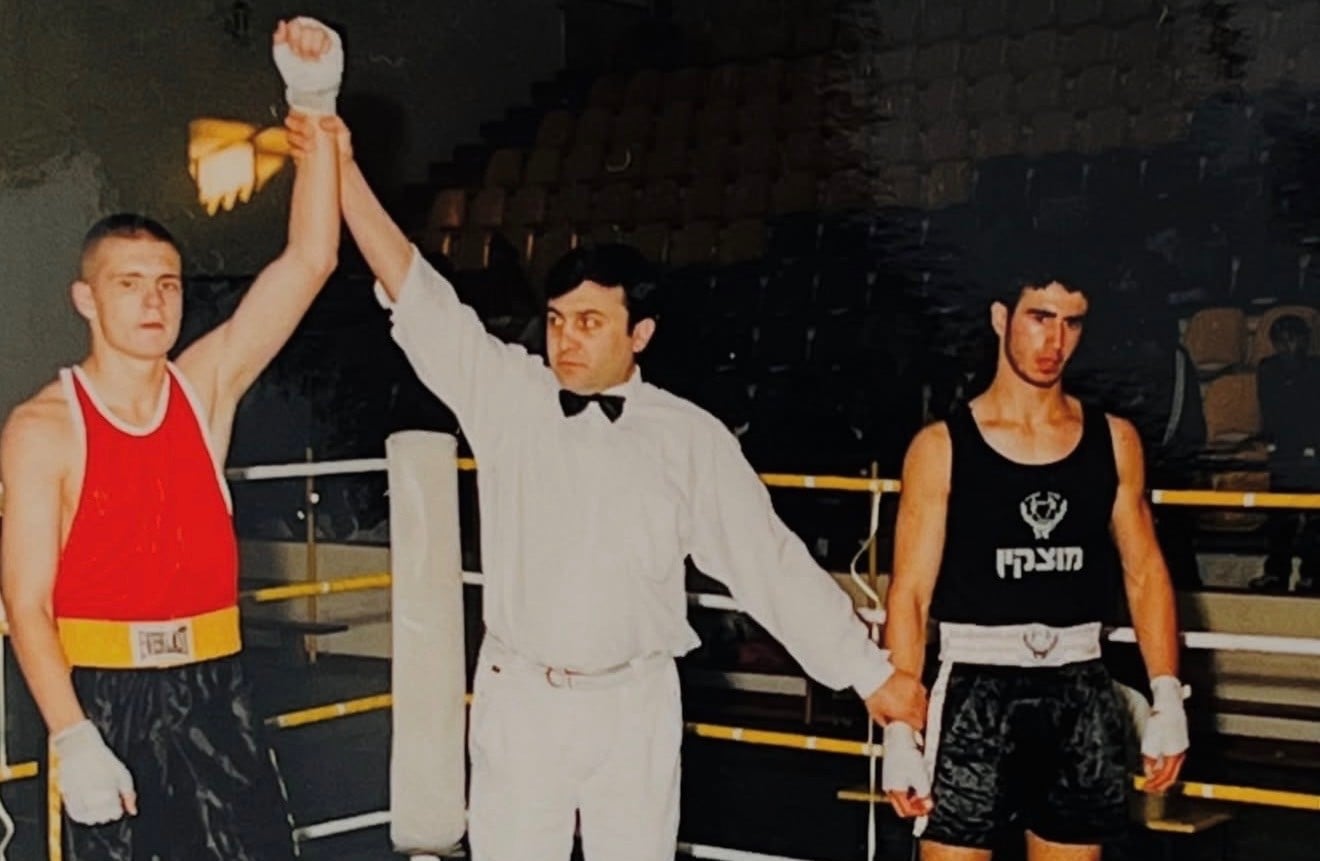
Yuri won three national championships in Israel, but could not advance to the next level. “I wanted to turn professional, but there was no professional boxing in Israel, and I always pictured myself as a world champion.”
“I was Screaming ‘Am Yisrael Chai!’”
At age 18, Yuri left Israel for Brooklyn, where he began training in the famed Gleason’s Gym, under the tutelage of a former Israeli coach who preceded Yuri to the U.S. After compiling an amazing 75-5 amateur record, and winning the 2001 New York Golden Gloves tournament as a super welterweight, Yuri, now 22, realized his dream of turning professional.
When he entered the ring for his first professional bout, “it was like my life was flashing before my eyes. All my sacrifices had led to this moment. I was stepping into the big leagues.”
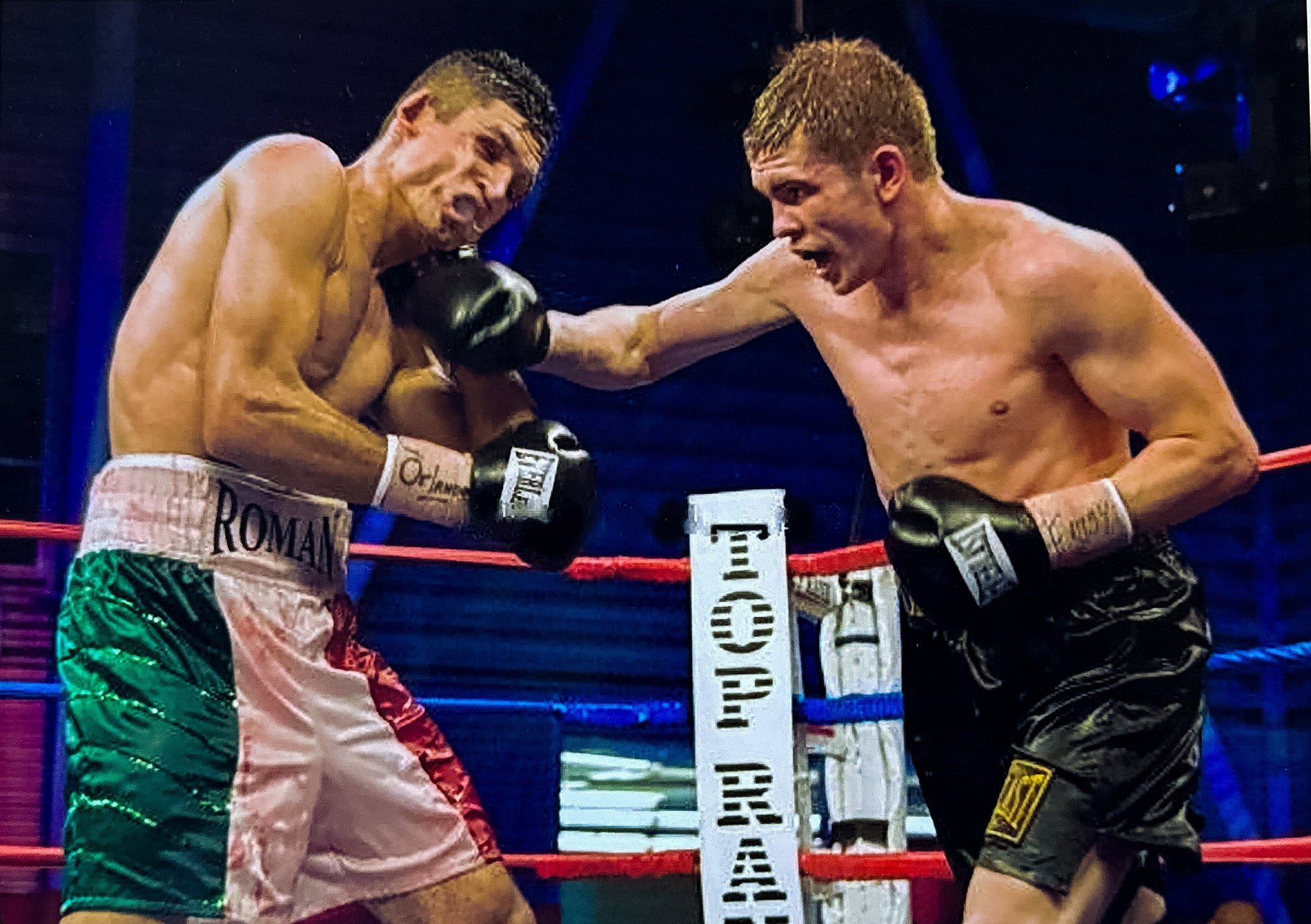
He won by decision, and, after winning an additional 27 consecutive bouts, Yuri was given a shot at the WBA super welterweight title, a bout against reigning champion Daniel Santos.
The fight took place November 14, 2009. As he stepped into the ring to the pounding metal of Pantera’s “Walk,” his chosen entry song, Yuri experienced “a massive adrenalin rush. I also felt quite a bit of fear, but it was channeled. Santos was a knockout artist, but if you want to conquer this mountain, it depends on your mind and spirit.”
When the 12-round bout ended and the decision announced, Yuri was crowned the WBA’s new super welterweight champion. “It was surreal. I had an Israeli flag draped around me, and I was screaming ‘Am Yisrael Chai!’”
In the aftermath, Yuri was embraced as a hero, a Jewish warrior akin to a modern-day Maccabee. He was named grand marshal of New York’s annual Celebrate Israel Parade, and signed autograph after autograph as hundreds of thousands of people lining 5th Avenue cheered their new hero. “It was,” he smiles, “pretty cool.”
Seven months after his championship bout, Yuri defended his title against Puerto Rican fighter Miguel Cotto. The match did not go well. A slip in the seventh round resulted in a serious knee injury, and the bout was stopped two rounds later.
It took several months to recover from his injury, after which Yuri had 10 more bouts, the last coming in 2021. His professional record stands at an impressive 35-4-1, including 10 knockouts.
“Everyone Is Searching For Meaning In Their Lives”
As he pursued a championship, Yuri was concurrently on what he terms “a spiritual journey.” The journey crystalized in 2008, when he made the decision to begin rabbinical studies. “Everyone is searching for meaning in their lives. For me, boxing is very physical, but also very spiritual. When you push yourself to the limit, you feel like there is a divine presence protecting you and giving you strength.”
He started studying with renowned scholar, kabbalist, and spiritual mentor Rabbi DovBer Pinson. “At the time, Jewish law was completely unknown to me. Ordination was completely new to me. It was very challenging. At times, I had to force myself to continue. Yet, there was never a point when I considered giving up, because I knew I would regret it later.”
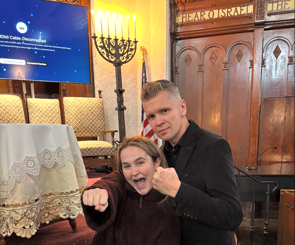
After nearly seven years of once-weekly classes, he was ordained as an Orthodox rabbi. “It was self-reassurance. I didn’t quit, I stuck with it, and I remained focused. I believe in tikkun olam – repairing the world.”
When asked what his decades-long physical and spiritual journey has meant to him, Yuri – WBA super welterweight champ, Orthodox rabbi, mentor, motivational speaker and father of three sons – responds reflectively. “We all have dreams, aspirations and goals in our lives. You have to stay disciplined, even when you don’t feel like it and no one’s watching. When you have faith in your abilities, I think G-d sees that. There were so many fighters better than me, but,” Yuri emphasizes proudly, “I became a world champion.”