
International Speaker, Author, Educator, Tour-Guide, Artist, Zionist
By the Book: What the Laws of War Actually Say About the IDF
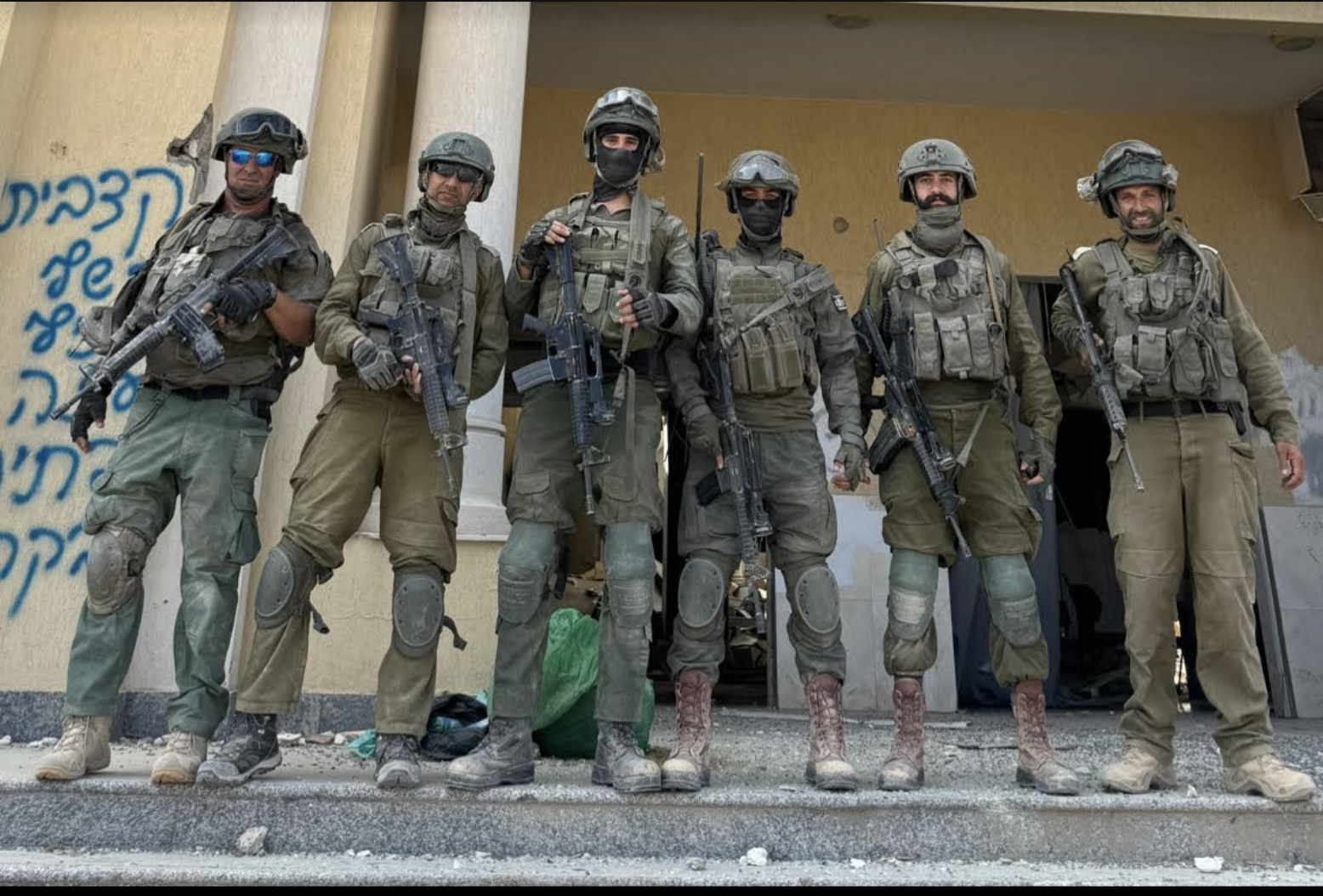
Me (left) and members of my IDF combat medical extraction unit (Palmar) inside Gaza. Photo ©️ 2026, T. Book.
In the flood of accusations levelled at Israel since October 7th, from NAZA to Sheeran, two phrases get thrown around constantly, and understood correctly almost never: “war crimes” and “proportionality.” It is worth pausing to ask what that terms actually mean under international law, and how it applies, or does not apply, to the conduct of the IDF.
International law defines “war crimes” with specificity. They include deliberately targeting civilian infrastructure such as international airports or nuclear facilities; tunnelling into another state’s territory to attack, murder, or kidnap civilians; using protected sites like schools, mosques, and hospitals to store munitions or launch attacks; breaching internationally agreed ceasefires; recruiting child soldiers; using civilians as human shields; and firing rockets indiscriminately at civilian populations. These are not abstractions. They are the actual legal standard, and worth holding in mind against the headlines.
One point is consistently misunderstood: the protected status of a school, hospital, mosque, or ambulance is not unconditional. As Colonel Richard Kemp CBE, the former British commander of forces in Afghanistan, has explained, if a military has credible reason to believe such a site is being used to store weapons or fire on soldiers, that site legally forfeits its protection under the Geneva Convention and becomes a lawful target. This is not a loophole. It is the law, and it exists precisely because armed groups have learned to exploit civilian infrastructure for military advantage.
Which brings us to Hamas’s use of human shields, a strategy that serves two purposes. First, it physically shields weapons caches, tunnel networks, and fighters from being struck. Second, and more disturbing, it manufactures civilian casualties for propaganda value, generating images that pressure Israel internationally and constrain its ability to defend itself. Both purposes rely on the same grim calculation: that the world will blame Israel for deaths Hamas itself engineered.
Then there is “proportionality,” perhaps the most misused word in this entire conflict. The claim goes: because more people have died in Gaza than in Israel, the war is disproportionate. But this is not what proportionality means under international humanitarian law. Proportionality weighs the anticipated military advantage of a strike against the expected civilian harm; it is not a scoreboard tallying bodies on each side. Author Douglas Murray put the absurdity of the numbers-based argument bluntly: by that logic, Israel would have had to replicate the atrocities of October 7th, the same number of murders, the same number of rapes, town for town, a standard no legitimate military ethic would ever impose on a nation defending itself.
International law also permits striking a legitimate military target even when civilians are nearby, so long as the expected military gain is not clearly outweighed by anticipated civilian harm. No army is legally required to warn an enemy before a strike, whether by leaflet, phone call, or text message. Israel does so anyway, and goes further still, publishing evacuation maps and safe routes ahead of operations, a practice with no parallel among modern militaries.
Intent is the crux of the legal distinction. IDF policy prohibits deliberately targeting civilians. When civilian harm occurs despite precautions, and without prior knowledge that civilians were present, that is an operational tragedy under the laws of armed conflict, not a war crime, which, by definition, requires intent.
Kemp’s own assessment, drawn from decades of military command, is unambiguous:
The Israeli army have taken greater steps than any other army in the history of warfare to minimise the harm to innocent civilians in a combat zone.
That is not a talking point. It reflects a pattern, advance warnings, designated safe corridors, and the deliberate choice to clear buildings on foot, street by street, rather than flatten them from the air. That choice has cost the IDF significant soldier casualties, because it places civilian protection above force protection.
None of this erases the human cost of war, which is real and devastating on every side. But facts matter, and the law is not a matter of opinion. Before the word “war crime” is used again, it is worth knowing what it actually means, and measuring the IDF against that standard, rather than against a headline.
–
Dr. Tuvia Book currently serving on IDF reserve duty. He is the author of Heroes of Palmar: How one IDF Unit Revolutionized Combat Medicine in Gaza. It is published by Gefen Publishing House and is available either from gefen.com or Amazon.com. He also authored “For the Sake of Zion, A Curriculum of Israel Education” and “Jewish Journeys” books on both the First Temple and Second Temple periods (Koren). In addition, Tuvia is a much sought after public speaker and is a Ministry of Tourism licensed Tour Guide, Jewish educator and a Judaica artist. www.booktuvia.com.
Related Topics
Related Posts