
Bye-Bye Bibi: Time to Go
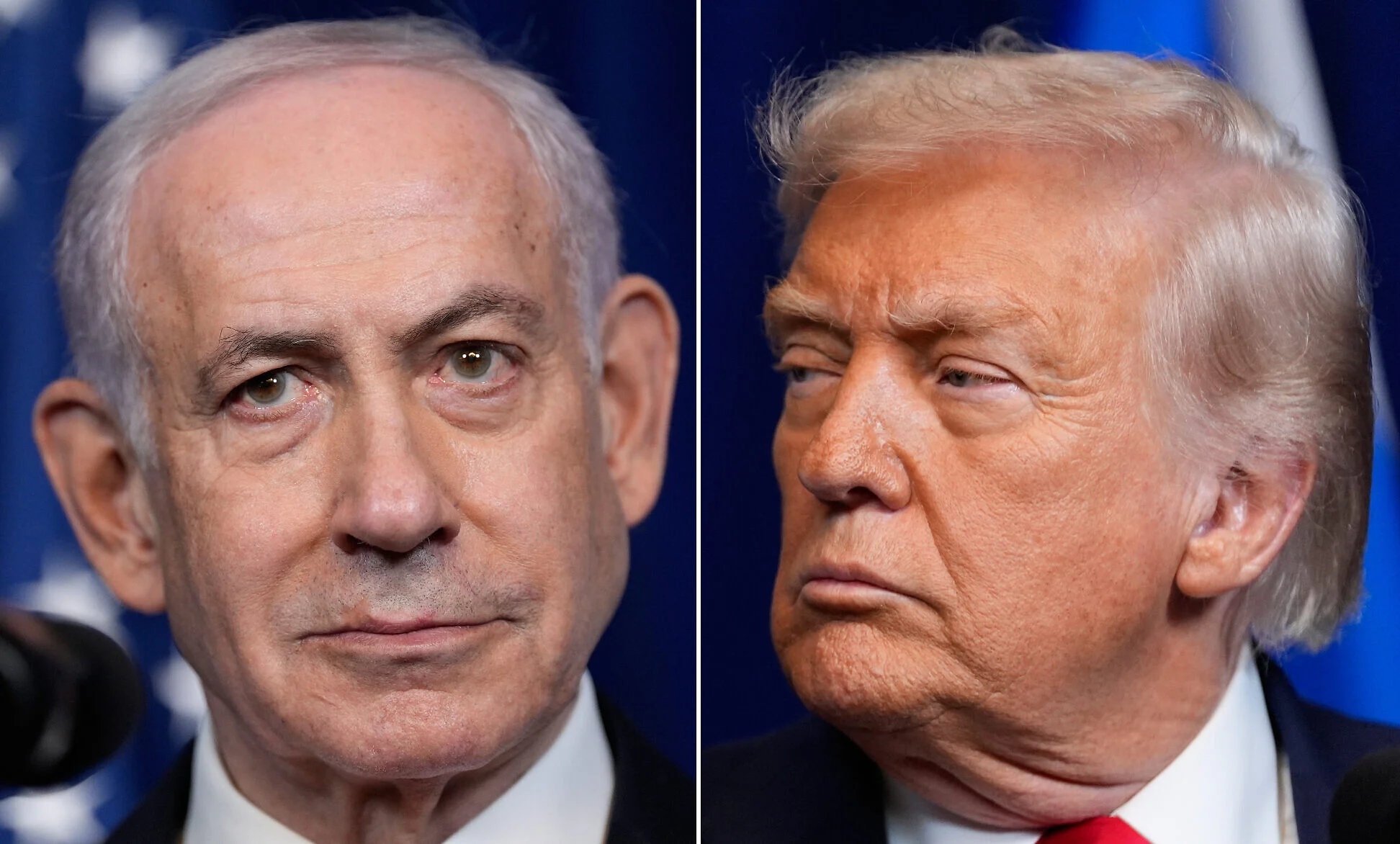
In a profanity-filled telephone conversation last September, according to New York Times reporters Maggie Haberman and Jonathan Swan in their new book, Regime Change: Inside the Imperial Presidency of Donald Trump, President Trump told Benjamin Netanyahu that “Everybody’s sick of you, Bibi. All the Jews are sick of you. Even the two Jews on this call [Steve Witkoff and Jared Kushner] are sick of you.”
This may have been Trump’s most insightful observation ever.
And yet, with the unctuousness of the furniture salesman he once was, Netanyahu persuaded Trump only a few months later that attacking Iran militarily was a good idea and that a US-Israeli war with Iran would not only be over in a matter of weeks but would result in surrender by and a change in the Tehran regime.
As is painfully obvious to all by now, especially to Trump, things didn’t quite work out that way. The war far lasted longer than Netanyahu predicted, was far costlier both politically and economically than anticipated, and there indeed was a surrender, but on the part of the U.S. rather than Iran.
As regards regime change, Netanyahu is still peddling a fictional spin to his ever-shrinking base. It will take the Iranian government and military “a long time to recover… And they may not recover” from the “cumulative damage” inflicted on them by the war, he told the JNS International Policy Summit in Jerusalem this past Sunday. “Because once you deal these blows, and once the rift between the regime and the people is so deep, you cannot tell when such a regime will fall. And I think we created the conditions for its future fall.”
Netanyahu’s bravado sounds like off-key whistling past what may well be his own political graveyard. The war did result in regime change in Tehran, but the new regime is more hardline than the one that had been in place at the beginning of the war. With the Iranians receiving an unexpected infusion of billions upon billions of dollars into their struggling economy, there is no reason to believe that anyone in Tehran is packing their suitcases to go anywhere.
Contrary to Netanyahu’s pronouncements, the Iranian regime seems to be recovering quite nicely, thank you very much.
For the son of a historian, he displays either a blatant disregard or a spectacular ignorance of history.
By unsuccessfully trying to drag successive U.S. presidents into what anyone with even rudimentary geopolitical awareness knew would be a doomed military conflict with Iran and finally hitting paydirt with Trump, Netanyahu has effectively reduced Israel’s de facto status to that of a vassal state of the U.S. Not since a series of Herodian kings tugged at the forelock before Roman emperors, generals, and prefects (among them Pompey, Julius Caesar, Vespasian, and, lest we forget, Pontius Pilate) has the head of a Jewish commonwealth manipulated himself into such subservience to a foreign power.
It would be easy to blame far-right or far-left antisemites, or Hamas, or Qatar, or anti-Zionist politicians for this untoward state of affairs. But it is Netanyahu and Netanyahu alone who has provided them with the requisite rhetorical ammunition by systematically blowing up alliances nurtured and cultivated by his predecessors and engaging in reckless military adventures that were doomed from the outset.
Let’s be clear: only in Netanyahu’s illusory self-aggrandizing virtual reality could anyone with an IQ in the triple digits or even a modicum of military and geopolitical awareness have convinced themselves that a nation the size of New Jersey, even in partnership with the U.S., could successfully wage war against Iran, the 17th largest country in the world with a landmass equivalent to Texas, California, Montana, and Illinois.
The stark reality is that Israel is one national election away from disaster, and the person most responsible for the crisis is none other than Netanyahu. If he and his reactionary and ultra-orthodox coalition are voted out of office this coming fall – he has so far refused to set a date for such an election, perhaps in the vain hope that he might somehow yet manage to avoid the wrath of the Israeli public – a new prime minister has a decent chance of bringing Israel back from the brink of a catastrophic political and ideological precipice. Like Peter Magyar who ousted the autocratic, anti-democratic Viktor Orbán from the Hungarian prime ministership, such a new Israeli head of government, whether it be Gadi Eisenkot, Naftali Bennett, or a dark horse who has yet to emerge, would be a breath of fresh air simply by not being Netanyahu.
Also, at the moment, no one is listening to anything Netanyahu has to say because, as Trump cogently observed, we’re all sick of him. Moreover, he long ago exhausted what little credibility he may once have had.
Having managed to alienate most Democrats in the U.S., starting with the unabashedly Zionist Joe Biden who had Israel’s back after October, Netanyahu is now successfully doing the same on the other side of the aisle. According to a recent Pew poll, 44 percent of Republicans, and, more importantly, 58 percent of younger Republicans, i.e., those under 50, have little or no confidence in Netanyahu. Add to this that according to the most recent Quinnipiac poll, a record 48 percent of American voters believe that the U.S. is “too supportive” of Israel.
Nice going here, Bibi! This is what can best be described as a reverse Midas touch: turning gold – in this case, Israel’s once vaunted reputation as a Jewish and democratic state – into political kryptonite.
No one doubts that Iran poses a threat to Israel, but at the same time, we all know that his motivation in instigating this year’s ill-conceived and ultimately counterproductive U.S.-Israeli military adventure was anything but altruistic. Former President Bill Clinton, still one of the most astute analysts of the international political arena, hit the nail on the head in June 2025, during the initial U.S. and Israeli bombing of Iranian nuclear facilities, when he tersely commented that “Mr. Netanyahu has long wanted to fight Iran because that way he can stay in office forever and ever.”
Moving to the global arena, Vice President JD Vance was right when he said that the U.S. is Israel’s remaining ally of consequence, and that relationship is precarious if not on thin ice as long as Netanyahu remains in power.
Spoiler alert: without the U.S., Israel is left with the Solomon Islands, Somaliland, Serbia, and perhaps Argentina. Not a happy or encouraging scenario.
A new Israeli prime minister, a non-Bibi, as it were, could begin to rebuild Israel’s relationships in the U.S. Congress, in Europe and elsewhere. Not an easy task by any means, but one that a Gadi Eisenkot or a Naftali Bennett could accomplish.
The decisive single biggest problem epitomized by Netanyahu is not that he is an unprincipled right-wing ideologue with no regard for anyone’s civil or legal rights. Nor is it that he has dragged Israel into a military misadventure that has left it internationally isolated and weakened in every relevant respect. Nor is it that he has shattered bipartisan support of Israel in the halls of Congress and has managed to alienate Republicans and Democrats alike. Nor is it that his conduct of the war in Gaza and his giving the green light to violence by West Bank settlers against Palestinian civilians has alienated and is alienating increasing numbers of Diaspora Jews, especially young Diaspora Jews. Nor is it that he is singlehandedly providing fodder to right-wing and left-wing antisemites alike on an almost daily basis. Nor is it that he is braying successes that no one alive above the neck takes seriously.
The decisive elephantine problem epitomized by Netanyahu is all of the above.
I am not an Israeli citizen, do not vote in Israeli elections, and thus do not have a direct say in who will be the next Israeli prime minister. Accordingly, I will not weigh in here on the prevailing political debate in Israel leading up to the forthcoming Knesset elections except to note that I am on record as considering Netanyahu an unmitigated political trainwreck. Shortly after he allowed the October 7, 2023, Hamas savagery to happen on his watch, I wrote in Newsweek that Netanyahu had “become a veritable albatross around his country’s neck,” and that he “must go. Now. Before he wreaks further havoc.” I pointed out in that article that:
he and Hamas were—and, for that matter, still are—on the same page in rejecting a two-state solution to the Israel-Palestinian conflict: Netanyahu opposes Palestinian statehood under any circumstances, and Hamas’ very reason for existing is its refusal to accept the existence of the State of Israel, again under any circumstances. . . . In a nutshell, . . ., he and Hamas have looked on one another as “useful idiots,” as it were, except that Netanyahu miscalculated appallingly while Hamas played Netanyahu like a Stradivarius.
Less than two months later, I wrote, again in Newsweek:
Netanyahu is squandering support for Israel among longtime friends who consider themselves staunch Zionists. But let’s remember that his vision for Israel’s future under his autocratic, narcissistic control is diametrically opposed to the Zionist principles of not just the likes of David Ben Gurion, Yitzhak Rabin, and Shimon Peres, not to mention former prime ministers Ehud Olmert, Ehud Barak, Naftali Bennett, and Yair Lapid, but perhaps even more so of Menachem Begin and former Israeli President Reuven Rivlin. Begin was—and Rivlin is—men of integrity committed to the rule of law rooted in democratic principles. Not so Netanyahu who considers both the law and conventional Israeli political norms to be personal inconveniences he can disregard at will.
However, while I happily leave Israeli politics to Israelis, together with Diaspora Jews across the globe, I have an enormous, even pivotal stake in the outcome of said elections.
Like it or not, Israeli Jews and Diaspora Jews are locked in a symbiotic relationship. We depend on one another, but we also have a responsibility toward each other.
This is not a clichéd trope. Nor is it the one-way Diaspora Jewry obligation toward Israel envisioned by Netanyahu and far too many Israeli politicians and Jewish communal leaders.
It is true, of course, that Israelis and Israelis alone get to determine how to protect themselves against hostile states and terrorist enemies. But that does not mean that the Israeli government’s policies and actions do not have consequences far beyond Israel’s borders.
There are reasons why many Diaspora Jews, especially young, idealistic Jews, have become disillusioned with Israel as it has evolved under the reign of successive governments led by Netanyahu. Diaspora Jews who believe in democracy and the rule of law are understandably disconcerted, to say the least, by the Orbánesque efforts by Netanyahu and his far-right acolytes to undermine if not scuttle Israel’s democratic system and its judiciary.
Diaspora Jews who believe in equality are understandably dismayed by the refusal of the same Netanyahu-led or Netanyahu-dominated political and ideological cohort to recognize the rights of Palestinians living in the West Bank and Gaza.
Diaspora Jews who are appalled by antisemitic manifestations directed against Jews cannot but be similarly dismayed by the violence perpetrated by Israeli – read extremist Israeli Jewish – West Bank settlers against Palestinians civilians.
Reform and Conservative Jews are increasingly antagonized by the Netanyahu government’s openly expressed hostility toward them and their religious identities.
The recent Salute to Israel parade in New York City was marred by the presence of representatives of the present Israeli government, including the abhorrent finance minister Bezalel Smotrich, who espouse discriminatory policies toward Palestinians that would be denounced as antisemitic if they were directed at Jews.
Simply put, Netanyahu and his draconian anti-democratic policies and actions have not just alienated Israel’s friends around the world, but he and the likes of Smotrich and National Security Minister Itamar Ben Gvir are vomit-inducing turnoffs for many Diaspora Jews and especially for the vast majority of young liberal or progressive Diaspora Jews who are not drinking Netanyahu’s brand of Kool-Aid.
Equally relevant is the fact that Netanyahu and his gang, a good number of whom openly and enthusiastically embrace fascism or neo-fascism, have been and are supplying talking points to antisemites on the far-right and the far-left on an almost daily basis. It is incredibly difficult if not nigh impossible for Jewish university and college students to counter claims of settler violence against and Israeli government denial of rights to Palestinian civilians when such claims are rooted in fact.
I will not go so far as to charge Netanyahu, Smotrich, Ben Gvir, et al. with consciously or intentionally fomenting antisemitism. But I definitely accuse them of not giving a damn that their words and actions are harming Jews in the Diaspora. An occasional mea culpa, if not an actual apology would be nice. But I’m not holding my breath.
What we desperately need after the coming Israeli elections is an Israeli prime minister who is committed to the values that have made generations of Jews support and identify with Israel for most of the past 78 years and who does not view Diaspora Jewry as a mindless political amen chorus or a bottomless ATM
Come to think of it, “Anyone but Bibi” may not be a comprehensive political or ideological platform, but it has the requisite je ne sais quoi.