


Mathematics Teaching Professor, Author
CABI of Boise, Idaho: Oldest Synagogue in Continuous Use West of the Mississippi
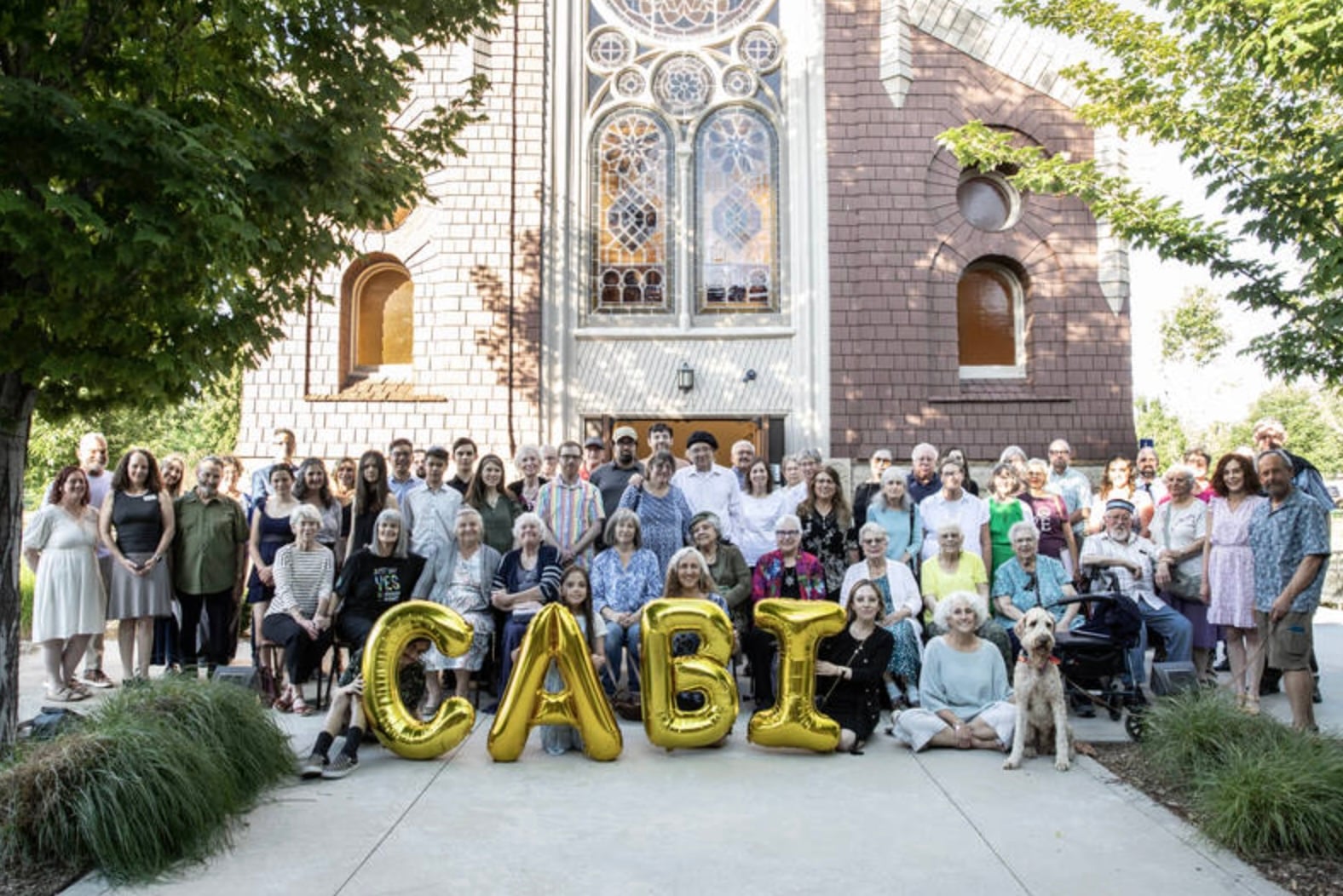
Congregation in front of the CABI synagogue (Source: Julie Shaw, CABI, Boise Idaho)
Nestled in the heart of Boise, Idaho, Congregation Ahavath Beth Israel (CABI) stands as a testament to the enduring spirit of Jewish life in the American West. Founded by Jewish merchants and families who helped shape the region in the late nineteenth century, CABI is housed in the oldest continuously used synagogue building west of the Mississippi River. Completed in 1896, the synagogue’s distinctive Moorish Revival architecture, highlighted by stained-glass windows, horseshoe arches, and handcrafted woodwork, reflects both its rich heritage and lasting beauty.
For generations, CABI has served as a center of worship, learning, and community, preserving the legacy of Idaho’s Jewish pioneers while embracing the future through its mission of empowering people to live meaningful Jewish lives.
I would like to thank Rabbi Johanna Rabbi Hershenson, President Betsy Russell and Executive Director Dr Robert H. Rich for their support of this article.
Synagogue
The exterior of Congregation Ahavath Beth Israel is both distinctive and historic. Clad in cedar shingles, the 1896 synagogue blends 19th century Rundbogenstil and Moorish Revival architectural styles, featuring a prominent circular rose window, graceful horseshoe-arched windows, and decorative shingle patterns that add texture and character.
Located at 11 N. Latah Street in Boise’s Bench neighborhood, the synagogue is the oldest continuously used synagogues west of the Mississippi River. Although relocated to its current campus in 2003, its historic exterior was carefully preserved, allowing the building to retain its original charm and architectural significance.
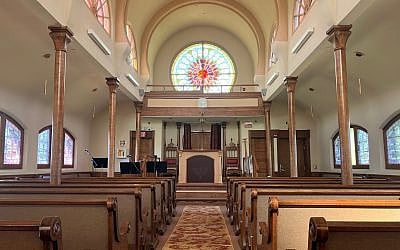
The interior of Ahavath Beth Israel is warm, intimate, and rich in historic character. Sunlight filtering through the stained-glass windows fills the sanctuary with color, creating a sense of peace and reverence that makes worship especially meaningful. A high barrel-vaulted ceiling, graceful Moorish-style horseshoe arches, and original woodwork draw attention to the ark and reflect the craftsmanship of the late nineteenth century. Together, the warm wood tones, historic details, and filtered light create a welcoming space for prayer, learning, and community.
Torah Scrolls
The main ark of Ahavath Beth Israel Congregation’s synagogue in Boise is the centerpiece of the sanctuary, built into the wall directly behind the bimah. Its beautifully crafted wooden doors, adorned with Stars of David, house the congregation’s Torah scrolls and serve as a focal point for worship and reflection. For many years, the congregation cared for three Torah scrolls, including one approximately 75 years old and two that were more than a century old.
Recently, the scrolls underwent a careful restoration process led by a sofer, a specially trained Torah scribe, who worked alongside congregants to clean the parchment, repair damaged letters, and preserve the scrolls for future generations. During restoration efforts this past February, however, it was determined that one of the century-old scrolls had deteriorated beyond repair and could no longer be restored for ritual use.
This week, through a partnership with the Memorial Scroll Trust who collects the Czech Holocaust Torah Scrolls, the congregation welcomed a replacement Torah scroll from a former Jewish community in Czechoslovakia that was devastated during the Holocaust. During World War II, at a time when many of their community were being shipped off to concentration camps, the Jewish community in Prague worked on collecting a hundred thousand items from their people, of which 1800 were Torah Scrolls.
Just 17 years after Holocaust, in the 1960s, the Communist government sold just over 1500 of the Torah Scrolls to an Art dealer of London, who was a. member of the Westminster Synagogue. A Memorial Scroll trust was formed, and the rabbi insisted the scrolls be given on permanent loan to synagogues around the world.
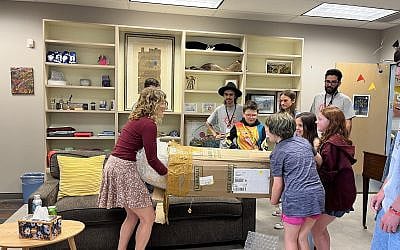
It was Scroll # 399 that CABI received this week as the replacement scroll. Rabbi Hershenson, together with a handful of kids, unwrapped the scroll, forming a memory for a lifetime. This fall, when the scroll makes its formal debut, the congregants will learn about the town from which it originated and the Jewish lives that were lost in the Holocaust, ensuring their memory is honored.
The original scroll that could not be restored will continue to hold a place of honor and will be housed in a second ark located in the congregation’s social hall.
Religious Life
Congregation Ahavath Beth Israel (CABI) in Boise, Idaho, represents a harmonious blend of Reform and Conservative traditions, formed by the landmark 1986 merger of Temple Beth Israel and Congregation Ahavath Israel. To honor both movements, the synagogue uniquely utilizes a Reform prayer book for Friday evening Shabbat services and a Conservative prayer book on Saturday mornings.
Members gather regularly for Shabbat services, where prayers, music, sermons, and Torah readings shape the experience of worship. The congregation’s Torah scrolls are central to these services, as they are respectfully carried, opened, and read from during weekly portions that connect the community to Jewish teachings and heritage.
Beyond weekly worship, religious life includes observance of major Jewish holidays such as Rosh Hashanah, Yom Kippur, Passover, and Sukkot, which are marked through special services and community gatherings. Education is also an important part of congregational life, with programs for children, teens, and adults that encourage study of Jewish texts, traditions, and values. In addition, the synagogue supports lifecycle events such as bar and bat mitzvahs, weddings, and memorial services, providing spiritual support and communal connection during significant moments in members’ lives.
Overall, religious life at Ahavath Beth Israel emphasizes participation, inclusion, and continuity of Jewish tradition within a modern Reform Jewish framework.
Learn
At Ahavath Beth Israel, learning is a vital part of community life and extends far beyond weekly worship services. The congregation offers educational opportunities for all ages, helping members deepen their understanding of Jewish traditions, history, values, and culture. The Jewish Community School provides a weekly opportunity for kids to learn and engage with the congregation’s tradition. Through Jewish community learning events, adult education classes, and an active teen program, CABI encourages lifelong learning, meaningful discussion, and strong connections across generations.
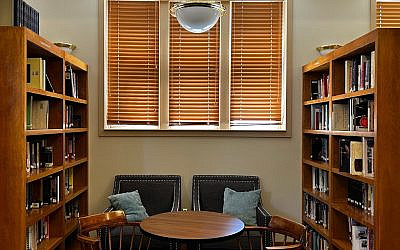
The CABI Library at Ahavath Beth Israel serves as a quiet hub for study, reflection, and lifelong learning within the congregation. Housing a thoughtful collection of Jewish texts, history, and educational resources, the library supports both formal programs and individual exploration of Jewish tradition, culture, and values. It is used by children, teens, and adults alike, complementing the congregation’s broader commitment to education and helping foster deeper engagement with Jewish learning beyond the sanctuary.
Community
At Ahavath Beth Israel, community involvement is a central part of congregational life. Programs such as CABI Corners bring members together through shared interests and small-group gatherings that strengthen relationships within the congregation. The Community Bulletin Board keeps members informed about news, events, and volunteer opportunities, while CABI ACT encourages putting Jewish values into practice through service, social justice, and acts of kindness that benefit both the synagogue and the broader Boise community. Together, these initiatives foster connection, engagement, and a strong sense of shared purpose.
Annual Deli Days Idaho Jewish Festival
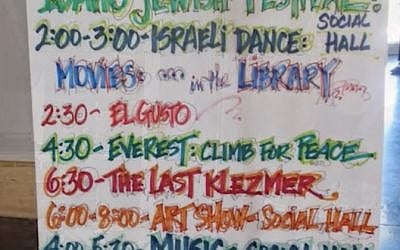
One of Ahavath Beth Israel Congregation’s most beloved traditions is the annual Deli Days Idaho Jewish Festival, a community celebration that has brought people together for many years to experience Jewish culture, food, music, and fellowship. Although the festival was paused during the COVID-19 pandemic, it has since returned and continues to grow, drawing approximately 3,000 attendees every other summer.
The event offers a taste of traditional Jewish cuisine, including pastrami and corned beef sandwiches, lox, bagels, and an assortment of Jewish baked goods, while live entertainment showcases both local performers and talented members of the congregation. More than a festival, Deli Days serves as an opportunity for CABI to share Jewish traditions and heritage with the broader Idaho community, fostering understanding, connection, and celebration across cultures.
Historical Background
In 1864, amid the turmoil of the American Civil War, Jewish pioneers began arriving in what would become Idaho, drawn by opportunities tied to the region’s mining boom. Early settlers such as merchant David Falk are documented in Boise during this period, and over time German Jewish merchants and entrepreneurs established stores, ranches, and businesses that helped support the growing frontier community and laid the foundations for a lasting Jewish presence.
By 1895, during the Gilded Age and a period of rapid industrial growth and social change in the United States, Boise’s Jewish community had expanded enough to formally organize Idaho’s first Jewish congregation, Beth Israel.
That same year, 1895, German Jewish immigrants established Temple Beth Israel as a Reform congregation in downtown Boise’s North End, with support from community leaders including Moses Alexander, who would later become the nation’s first practicing Jewish governor. The following year, the congregation completed a synagogue that remains in use today as part of Ahavath Beth Israel but has been moved from its original location.
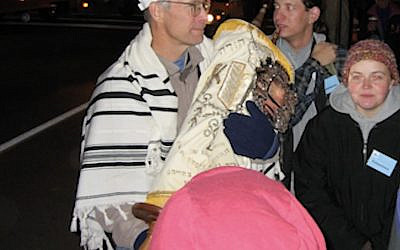
In 2003, Ahavath Beth Israel Congregation undertook an extraordinary effort to preserve its historic synagogue by relocating the entire building to its current campus. Recognized as the nation’s oldest synagogue in continuous use west of the Mississippi River, the move was a significant moment for both the congregation and the Boise community.
The overnight relocation drew crowds of over 3000 people from across the city, with residents gathering to watch as the treasured landmark slowly made its journey through the streets. By sunrise, the synagogue had been successfully placed on its new site, where it now serves as the centerpiece of a campus designed to honor and preserve its historic character.
The campus is located adjacent to the historic Morris Hill Cemetery, which is operated by the city of Boise. In 1895, the congregation secured a Jewish section in the cemetery. Today its proximity to the synagogue provides a meaningful connection between worship, remembrance, and tradition. Following a funeral service, congregants can walk directly from the synagogue to the cemetery, continuing a practice that reflects the deep continuity of Jewish community life across generations.
Ahavath Beth Israel stands as both a historic treasure and a vibrant center of Jewish life in Idaho. For more than a century, it has preserved the traditions, faith, and community spirit of the generations who built and sustained it. Its beautiful architecture, rich history, and continued role in religious and cultural life make it an important landmark not only for Boise’s Jewish community but also for the city’s broader heritage.
As the oldest continuously used synagogue in the western United States, Ahavath Beth Israel serves as a lasting reminder of the contributions of Jewish pioneers to the development of Idaho and the enduring strength of their legacy.
Contact Information:
Congregation Ahavath Beth Israel of Boise, Idaho, 11 N Latah St. Boise Idaho, 83706
Phone: 208-343-6601
Email: execdirector@cabi-boise.org
Website: cabi-boise.org/home.html