Author, Educator and Father - Brother to All
Calling Herzl Secular Misses What Matters
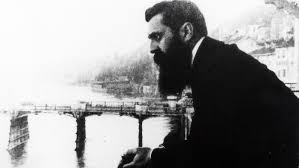
Theodore Herzl
The long journey home ended on Mount Herzl. In a quiet ceremony heavy with meaning, the remains of Theodore Herzl’s grandparents were reinterred in the soil of the Jewish state their grandson had summoned into being. The effort required diplomatic coordination, historical research, and national will. It was an act of historical justice, a recognition that the roots of modern Zionism ran deeper than the man who gave the movement its name and organizational force.
Prime Minister Benjamin Netanyahu captured the moment with his usual precision, “The long journey of the Herzl family from foreign soil to the soil of Zion ends here today, on Mount Herzl. All of us hold respect and admiration for Binyamin Ze’ev Herzl for the gigantic Zionist enterprise that stands proudly. But now our gaze focuses on the foundations of the building, Judaism, as the basis for Zionism. The Torah and the entire Tanach, as the cornerstone of identity. The chain of generations as the anchor of values and heritage. The home of Herzl’s grandfather and grandmother provided the roots that grew a trunk, branches, and fruit.
This was not a simple process, because the 19th century greatly challenged traditional Judaism in its encounter with modernity. The Herzl family as well was influenced by the tension between tradition and enlightenment.”
Those words cut through decades of lazy historiography. More than the Dreyfus Affair, more than the antisemitism of fin-de-siècle Vienna, more than any single political event, it was Herzl’s grandparents who planted in him the unbreakable connection to Eretz Yisrael. The conventional story, that a secular, assimilated journalist was shocked into Zionism by the humiliation of Captain Dreyfus, is not false so much as incomplete.
Theodore Herzl’s paternal grandparents were Simon Leib Herzl, born around 1805 in Zemun near Belgrade, and Rebecca Bielitz, born around 1809. His grandparents lived closer to traditional Judaism than Herzl’s own parents, who had moved toward the assimilated norms of Central European Jewish life. Young Theodore knew and admired both grandfathers.
Simon Leib Herzl was the son of a rabbi. He served as gabbai in the Sephardic synagogue of Zemun, where Rabbi Yehuda Alkalai was the spiritual leader. He also served as ba’al tekiah, the man who sounded the shofar. The two men knew each other for at least forty years. Scholars believe Rabbi Alkalai may well have officiated at Simon’s wedding; Zemun had only one Jewish community and one synagogue at the time.
Simon was among the first to acquire Alkalai’s 1857 treatise Goral la-Adonai, which laid out practical plans for Jewish return to the Land of Israel, joint-stock companies, Hebrew revival, organized settlement. He and his son Jakob, Theodore’s father, ranked among the largest donors to the new Zemun synagogue built in 1862.
Simon was an Orthodox Jew, a respected merchant, and a community board member who promoted the idea of national restoration decades before the First Zionist Congress. In 1849 he spent ten days in jail for sympathizing with the Hungarian uprising, released at the community’s request so he could observe the High Holy Days. Alone among his brothers he remained faithful to Judaism. The others converted to Serbian Orthodoxy and changed their names; the family refused to speak of them.
Every summer and every holiday, young Theodore traveled to Zemun. Those visits, biographers note, formed a central source of his ideological and national foundation. Simon also visited the family in Budapest and is believed to have shared Rabbi Alkalai’s ideas with his grandson. The boy absorbed a living tradition of Jewish peoplehood and territorial longing long before he ever set foot in a Paris courtroom.
This is the part the standard narrative discards. Herzl later abandoned daily Torah observance. He did not keep Shabbat, did not wear a kippah, and did not treat kosher laws as binding. From that fact many historians leap to the conclusion that he was a secular Zionist, a modern European who happened to be Jewish by birth and who reinvented Jewish nationalism in the language of nineteenth-century liberalism. The leap is a mistake.
Calling Herzl secular because he was not observant of mitzvot reflects a superficial understanding of both Torah and the man. Traditional Jewish thought has never measured a person’s place solely by ritual performance. Maimonides’s Thirteen Principles of Faith define membership in the nation of Israel and entrance in the world to come far more sharply than most individual commandments. A Jew whose personal philosophy, values, and priorities are founded on Torah axioms, not merely consistent with them, cannot be dismissed as secular simply because his practice was incomplete.
Herzl’s philosophy of return was not invented in a moment of outrage over Dreyfus. It was inherited. It came from grandparents whose lives were shaped by Torah and by a rabbi who translated ancient longing into modern political program. Rabbi Alkalai’s vision of practical redemption, of organized return, of Hebrew as a living language, these ideas entered the Herzl home through Simon Leib. The grandson transformed them into a political movement capable of mobilizing a people and confronting empires. But the roots remained Torah roots.
To judge Herzl as anti-Torah or purely secular is to ignore what the Torah itself prioritizes. God demands both observance and philosophical alignment. Yet the tradition is clear: denial of the fundamentals of faith severs a person from the nation and from the afterlife in ways that the violation of most mitzvot does not. Herzl’s driving conviction, that the Jewish people must return to their land and rebuild their sovereignty, was not a European nationalist idea draped in Jewish colors. It was a Torah idea, transmitted through a Torah-observant grandfather, refined by a grandson who no longer kept the full regimen of commandments but never abandoned the core claim.
The reinterment on Mount Herzl was therefore more than a family reunion across generations. It was a public correction of the historical record. The foundations of the building are Judaism. The Torah and the Tanach remain the cornerstone. The chain of generations is the true anchor. Herzl’s grandparents supplied the living link. Their grandson built the structure that still stands. Those who insist on reducing him to a secular reaction against European antisemitism miss the deeper continuity. They miss the man who carried, in secular dress, a religious idea of exile and return that had never died.
Related Topics
Related Posts