

Rabbi, Special Operations Police Officer, Award Winning Filmmaker
Can One More Chair Help Heal a Divided Nation and People?
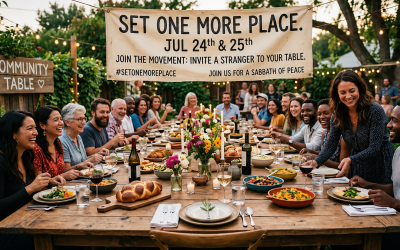
Israel is a nation that has learned how to defend its borders. We have built one of the world’s most sophisticated militaries, one of its strongest economies, and one of its most innovative technology sectors. Yet alongside these remarkable achievements lies a quieter challenge—one that no army can solve and no technological breakthrough alone can repair.
How do we strengthen the bonds between Jews who have grown increasingly distant from one another?
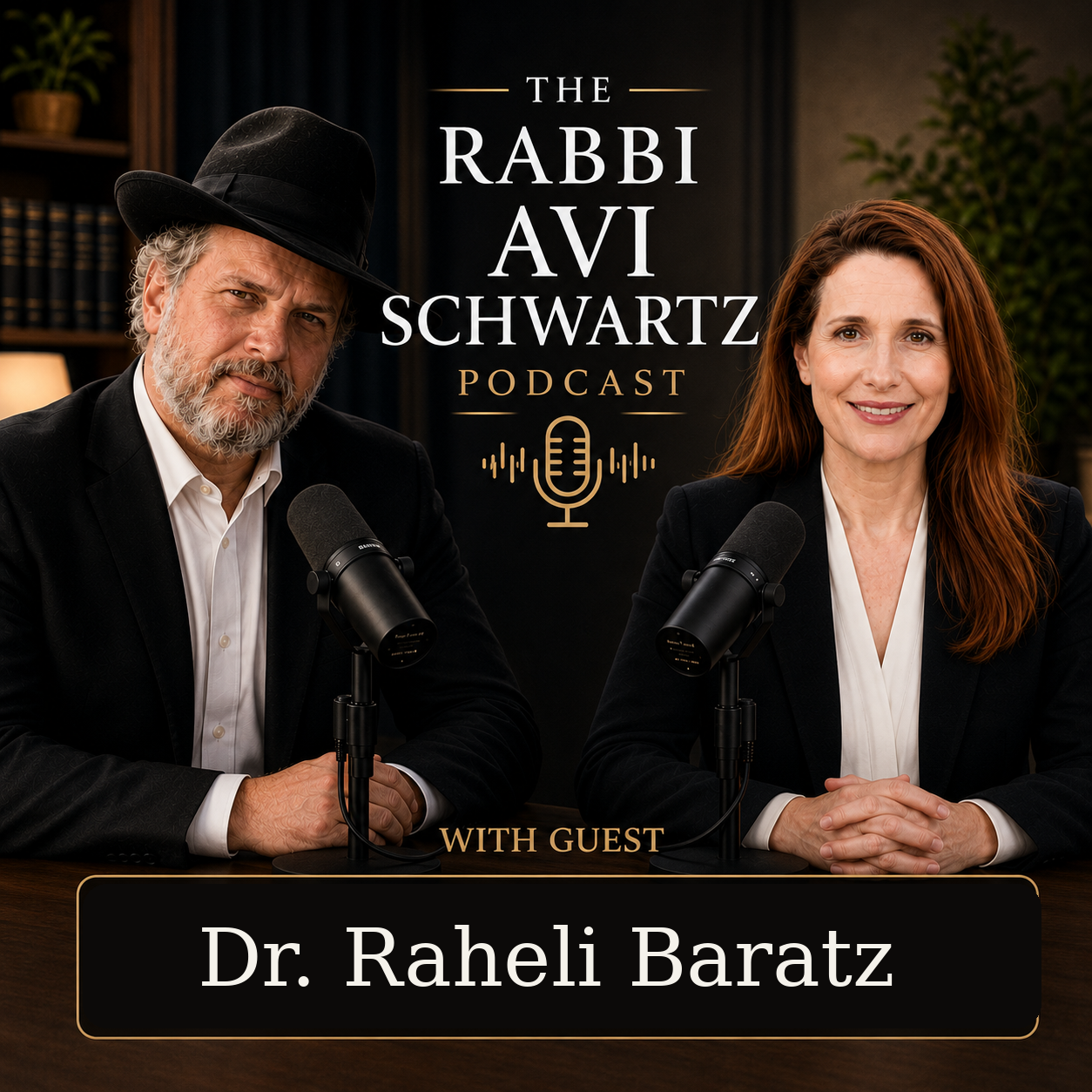
That question was at the heart of my recent podcast (click to see excerpt) conversation with Dr. Raheli Baratz
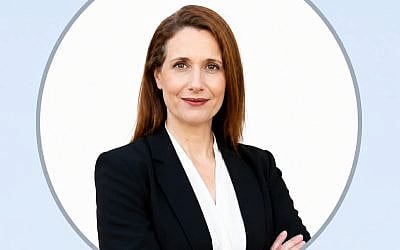
an Israeli researcher, public intellectual, and leading voice on Jewish identity, Zionism, and Israeli society. Our discussion ranged from Israel’s internal divisions to the relationship between Israelis and the Diaspora, from education to Jewish continuity. Yet every subject eventually returned to one central theme: the future of the Jewish people in Israel and across the globe depends not only on our security but also on our ability to remain one family.
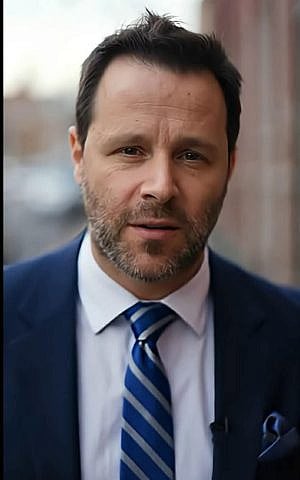
In many ways, that conversation reflected the very purpose of Shabbat Nachamu – Shabbat Achdut, a worldwide initiative, created by Mendy Fensterszaub,
inviting Jews everywhere to perform one simple act on the Shabbat following Tisha B’Av:
Set one more place at the table.
It sounds almost too simple.
Can an extra chair really make a difference?
Dr. Baratz believes it can.
One of the most striking moments in our conversation came when she spoke about “the other.” In today’s Israel and within the Jewish world aboard, the phrase is often used to describe someone outside our own community—the secular Jew, the religious Jew, the settler, the Tel Aviv liberal, the Haredi, the new immigrant, the Diaspora Jew, the Israeli Jew, the Zionist Jew, the non-Zionist Jew. Political discourse encourages us to place people into categories before we ever meet them.
Yet, as Dr. Baratz observed, “the other” is often simply someone we have never taken the time to know.
That insight captures the essence of the Shabbat Achdut – Shabbat Unity initiative.
The campaign does not ask anyone to abandon deeply held beliefs or political convictions. It does not ask Israeli Jews and Diaspora Jews to vote alike, pray alike, or think alike.
Instead, it asks something profoundly Jewish.
Invite someone.
Open your home.
Share your table.
Listen.
The timing is no coincidence.
This year Shabbat Achdut – Shabbat Unity takes place on Shabbat Nachamu, Friday evening, July 24, and during the day on Saturday, July 25. The first Shabbat after Tisha B’Av, the day we remember the tragic destruction of the Holy Temple and the beginning of our nearly 2,000-year-old exile. After mourning the destruction of the First and Second Temples, the Jewish people immediately hear the words of the prophet Isaiah: “Comfort, comfort My people.”
This year’s Shabbat Nachamu is especially unique.
It follows a very rare occurrence in the Jewish calendar. The 10th of Av—the day on which the Holy Temple was still burning after its destruction—falls on Erev Shabbat.
According to halachah (Jewish Law), aspects of the mourning that would normally continue after Tisha B’Av are set aside because we immediately enter the holiness and joy of Shabbat. This alignment occurs only once every 19 years.
It’s remarkable that Mendy Fensterszaub was inspired to launch this movement for Shabbat Nachamu at precisely this moment. Long before most people realized how unusual this year’s calendar would be, the inspiration was already there.
It’s as if this rare Shabbat was waiting for a message of comfort, healing, and Jewish unity.
The transition from mourning to consolation is deliberate. Judaism does not leave us in despair. It immediately challenges us to begin rebuilding.
But how do you rebuild a nation and a broken People?
Not only with stones.
Not only with politics.
You rebuild through relationships.
For centuries, the Shabbat table has been one of Judaism’s greatest institutions. It is where children absorb traditions, where families reconnect after demanding weeks, where guests become friends, and where strangers become part of the family.
It is difficult to demonize someone after sharing challah, singing Shalom Aleichem, discussing the weekly Torah portion, and laughing together over a meal.
Hospitality has always been one of Judaism’s most powerful forms of leadership.
During our discussion, Dr. Baratz emphasized another important point: disagreement is not new to the Jewish people. The pages of the Talmud are filled with passionate debate. Jewish history has never lacked differing opinions. Our tradition never demanded uniformity.
What it demanded was responsibility.
Respect.
The willingness to continue talking.
The danger facing Israel and the Jewish world at large today is not that people disagree.
It is that too many have stopped listening.
Social media rewards outrage. Television rewards confrontation. Political campaigns reward polarization. Algorithms thrive on anger because anger generates engagement.
The Shabbat table offers something radically different.
There are no headlines.
No notifications.
No anonymous comments.
Only people.
Only conversation.
Only the possibility that someone who seemed distant yesterday may feel much closer tomorrow.
That is why Dr. Baratz’s decision to join and publicly support the Shabbat Achdut initiative is so significant. It reflects the understanding that healing Israeli society and the Jewish Diaspora requires more than government programs or public statements. It requires ordinary people taking personal responsibility for rebuilding trust.
Across Israel and throughout the Jewish world, the campaign continues to gather momentum.
Rabbis from across the religious spectrum have joined.
Community leaders have joined.
Educators have joined.
Entrepreneurs have joined.
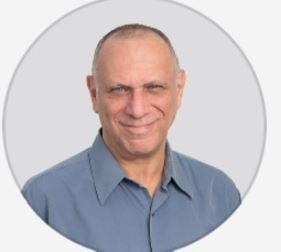
Among them is Dov Moran, the inventor of the USB flash drive and one of Israel’s most respected technology pioneers, who recorded a message supporting the initiative. Public figures from North America, Europe, and Israel are adding their voices, recognizing that Jewish unity is not a slogan but an ongoing responsibility.
The beauty of this initiative is that participation requires no organization, no committee, and no budget.
Every family already possesses what is needed.
A home.
A table.
An extra chair.
Imagine if tens of thousands of Jewish families accepted that challenge this Shabbat.
Imagine if every synagogue encouraged its members to invite someone they did not know.
Imagine if secular and religious Jews crossed boundaries that politics has spent years reinforcing.
Imagine if Israeli-born families welcomed new immigrants.
Imagine Jews across the political divide in the United States simply breaking bread together.
Imagine if college students, lone soldiers, widows, Holocaust survivors, and neighbors who rarely speak suddenly found themselves sharing a meal.
No single dinner will solve Israel’s and the Jewish Nation’s divisions.
But every lasting movement begins with one action repeated thousands of times.
History is often written through wars, elections, and diplomatic agreements.
Yet Jewish history has also been shaped by quieter moments—acts of kindness, hospitality, learning, and responsibility that strengthened the bonds of an ancient people across generations.
As my conversation with Dr. Raheli Baratz came to a close, one thought remained with me.
The Jewish future will not be secured by technology alone.
It will not be secured by politics alone.
Nor will it be secured by military strength alone.
It will also be secured by our willingness to rediscover one another.
Perhaps that journey begins exactly where Judaism has always placed it:
Around the Shabbat table.
This Shabbat Nachamu, the invitation is wonderfully simple.
Join the worldwide movement at #SetOneMorePlace.
One extra chair may not change the entire world.
But it may change someone’s world.
And if enough of us do it together, it may help change ours.
Check out the great song about the project.