
Author and Global Affairs Commentator
Can Tehran’s Terror Network Be Contained?
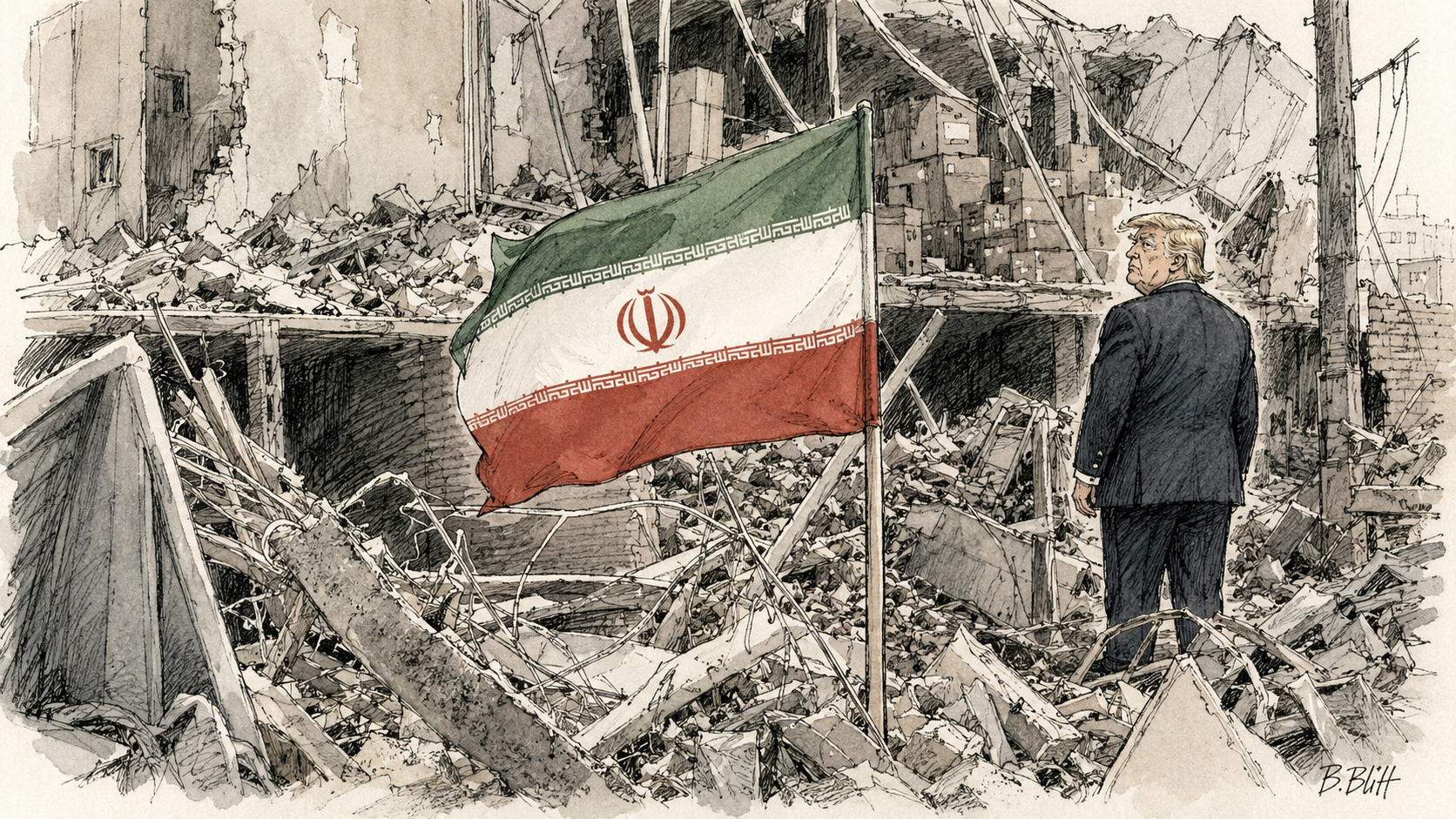
The more difficult question is whether any agreement adequately addresses the broader ecosystem of institutions and proxy forces through which Iran projects power across the Middle East.
Any durable agreement with Tehran will ultimately be judged not by the signatures it produces but by whether it constrains the Islamic Republic’s capacity to project power beyond its borders. While diplomacy may reduce immediate tensions, Iran’s regional proxy network and ideological commitment to asymmetric warfare continue to present the central strategic challenge facing the United States, Israel, and America’s Middle Eastern partners.
Negotiations with Iran have long reflected a familiar dilemma in American foreign policy: whether diplomatic engagement can moderate a revolutionary state whose security doctrine is built upon confrontation. The latest framework pursued by the Trump administration represents another attempt to reduce tensions through negotiation. Whether it succeeds, however, will depend less on the terms of any agreement than on whether it meaningfully constrains the institutions that have sustained Iran’s regional influence for decades.
Inside Iran, many opponents of the Islamic Republic continue to view the 1979 Revolution as the beginning of a political system rooted in ideological repression, centralized clerical authority, and the export of revolutionary violence. While opinions differ over the merits of renewed diplomacy, there remains widespread skepticism among many regime critics that negotiations alone can fundamentally alter the character of the state.
History offers reason for caution. Authoritarian governments frequently adapt their tactics under external pressure without abandoning their long-term strategic objectives. Diplomatic engagement may change behavior at the margins, but it rarely transforms the underlying institutions that preserve a regime’s power. In Iran’s case, those institutions—including the Islamic Revolutionary Guard Corps (IRGC) and its overseas Quds Force—remain central pillars of the state’s security architecture.
Military pressure over recent years has undeniably imposed costs on Tehran. The deaths of senior commanders, including Qassem Soleimani, significantly disrupted the leadership of Iran’s expeditionary operations and demonstrated that even senior officials were vulnerable. Yet eliminating individual figures is not the same as dismantling an organizational structure built over decades.
The Islamic Republic has repeatedly shown an ability to regenerate its command structure. Leadership changes may alter operational methods, but they have not fundamentally changed the strategic logic that underpins Iran’s regional policy.
That strategy relies heavily upon an extensive network of non-state partners stretching across the Middle East. Organizations including Hamas, Hezbollah, Yemen’s Houthis, and Iraqi Shiite militias have enabled Tehran to project influence far beyond its borders while limiting the risks associated with direct military confrontation. Although Israeli operations and sustained international pressure have weakened parts of this network, they have not eliminated it.
This distinction matters. A nuclear agreement may reduce one category of risk while leaving another largely untouched. Even if Iran accepts limitations on elements of its nuclear program, its capacity to employ proxy organizations, missile forces, cyber operations, and political influence campaigns could remain substantially intact.
For successive American administrations, this has become the central strategic challenge. Preventing nuclear proliferation is an important objective, but it addresses only one component of Iran’s broader regional posture. The Islamic Republic’s ability to shape events through irregular warfare has often proven equally consequential.
President Trump’s first administration recognized aspects of this challenge through its campaign of economic pressure and its decision to authorize the strike against Soleimani. Supporters argue these measures disrupted Iran’s regional operations and restored deterrence after years in which Tehran appeared increasingly willing to test American resolve. Critics questioned their long-term effectiveness, but few disputed the significance of targeting the operational leadership of Iran’s external security apparatus.
The current diplomatic initiative should therefore be evaluated within this broader strategic context rather than solely through the narrow lens of nuclear negotiations. If sanctions relief or expanded economic engagement allows Tehran to rebuild military capabilities, strengthen proxy organizations, or finance renewed regional operations, any short-term diplomatic gains could ultimately prove fragile.
This concern extends beyond Israel. American military personnel, Gulf Arab states, maritime commerce, and international energy markets have all experienced the consequences of Iran’s regional strategy over the past two decades. Stability in the Middle East depends not only upon limiting uranium enrichment but also upon reducing the capacity of armed non-state actors to destabilize neighboring states.
The internal dimension is equally significant. Iran continues to face recurring economic hardship, political discontent, and periodic waves of popular protest. These domestic pressures suggest that the country’s long-term trajectory will be shaped as much by developments within Iranian society as by negotiations conducted abroad. While external diplomacy can influence the strategic environment, it cannot determine the outcome of Iran’s internal political evolution.
For policymakers in Washington, the question is therefore not whether diplomacy should be pursued. Engagement remains an important instrument of statecraft and may help prevent escalation at moments of heightened tension. The more difficult question is whether any agreement adequately addresses the broader ecosystem of institutions and proxy forces through which Iran projects power across the Middle East.
Ultimately, the durability of any accord will depend on more than nuclear safeguards or verification mechanisms. It will be measured by whether it limits Tehran’s ability to rebuild the regional networks that have underpinned its influence for more than four decades. Unless that challenge is addressed, diplomatic agreements may buy time, but they are unlikely to resolve the deeper strategic competition that continues to define Iran’s relationship with the United States and its allies.
Related Topics
Related Posts