
Mother. Googler. Community Builder. Succeeded at Aliyah the Hard Way.
Featured Post
Can we separate the authors from the antisemitism?
Losing an intellectual home means losing a source of comfort – it's a painful realization that the culture that shaped you no longer wants you
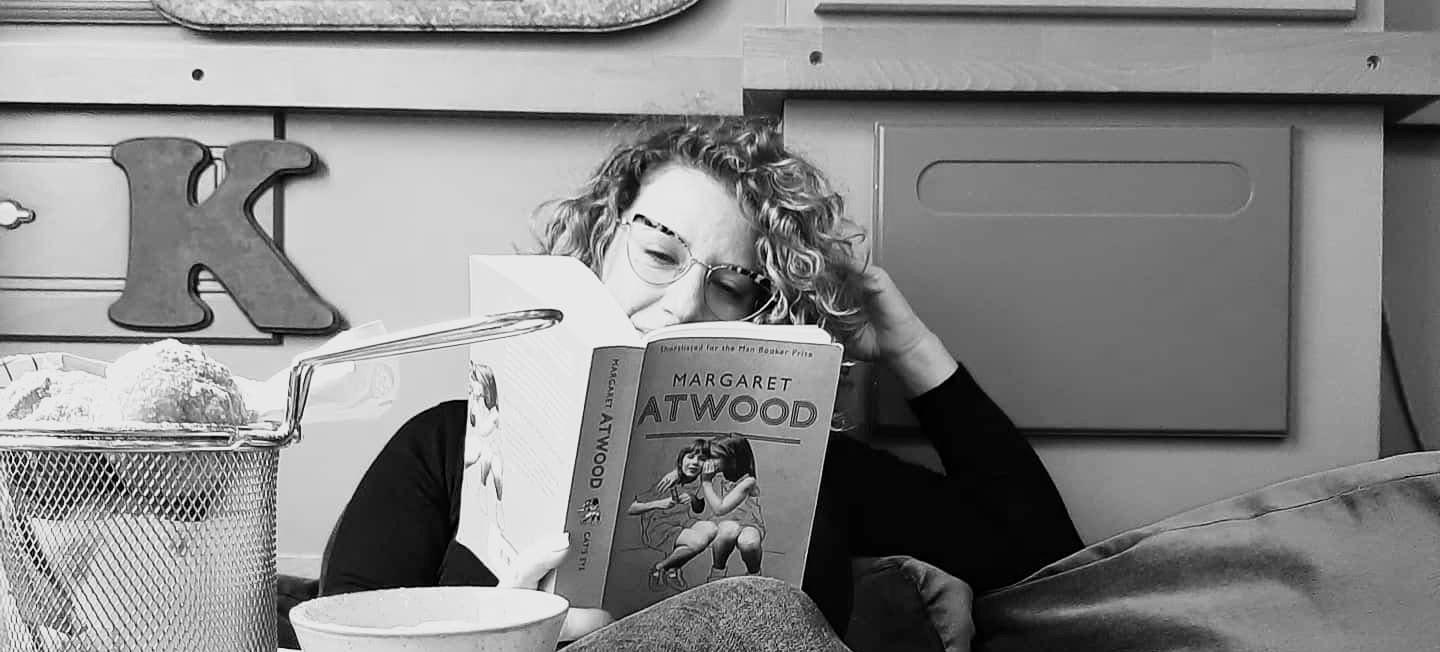
(courtesy)
For the last decade, my inner life has been furnished by a specific group of women. You probably know them. You might have their books on your nightstand right now.
I’m talking about the thinkers who taught us a new vocabulary for our emotions. Glennon Doyle, who taught us to stop pleasing and start living. Brené Brown, who taught us that vulnerability is courage. And let’s not forget the Canadian icons I grew up on. Sarah Polley, the actress I loved as a girl, went on to make deeply feminist movies and books. And Margaret Atwood, who taught us to be vigilant about the fragility of women’s rights.
They were my guides. I listened to their podcasts while washing dishes. I quoted them to friends when we were struggling with marriage, motherhood, or self-doubt. They provided the “operating system” for my inner world: liberal, humanistic, nuanced, and deeply empathetic.
But I’ve been ignoring their work on my bookshelf over the last few years.
It wasn’t a quiet drifting apart. It felt more like the moment a relationship turns toxic, when you start avoiding each other because the contempt is too thick to breathe. Almost immediately after October 7th, the very women who taught me to “do hard things” and “lean into discomfort” couldn’t do either of those for my people.
When Margaret Atwood calls for the release of a convicted terrorist, or when the champions of “believing women” fall silent on mass sexual violence against Jewish women, it doesn’t just hurt.
It makes me feel foolish.
I felt the burning shame of realizing that the admiration was entirely one-sided. I had let these women into the most intimate corners of my psyche. I had almost let them parent me. And in return, when my world was burning, they looked at the slaughter of my people and pointed the finger at me.
I posted a note on Substack about this feeling back in early December, thinking I was venting a specific Israeli frustration. I thought it was just me, feeling out of step with the world.
But now that note has over 250 likes and more than 60 replies. Not just from Israelis, but from Jewish people all over the world. The message was the same. I feel like I’ve lost my friends. I feel like I’ve been evicted from my own intellectual home.
It turns out that “intellectual homelessness” is a global Jewish condition right now.
The English-Speaking Brain in the Middle East
Some of you might ask: You’ve lived in Israel for 24 years. Why don’t you just read Israeli thinkers?
It’s a fair question. I know there are brilliant Israeli philosophers and writers. I live my daily life in Hebrew. But my emotional brain? It still runs on North American software.
When I want to be challenged intellectually or comforted emotionally, I don’t reach for a Hebrew text. I reach for that specific rhythm of English prose that blends personal vulnerability with social observation. It is a specific genre, the “Western Progressive Woman Essayist,” and it is the language my heart speaks.
To lose that is to lose a source of comfort. It is realizing that the culture that shaped you no longer wants you.
Can We Separate the Art from the Antisemitism?
This brings me to the question I have been wrestling with for the past few weeks. Do we have to throw them out?
We have done this dance before with other artists. We read Roald Dahl despite his antisemitism. (Charlie and the Chocolate Factory defined my childhood imagination and still holds a piece of my heart.) We listen to Wagner. We separate the genius from these hateful men.
Can we do the same now?
Can I still use Brené Brown’s research on shame, even if she couldn’t find the courage to stand with us? Can I still appreciate Margaret Atwood’s dystopian warnings, even if her current politics feel dystopian to me?
Part of me wants to say yes. I want to say that wisdom is wisdom, wherever it comes from. I want to be the “bigger person” who can take the good and ignore the bad. I don’t want to shrink my world. I don’t want to let their politics rob me of art that I love.
But another part of me, the part that lives here in Israel, the part that runs to the safe room, the part that is still trying to reconcile with the massacre of October 7, says no.
It feels different when the “art” isn’t a painting or a symphony, but a guide to morality.
These women sold us a moral compass. They sold us empathy. And when you realize that their compass is broken when it points to Jews, it becomes very hard to trust them to navigate anything else. It’s hard to read a chapter on “radical compassion” from someone who cannot extend it to my family.
Building a New Bookshelf
In my note, I asked for recommendations. “Who are your guides right now?” I asked. “Send me non-antisemitic recommendations.”
The Substack community delivered. The comments section filled up with incredible names: Gad Saad, Haviv Rettig Gur, Einat Wilf, Bari Weiss, Dr. Mijal Bitton and many more.
I am grateful for every single one of them. But as I scrolled through the list, I noticed something that made me feel a different kind of sadness. They were almost all Jews.
Don’t get me wrong, I love Jewish wisdom. But there was something heavy about the realization that our world has shrunk. We used to be part of the “universal” conversation. Now, we are retreating into a smaller room.
I am still undecided. My old heroines’ books are still on my shelf, but I haven’t opened them in months. I’m stuck in limbo, unable to forgive them, but not quite ready to let them go.
What do you think?
Is it possible to separate the “progressive wisdom” from the people who abandoned us? Or is the trust too broken? Do you still read them?
Related Topics
Related Posts