
Can We Separate the Music From the Man?
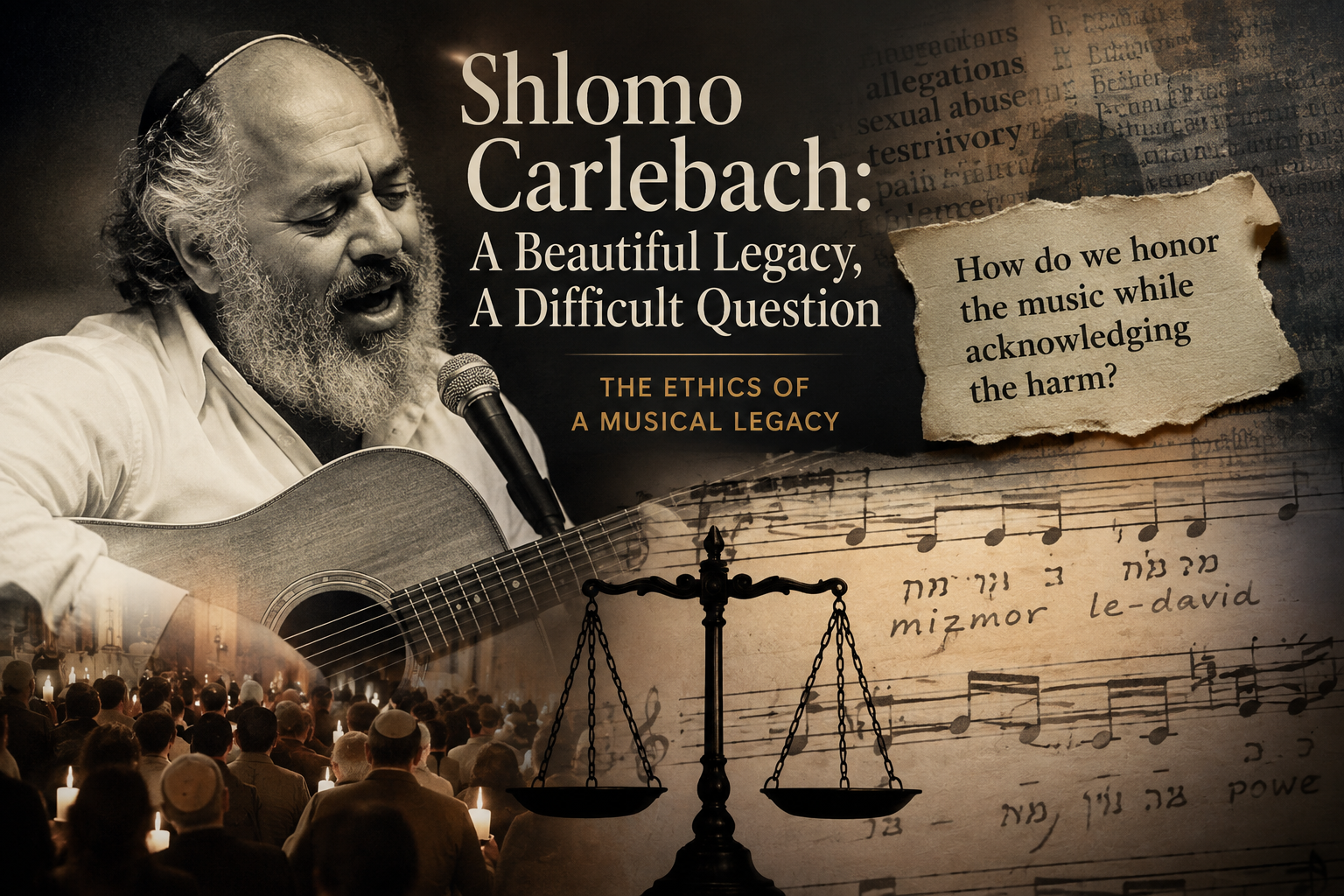
Last month, a new documentary about Shlomo Carlebach titled The Darkest Light was released. The film explores Rabbi Carlebach’s extraordinary musical and spiritual legacy while directly confronting allegations of sexual abuse made by numerous women. A central voice in the film is his daughter, singer Neshama Carlebach, who openly grapples with the painful and conflicting aspects of her father’s story.
The documentary has renewed attention on allegations that have lingered for decades. Because Carlebach passed away in 1994, there was never a legal proceeding to formally adjudicate these claims. That leaves each of us—and our communities—to wrestle with the available testimony and decide how to respond.
When new details emerge about figures whose work we have loved, we are forced to ask some tough ethical questions: Can we separate the artist from the art? Does enjoying the music imply we endorse the person who wrote it? And once we learn something deeply troubling about a creator, does it permanently change what the art means to us?
There are no easy answers.
On one hand, many feel that once a piece of art enters the world, it takes on a life independent of its creator. Carlebach’s melodies, for instance, are now deeply woven into the fabric of Jewish prayer. In many synagogues, worshippers singing Mizmor L’David or Am Yisrael Chai aren’t thinking about Carlebach at all; the tunes simply feel like part of our collective heritage. From this point of view, throwing out the music would mean losing something genuinely meaningful that brings people together in prayer.
One might compare this to reading the works of philosophers who held racist views, listening to composers who behaved cruelly, or admiring paintings by artists who were morally compromised. Human culture is filled with masterpieces created by imperfect—even terrible—people.
On the other hand, many argue that playing and celebrating the music keeps the man on a pedestal. Labels like “Carlebach minyan” or tribute concerts honor him as a spiritual mentor. For survivors of abuse, hearing these tunes—and seeing the composer praised—can be genuinely painful, signaling that their pain takes a backseat to his legacy.
Personally, I tend to land somewhere in the middle—a stance I think many of our communities could adopt without abandoning their values.
Why can’t congregations continue singing Carlebach’s melodies without romanticizing his life? Why can’t we keep the music while being completely honest about the man? We don’t need to brand a Friday night service as a “Carlebach minyan.” We can teach the history openly, acknowledging both the beauty of the tunes and the harm reported by those who came forward. Above all, we should be deeply sensitive if survivors in our midst find the music distressing, ensuring their perspectives are treated with respect.
This middle path avoids both turning a blind eye and total cancellation.
Our tradition has long understood that even great figures can be deeply flawed; the Talmud never hides the moral shortcomings of biblical leaders. At the same time, Judaism places immense weight on kavod habriyot—human dignity—and on protecting the vulnerable. There is also a distinction between zekhut (merit) and kedushah (holiness). Someone may possess extraordinary gifts without being a saint. Carlebach’s musical genius does not require us to conclude that he was morally exemplary.
So where does that leave our synagogues?
Communities across the country are reaching different conclusions. Some shuls have stopped using his compositions entirely. Others continue to sing them because the tunes have become part of the shared prayer experience rather than an act of praise for the composer. Many are weighing factors locally: Are there survivors in the room who feel uncomfortable? Is the community worshiping the personality, or just using familiar melodies?
For Jewish communities, the challenge is especially acute because Carlebach’s melodies are not merely entertainment—they have become vehicles of prayer. Each congregation must ask not only, “Is this beautiful music?” but also, “Does singing it today help us draw closer to God while honoring the dignity of every human being?” That question may lead different communities to different answers, and there is room for thoughtful disagreement … as long as the discussion gives genuine weight to both the enduring spiritual power of the music and the experiences of those who say they were harmed.
Carlebach is hardly unique. Similar debates surround figures such as Woody Allen, Roman Polanski, Bill Cosby, and others. Society has not settled on a single rule because the relevant considerations vary: the nature of the misconduct, the strength of the evidence, whether the person acknowledged wrongdoing, whether victims are still living, whether the work itself is tied to the misconduct, and whether continuing to consume the work materially benefits the individual or their estate.
Rather than searching for a single rigid rule, maybe the most honest response is a bit of moral humility. We don’t have to pretend that talent excuses bad behavior, nor do we have to act as if serious wrongdoing wipes out everything good a person created. Holding both truths at once is uncomfortable, but it feels like the most candid way forward.
In the end, we don’t have to choose between believing the artist was entirely wonderful or entirely terrible. We can simply say: This artist created something beautiful, and this artist also caused real pain. Neither fact erases the other.
The real work begins with how we choose to carry that tension forward.
And that is a question that each congregation will need to answer.