


Mathematics Teaching Professor, Author
Celebrating Jewish Britain: Inside the Jewish Museum London
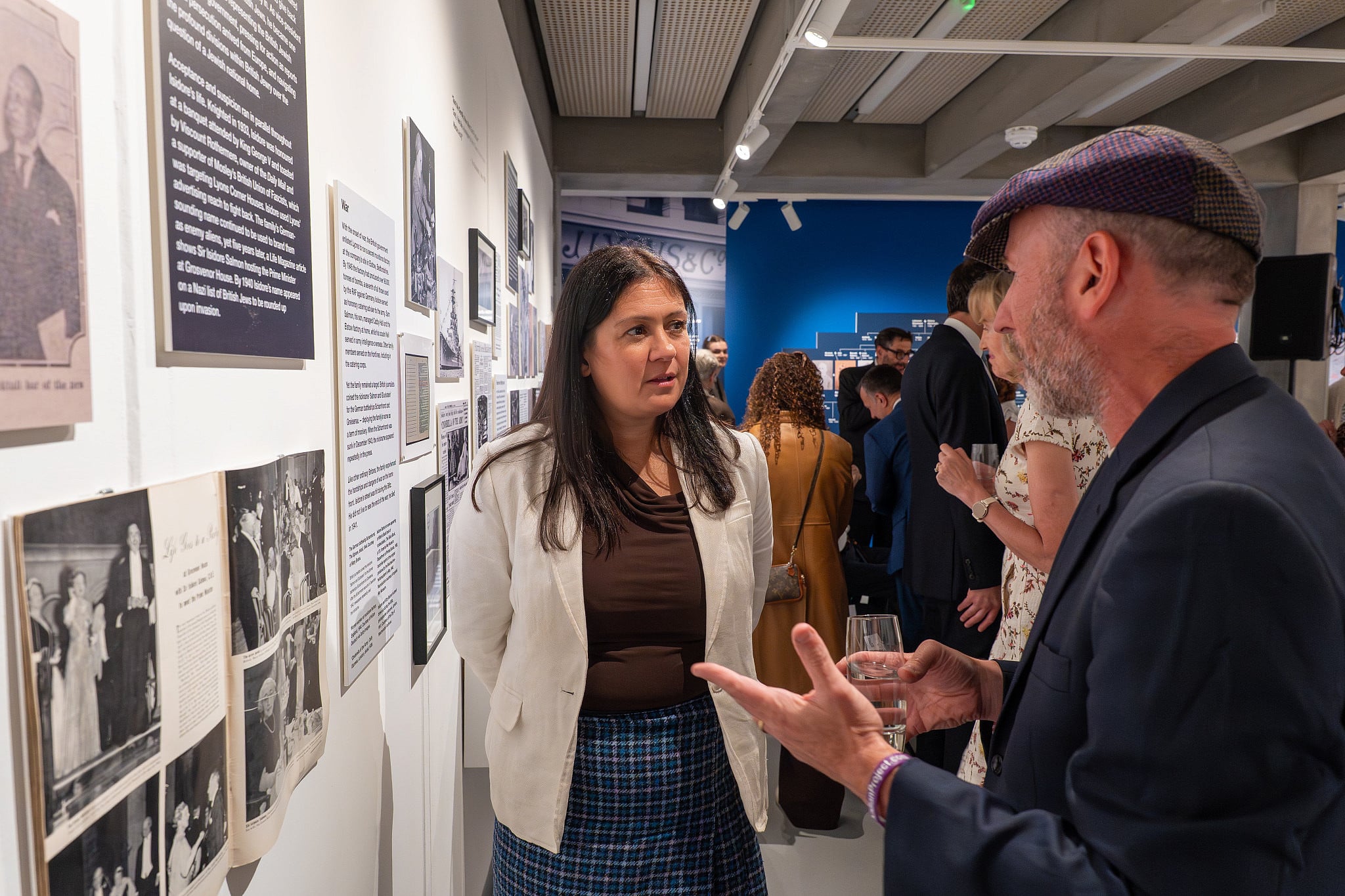
Opening of “Two Rooms” by Jewish Museum London, with UK Culture Secretary Lisa Nandy (left) and Thomas Harding (right), whose book inspired Legacy: The Story of the Jewish Family who Founded J. Lyons and Fed Britain’ (Source: Jewish Museum of London)
The recently launched the new “Two Rooms” by Jewish Museum London is an interim exhibition space in two rooms at the JW3 Jewish Community Center in Northwest London, while the Jewish Museum London prepares to open a permanent space by 2030. While modest in scale, “Two Rooms” offers a fascinating introduction to Jewish life in Britain. Through engaging exhibitions, historical artifacts, photographs, and personal stories, this new project space explores the history, culture, and contributions of British Jews, from their roles in trade unions, the food industry, and public life to the experiences of everyday Jewish families in the early 20th century.
“Two Rooms” has recently launched two different but linked exhibitions: Legacy: The Story of the Jewish Family who Founded J. Lyon, will continue until Nov 15 and Fed Britain and Tree of Life: Stories from Jewish Museum London’s Collection which is on permanent exhibit. Both exhibitions celebrate the Jewish contribution to British life. The ‘Legacy’ exhibition is particularly significant in the UK, where the Lyons catering dynasty was a part of British life for almost a century from the late nineteenth century to the 1970s, from the famous Lyons teashops, to cakes, ice creams and even the first fast food in the UK with their Wimpy hamburger chain.
“Two Rooms” by Jewish Museum London will continue to present a program of new exhibitions about different aspects of British Jewish culture and creates a thoughtful and moving journey through Britain’s Jewish heritage. For anyone interested in understanding Jewish life in Britain, the museum is an essential visit, demonstrating how a community’s history and traditions can be documented, celebrated and shared with future generations.
I would like to thank the esteemed Curator Dr. Nina Pearlman, Sarah Greenberg and Charles Ross for their support and guidance.
Museum
Currently based in a temporary space the JW3 Jewish Community Centre, where it can experiment with different curatorial ideas while it prepares to open a new permanent home by 2030, the Jewish Museum London has received a £1 million UK government grant to support its relocation and public outreach. Admission is free, and the space is air-conditioned and there is disabled access.
Visitors can also enjoy the kosher café at JW3. Located opposite the Camden Art Centre and near the Freud Museum ‘Two Rooms’ by Jewish Museum London is well placed to explore as part of Northwest London’s cultural trail, making it easy to combine with other nearby attractions.
Two Rooms
While preparing for a new permanent home, the Jewish Museum London welcomes visitors to Two Rooms, its interim exhibition space at the JW3 community. Drawing on the museum’s collection of more than 35,000 objects, the exhibitions explore the rich history, diversity, and evolving story of British Jewish life.
Objects are thoughtfully arranged in conversation with one another across different regions and time periods, revealing shared experiences, changing traditions, and the community’s significant social, cultural, and wartime contributions.
According to Curator Nina Pearlman “Working across 35,000 objects to create a small yet permanent display in a temporary space has been an opportunity to think afresh about how Jewish history and culture can be presented, not as a single story, but as many, held together by recurring questions about visibility, belonging, and what it means to be rooted in a place. I hope that the objects do what objects always do: make you see, learn, and experience something you did not expect.”
Room One: Tree of Life
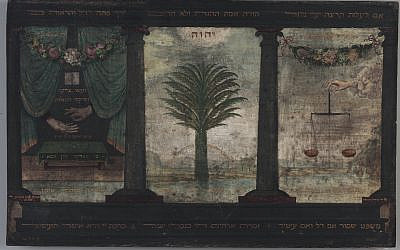
Tree of Life draws on the Jewish Museum London’s collection of more than 35,000 objects to tell the story of Jewish life in Britain from the 1650s to the present day. Bringing together Judaica, everyday artifacts, commemorative objects, photographs, and archival materials, the exhibition serves as both a portrait of Britain’s Jewish community and of the museum’s role in preserving its history.
The exhibition is unified by the metaphor of the Tree of Life or Etz Chayim, which is also the Hebrew name for the wooden rollers around which a Torah scroll is wound. Using the imagery of roots and branches, it explores Jewish identity, social history, and cultural traditions, while revealing how the community has evolved over the centuries. Rather than following a strict timeline, objects are arranged in conversation with one another across different eras and places, drawing connections between past and present.
Highlights include prayer books carried by Jewish servicemen during wartime, a poignant letter written by an evacuated Jewish boy describing Hitler and Charlie Chaplin, family photographs documenting migration to Britain, and a 2025 photograph of a same-sex wedding that was the first multi-faith union held at West London Synagogue.
Digital stories from members of the Jewish community further enrich the exhibition, offering personal reflections on identity, faith, and belonging. Together, these displays provide a powerful and deeply human introduction to the heritage, resilience, and lasting contributions of Jewish communities in Britain.
Room Two: Legacy – The Story of the Jewish Family Who Founded J. Lyons and Fed Britain
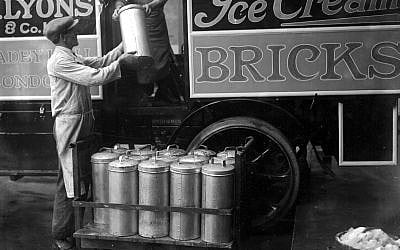
Inspired by Thomas Harding’s book Legacy: The Remarkable Story of J. Lyons and the Family Behind It, this exhibition tells the remarkable story of the Jewish family who built J. Lyons & Co. into one of Britain’s most iconic companies. It traces the rise of the Lyons empire from its celebrated tea shops and Corner Houses to Lyons ice cream, baked goods, the introduction of the Wimpy hamburger chain, the Strand Palace Hotel, and the pioneering LEO computer, one of the world’s first business computers. The company also famously baked a wedding cake for Princess Elizabeth and Prince Philip.
Beyond its commercial success, the exhibition explores broader themes of immigration, entrepreneurship, and the Jewish contribution to British society. Having fled persecution in Germany during the 19th century, the Lyons family overcame prejudice and helped shape everyday life in Britain. Their story also reflects the challenges faced by many Jewish immigrants, from anti-immigrant sentiment following the Aliens Act of 1905 to hostility from Oswald Mosley’s British Union of Fascists in the 1930s.
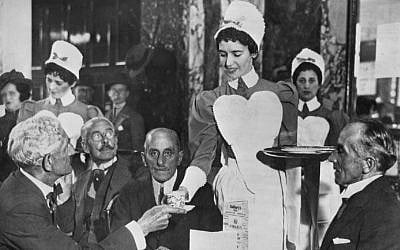
Through personal stories, photographs, and historical objects, Legacy offers a compelling account of resilience, innovation, and the lasting impact of one family’s achievements on Britain.
Online Exhibitions
Readers who cannot visit in person can still explore the Jewish Museum London’s extensive collections through its online exhibitions and digital catalogue. More than 20,000 collection records and images are available online, offering access to centuries of Jewish history, culture, and heritage from anywhere in the world.
Among the featured online exhibitions is Jewish Britain: History in 50 Objects, which traces Jewish life in Britain from medieval times to the present through some of the museum’s most treasured artifacts.
Journey Through Emotions, created by 29 young people, explores the emotions and memories inspired by objects from the collection, while Reflection presents creative responses by members of the University of the Third Age. Reflections JCoSS, developed by sixth-form students at JCoSS, the Jewish Community Secondary School, offers thoughtful personal interpretations of selected objects, highlighting the continuing relevance of the museum’s collection to new generations.
External Venues
While working towards a new permanent home, the Jewish Museum London continues to operate as a “museum without walls”, sharing its collections through displays at partner venues across the UK. Current exhibitions include Voices on Stage: Women in Yiddish Theatre at Bradford Reform Synagogue, celebrating pioneering women of Yiddish theatre; Through a Queer Lens at the Manchester Jewish Museum, featuring powerful photographic portraits and personal stories; a display on the history of the Jewish Deaf community at the Jewish Deaf Association; and a new exhibition at the National Holocaust Centre and Museum highlighting the life and legacy of Holocaust survivor Leon Greenman.
Learning
The Jewish Museum London offers virtual classrooms, outreach programs and workshops that bring Jewish history, culture, and traditions to schools across the UK. Its award-winning primary and secondary school sessions explore topics including Jewish life, Shabbat, Hanukkah, and Passover, while special projects such as I Say British, You Say Jewish and Museum on the Move extend learning beyond the museum through national partnerships and community collaborations.
Historical Backgrounds
Jews first arrived in England shortly after the Norman Conquest of 1066, when William the Conqueror invited Jewish financiers and merchants from Rouen, France, to help develop the country’s economy. In 1070, in London, the Jewish community established itself around the area known as Old Jewry, which became an important center of medieval Jewish life.
In 1290, King Edward I expelled all Jews from England, including the Jewish communities of London. Thousands of Jews were forced to leave the country, marking the end of medieval Jewish life in England for more than three centuries. The expulsion was driven by political, financial, and religious pressures, including Edward I’s need for parliamentary support, reduced reliance on Jewish moneylenders, and pressure from the Church.
Following a petition by Rabbi Menasseh ben Israel of Amsterdam and Jewish merchants, Oliver Cromwell informally allowed Jews to return to England in 1656, ending the expulsion that began in 1290. This marked the beginning of gradual integration, allowing the community to establish a lasting presence in British society.
Between 1700 and 1900, England’s Jewish population grew from about 8,000 to nearly 60,000. Early 1700s life was mostly shaped by wealthy Sephardic merchants. By 1900, waves of poor Ashkenazi refugees fleeing Eastern European violence changed the community.
Which brings us to 1932.
In 1932, England was deeply caught in the Great Depression. The country faced severe economic struggle, resulting in about 3.5 million unemployed workers. Many families survived on state aid known as the dole. This era was marked by a sharp divide between rich and poor, political tension, and early forms of modern technology.
London in 1932 was a city of deep extremes. It was a time of severe poverty alongside modern changes. The streets were full of poor workers and protesting hunger marchers. Still, new radio technology and art-deco buildings were changing daily life.
In 1932, London’s Jewish life was split in two. Most Jews lived in the poor, bustling East End. The streets were filled with Yiddish, kosher markets, and garment workshops. Wealthier, established families lived in the West End and suburbs like Golders Green.
It was during this year, 1932, that the Jewish community also founded the Jewish Museum London. Established by Professor Cecil Roth, Alfred Rubens, and Wilfred Samuel, the museum was originally located in Bloomsbury before moving to its former Camden Town home.
The London Museum of Jewish Life was founded in 1983 as the Museum of the Jewish East End, created to preserve the disappearing heritage of London’s historic Jewish community. Over time, it expanded to explore Jewish life across London, including refugee experiences and Holocaust education.
In 1995, the London Museum of Jewish Life merged with the Jewish Museum London and later moved to its Camden Town site, opening to the public in 2010 and closing in 2023. Today the Jewish Museum London is planning to reopen a permanent space in 2030 and meanwhile its award-winning education programs continue to engage students through exhibitions, learning resources and outreach activities exploring Jewish history and culture in Britain.
The Jewish Museum London is more than a museum; it is a living archive of Britain’s Jewish heritage. Through its carefully curated exhibitions, personal stories, and expanding digital collections, it preserves the past while connecting with the present. Whether visiting in person or exploring its online collections, visitors can gain a deeper understanding of the resilience, diversity, and lasting contributions of Jewish communities in Britain.
Contact Information:
‘Two Rooms’ by Jewish Museum London, Top Floor of JW3, 341-351 Finchley Road, London NW3 6ET.
Phone: +44 20 7284 7384
Email: admin@jewishmuseum.org.uk
Website: https://jewishmuseum.org.uk/