Ceremony without courage

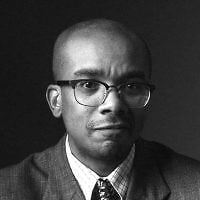
There is a peculiar modern achievement in making punishment track the truth-teller rather than the lie. Institutions manage it with surprising ease. They praise vigilance, invoke memory, speak of historical responsibility – and then, when someone speaks plainly about what they claim to oppose, candour becomes the offence. That is the logic behind the removal of Professor Joël Kotek from the Belgian delegation to the IHRA. He was not accused of distortion or incitement. He appears to have been penalised for naming antisemitism in the present tense.
It would be absurd if it were not so familiar. The IHRA exists to preserve memory, but memory is not a museum display with good lighting and no exits. It is meant to illuminate the present. When a scholar of genocide points to contemporary realities – public insults, threats, unease around Jewish schools, the way antisemitic language slips into “debate” – he is doing the job.
That, it seems, is the problem. Many organisations are comfortable with antisemitism as history: bounded, curated, finished. The dead are easier to honour than the living are to hear. A commemorative speech costs nothing. A candle asks nothing. A plaque does not answer back. But when memory speaks about present danger, it stops flattering and starts accusing. That is when institutional confidence falters.
The pattern is drearily familiar. It rests on a preference for the safe Jew: remembered, abstract, confined to anniversaries and careful language. This figure can be mourned without being heard. He belongs to history, not to argument. The living Jew is less convenient. He notices the shift in atmosphere. He points to threats. He expects memory to carry obligations.
That is why Kotek’s removal matters. It reflects a habit: celebrate the witness, then sideline him when the testimony turns contemporary. One may speak about the past, provided it is not used as a mirror. Raise the mirror and the tone changes – procedures, sensitivities, concerns about phrasing. The message is clear enough: remember, but do not connect.
There is another irony. Those who define antisemitism most confidently are not always those who live with its daily pressure. That does not make them wrong. It does mean their authority should be examined more carefully than it often is. Definitions are not neutral. They decide what counts, what is excused, and what is treated as an inconvenience.
If Siska Castelain played a role in Kotek’s removal, that role should be assessed on judgment and accountability, not identity. The question is who gets to set the boundaries of acceptable speech in the name of protection. When those boundaries are drawn so tightly that a scholar of antisemitism is sanctioned for speaking plainly, it is not courage. It is managerial caution dressed up as principle.
This, too, is familiar. Institutions prefer a form of responsibility that is tidy and low-risk. They like enemies that stay in the past and solidarity that can be scheduled. They are less comfortable with those who insist that antisemitism is current – present in speech, in public space, in daily life. Such people complicate things. They make them real.
There is a deeper unease here. In societies shaped by the legacy of persecution, support for Jews can slip into a kind of inherited penance rather than a practice of justice. The language may be sincere. The motive is often to feel clean in the presence of historical horror. That sympathy can be loud. It is not always steady. It tends to stop where consequences begin.
You can see it in the contrast between past and present. Old atrocities are denounced with confidence because they cost nothing now. Contemporary antisemitism, named too directly or too close to institutions, produces discomfort. The reaction is not always denial. Often it is irritation. As if the problem were the person who pointed it out.
What Kotek’s case shows is not just a personnel decision. It exposes a fragility in institutions that claim to confront antisemitism while shrinking from direct speech about it. A serious democracy does not sideline expertise because it is awkward. It does not ask scholars to become decorative. It does not invite witnesses and then object when they testify.
If the IHRA cannot tolerate a veteran scholar saying what he sees, it risks becoming a stage set – presentable, hollow, convenient. The danger is not only to one man. It is to the meaning of remembrance itself. Detached from the present, memory becomes manageable. It can be honoured without being followed.
Once that happens, its force is gone. It sits neatly framed, away from the friction of real life. But antisemitism is not an exhibit. It does not stay behind glass. Those who speak about it plainly should not be treated as the disruption.
The final insult is the appeal to dignity as a reason for silence. Restraint is praised. Moderation is urged. The case must not be overstated. In practice, this caution allows the problem to grow while statements are drafted and redrafted. The issue was never that Kotek spoke too strongly. It is that accuracy has become awkward.
A serious effort against antisemitism cannot run on ceremony. It requires clarity, discomfort, and a willingness to name what is there. If a scholar is pushed aside for doing that, the problem is not his tone. It lies with those who prefer vigilance without consequence.
It is a neat system. It is also a disgrace.