Middle East Analyst
Chabad, Jared Kushner, Tucker Carlson, and the Third Temple
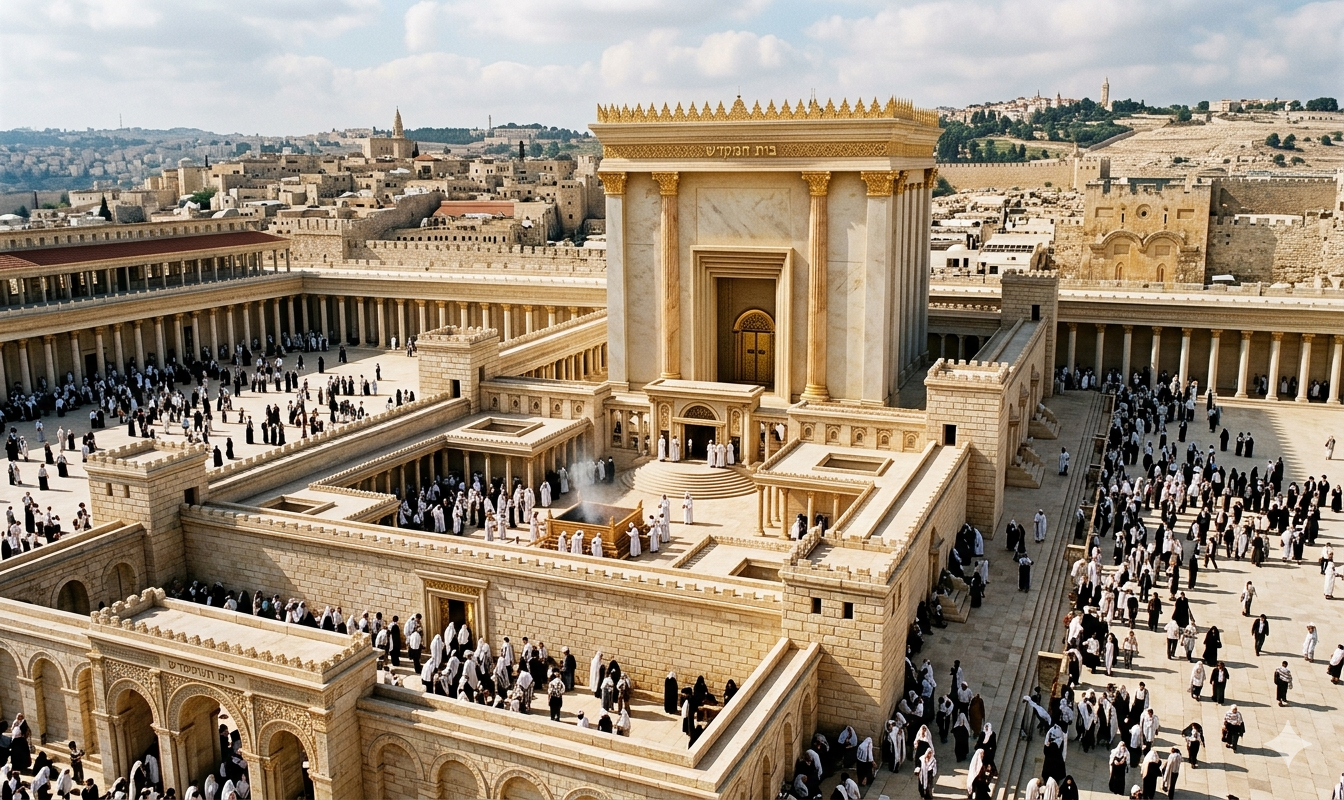
AI generated by author
Faith, Fact, and Friction: Assessing Chabad’s Role in Contemporary Geopolitics
For decades, the Chabad-Lubavitch movement was best known to the general public as a visible—if somewhat enigmatic—presence in global travel hubs, business districts, and university campuses. Through its network of Chabad Houses, emissaries, and community programs, the movement built a worldwide infrastructure devoted primarily to Jewish religious outreach. Travelers encountering its “Mitzvah Tanks” in major cities or its welcoming centers near airports were far more likely to associate Chabad with hospitality and spiritual engagement than with geopolitics.
Recently, however, the movement has been pulled into a far more contentious conversation. A mix of an investigative document, social-media amplification, and commentary from high-profile media figures has pushed Chabad into debates about religion, influence, and Middle Eastern policy. Understanding the controversy requires separating raw information from verified intelligence and distinguishing theological belief from political intent.
The initial catalyst for the discussion was a recently released 2020 memorandum contained within the FBI’s investigative files related to Jeffrey Epstein. The document records statements from a Confidential Human Source (CHS) who alleged that the Chabad network had connections to Jared Kushner, the former presidential advisor and son-in-law of President Donald Trump. According to the source, Chabad was attempting to co-opt the Trump presidency, presumably through Kushner who exercised significant influence over policy decisions, including aspects of the administration’s Middle East diplomacy. The informant also alleged that Chabad had become state-sanction Judaism in Russia and Kushner’s investment in the Kremlin backed holding company Cadre was the real Russian collusion story.
A link to the original memo is provided so readers can review the source reporting directly and draw their own conclusions.
In intelligence and investigative work, the status of such a report matters as much as its content. CHS reporting is considered raw reporting: a record of what a source claims, preserved so it can later be compared against other information. It is not itself a validated conclusion by investigators. Agencies retain such reports precisely because individual statements may later prove relevant when corroborated—or may ultimately prove unreliable.
Nevertheless, the appearance of Chabad and Kushner within the same investigative document inevitably drew attention. Kushner played a prominent role in shaping the diplomatic initiative that produced the Abraham Accords, making any suggestion of religious influence on policy particularly sensitive. In a moment already defined by heightened tensions across the Middle East, the intersection of religion, intelligence reporting, and diplomacy created fertile ground for speculation.
The controversy escalated when media commentator Tucker Carlson discussed the issue in a widely circulated podcast. Carlson suggested that the Chabad movement—or figures influenced by it— encouraged an escalatory conflict with Iran in pursuit of a religious objective: the destruction of the Al-Aqsa Mosque and the rebuilding of a Jewish Third Temple in Jerusalem. In this telling, geopolitical confrontation was not merely a strategic dispute but part of a broader religious project.
Carlson’s argument drew heavily on symbolic observations. One example involved images of Israeli soldiers wearing patches depicting the Third Temple, which he interpreted as evidence that messianic aspirations had penetrated military culture and strategic thinking. From these fragments he constructed a broader narrative suggesting that religious motivations might be shaping global conflict.
Questions about the intersection of religion and politics are entirely legitimate. Religious ideas have historically influenced political leaders, social movements, and national identities across the world. Yet Carlson’s interpretation illustrates a common feature of modern media debates: the rapid construction of sweeping conclusions from limited or unverified evidence. The presence of religious symbolism in public life does not necessarily indicate coordinated political intent, and interpreting such imagery requires a clear understanding of the religious traditions involved.
In this case, evaluating the claims requires examining Chabad’s actual theology. The movement does hold a messianic outlook in the sense that it anticipates the eventual arrival of the Jewish Messiah and the restoration of the Temple in Jerusalem. But its interpretation of that belief differs significantly from the activist approaches sometimes found in other corners of Israeli religious politics.
Chabad’s teachings follow the guidance of the late Lubavitcher Rebbe, Menachem Mendel Schneerson. Under his leadership the movement emphasized what scholars often describe as spiritual or passive messianism. In this framework, redemption emerges gradually through ethical conduct, religious observance, and acts of kindness that elevate the moral character of society. The rebuilding of the Temple is not viewed as a political project to be achieved through warfare or the destruction of existing holy sites. Instead, it is understood as a divine development that follows a broader transformation of human behavior.
This perspective contrasts with the outlook of certain activist organizations in Israel that advocate preparing directly for the restoration of the Temple. One such group, the Temple Institute in Jerusalem, focuses on research, ritual preparation, and public education related to the ancient sanctuary. While the Temple Institute occupies a prominent place in debates about the future of the Temple Mount, it is institutionally separate from Chabad and reflects a different ideological current within Jewish religious life.
The distinction is important because visual symbols—such as depictions of a future Temple—circulate widely in Israeli religious culture. Such imagery may appear on patches, posters, or social-media graphics without necessarily representing a coordinated political agenda. In Israel’s diverse religious landscape, these symbols can carry devotional or cultural meanings that differ from the strategic interpretations sometimes attached to them by outside observers.
Equally significant is the structure of Chabad itself. Unlike hierarchical religious institutions with centralized authority directing policy from the top, Chabad operates through a decentralized network of emissaries known as shluchim. These rabbinic couples establish local Chabad Houses across the world, often working with considerable autonomy as they build religious communities and charitable initiatives. This organizational model has enabled the movement’s global expansion, but it also makes coordinated geopolitical direction from a central leadership far less plausible than critics sometimes assume.
The discussion of Kushner’s relationship to Chabad also benefits from context. Kushner comes from a Modern Orthodox Jewish family whose philanthropic activities have intersected with many Jewish institutions, including Chabad organizations. Such connections reflect social and charitable networks common within religious communities. They indicate proximity, but they do not necessarily imply adherence to a specific theological agenda or participation in an organized political movement.
When these elements are considered together, two broad interpretations emerge. One treats Chabad as a covert orchestrator of geopolitical events, influencing policymakers and encouraging conflict in pursuit of religious goals. For such a claim to move beyond speculation, however, the evidentiary bar would need to be high: documentary proof of coordinated planning, financial links demonstrating organized direction, or corroborated testimony from multiple independent sources.
The second interpretation is more conventional. In this view, the overlap between religious communities and political actors reflects the normal dynamics of social life. Policymakers, like individuals in any field, maintain networks shaped by family, faith, business, and philanthropy. Religious leaders may influence ethical perspectives or offer guidance, but such relationships do not necessarily translate into organized geopolitical strategy.
At present, publicly available evidence supports the latter explanation more strongly. The FBI memorandum records a source’s claims but does not confirm them, while the broader narrative connecting Chabad theology to global conflict relies largely on symbolic interpretation rather than documented coordination.
The larger lesson may lie less in the substance of the allegations than in the dynamics of modern information environments. Intelligence fragments, religious symbolism, and geopolitical anxiety can combine to produce narratives that spread rapidly across digital networks and international media. Once these narratives gain traction, they can generate intense reactions long before the underlying facts have been carefully examined.
For observers seeking clarity rather than controversy, the most instructive story may therefore be less about hidden conspiracies than about the enduring influence of ideas and relationships. In a world where faith communities span continents and political decisions reverberate globally, those human networks remain powerful forces—not necessarily through secret orchestration, but through the everyday connections that shape how individuals interpret events and attempt to influence them.
Related Topics