Chana’s Two Prayers, One Story
The first words I hope to say as chazan on Rosh Hashanah are:
הִנְנִי הֶעָנִי מִמַּעַשׂ
Here I am, poor in deeds.
Before beginning Musaf, I will acknowledge how inadequate I am for the task of representing the community before G-d. On the day we crown the King of the universe, I will begin with my own smallness. And it is completely true.
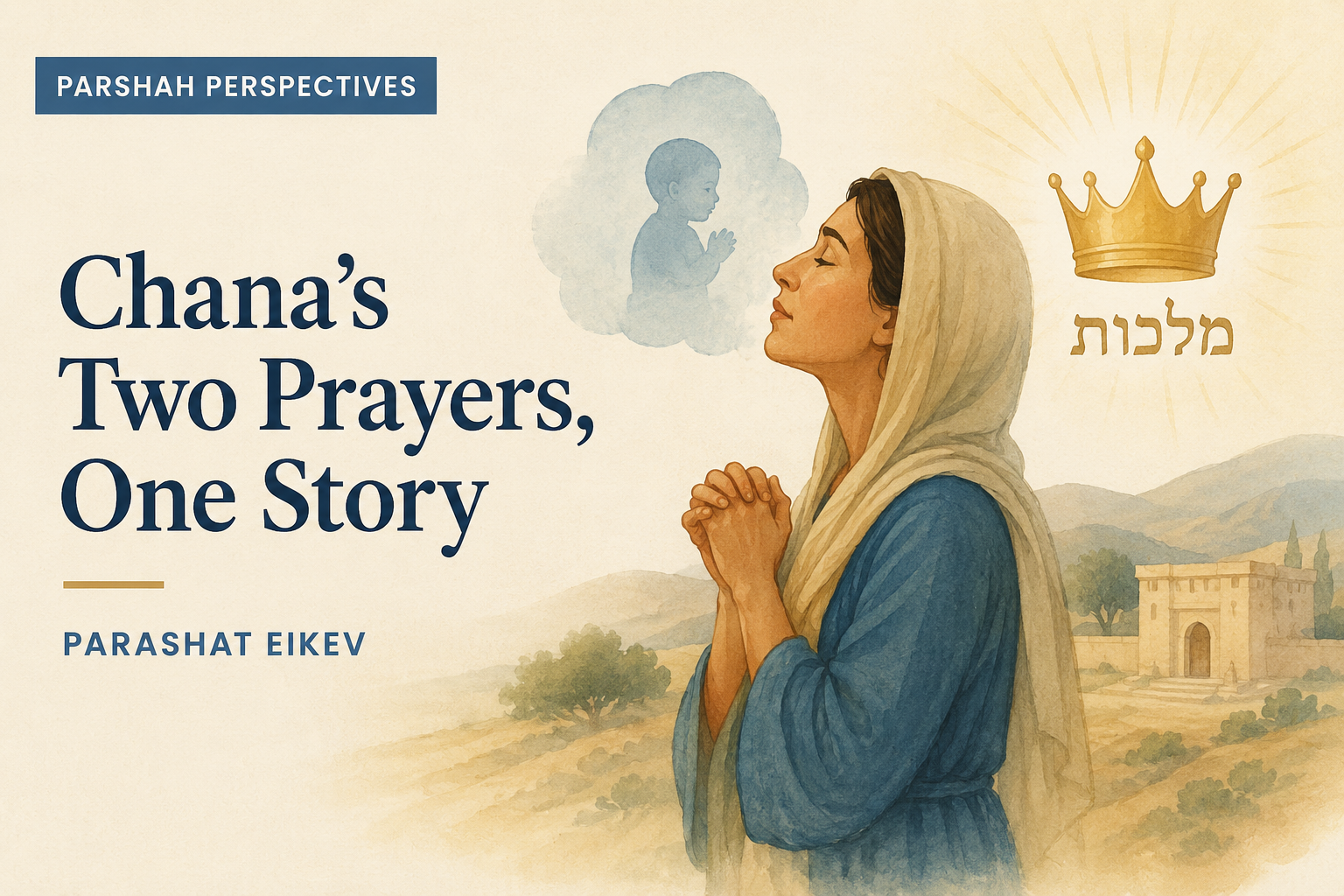
As I prepare, I find myself returning to Chana. Her story contains two prayers that seem very different: one intensely personal, the other filled with visions of kingship and national destiny. Yet on Rosh Hashanah we encounter both, because together they tell a single story.
Chana appears twice in the Rosh Hashanah experience. Her story forms the haftarah of the first day, and her prayer helped shape important elements of the Rosh Hashanah Musaf service. The Gemara derives key laws of prayer from Chana’s conduct and associates the nine blessings of the Rosh Hashanah Musaf Amidah with the nine mentions of G-d’s name in her song.
Her first prayer comes from deep personal pain. She longs for a child and believes that G-d can help her when nobody else can.
וְחַנָּה הִיא מְדַבֶּרֶת עַל־לִבָּהּ רַק שְׂפָתֶיהָ נָּעוֹת וְקוֹלָהּ לֹא יִשָּׁמֵעַ
Chana was speaking upon her heart; only her lips moved, but her voice could not be heard.
(I Shmuel 1:13)
Eli sees her and misunderstands what is happening. Chana explains:
וָאֶשְׁפֹּךְ אֶת־נַפְשִׁי לִפְנֵי ה׳
I have poured out my soul before G-d.
(I Shmuel 1:15)
This is one of the most personal prayers in Tanach. There is no audience, no rhetoric, no public message. Chana brings G-d her private pain and trusts that He hears her.
This week’s parashah, Eikev, describes prayer as service of the heart:
וּלְעָבְדוֹ בְּכָל־לְבַבְכֶם
To serve Him with all your heart.
(Devarim 11:13)
The Gemara explains that this service is prayer. It also learns from Chana how the Amidah should be offered: with concentration, moving the lips but without raising the voice.
The way Jews pray every day is therefore shaped by Chana’s personal encounter with G-d.
Yet her prayer is not only personal.
The child she seeks is Shmuel. The child she dedicates to G-d will become one of the greatest leaders in Jewish history: prophet, judge, teacher, and the figure who will anoint Israel’s first kings.
What begins as the prayer of one woman will shape the future of an entire nation.
Then comes Chana’s second prayer.
After Shmuel is born and she fulfils her promise to bring him to serve at the Mishkan, she declares:
אֵין־קָדוֹשׁ כַּה׳ כִּי אֵין בִּלְתֶּךָ וְאֵין צוּר כֵּאלֹהֵינוּ
There is no holy one like G-d, for there is none beside You; there is no rock like our G-d.
(I Shmuel 2:2)
Now her vision expands far beyond her own life.
She concludes:
ה׳ יָדִין אַפְסֵי־אָרֶץ וְיִתֶּן־עֹז לְמַלְכּוֹ וְיָרֵם קֶרֶן מְשִׁיחוֹ
G-d will judge the ends of the earth; He will give strength to His king and raise the power of His anointed.
(I Shmuel 2:10)
There is no king in Israel when she says this. Chana is already looking beyond her own story towards the future of her people and towards G-d’s rule over the world.
This prayer resonates deeply with Rosh Hashanah. We recognise G-d as King. We proclaim that He judges all humanity. We step beyond our individual concerns and confront a larger reality.
But perhaps the most important point is that these are not really two different prayers.
The first is not merely personal. The second is not merely national or universal.
They are two parts of the same story.
The G-d who rules the world is the G-d who listens to an individual whisper. The G-d who judges the ends of the earth is the G-d before whom Chana pours out her soul.
Chana does not move from one G-d to another. She discovers that they are the same.
Her private prayer ultimately transforms the destiny of Israel. Her national vision grows out of a deeply personal relationship with G-d. The journey from the tears of Shiloh to the kingship of Rosh Hashanah is not a change of subject. It is a widening of perspective.
Perhaps that is why Rosh Hashanah gives us both prayers.
Before we can crown G-d as King of the universe, we must know that He hears the prayers of individuals. And once we know that, we can begin to understand what His kingship means.
That is what I hope to carry with me if I rise to lead the congregation on Rosh Hashanah.
Like Chana, I will begin with my own smallness. The words Hineni ask a chazan to acknowledge his limitations before attempting to speak on behalf of others. Before I can represent a community, I need the honesty to stand before G-d with my own hopes, fears, and imperfections, and to bring Him what is genuinely in my heart.
But Chana’s story reminds me that prayer cannot end there. Her whispered plea in Shiloh became part of a much larger story, shaping the future of her people and leading her to a vision of G-d’s rule over the whole world. What began as a personal prayer widened into something far greater.
Perhaps that is the journey that Rosh Hashanah asks of all of us. We begin with our own lives, our own struggles, and our own relationship with G-d. Yet we do not remain there. We are called to recognise that the G-d who listens to our quietest prayers is also the King before whom all humanity stands.
Chana’s two prayers tell one story. They teach that personal prayer and Malchuyot are not competing ideas but parts of the same religious experience. The One who hears is the One who reigns.
That is the lesson I hope to carry with me as I stand before the amud on Rosh Hashanah.