


Change the paradigm!
No matter how loud the election cacophony and how clear what needs to be done, it’s also clear that we Jewish Israelis must rethink our views on Arab political parties if there is to be sane governance here
I want to close my eyes and ears. Indulge me, because for the past few months, candidates have been vying for – no, demanding – my vote come October 27.
Drivetime radio news programs blast policial voices in paid spots. Browsers and apps burst with push ads featuring political faces. Some of these faces peer down at us from gargantuan posters along Tel Aviv’s Ayalon Freeway, causing us to miss off-ramps. (Okay. I didn’t complain about the Bar Refaeli and Sydney Sweeney posters. Go sue me.)
There are also the pre-recorded political spots on TV.
In one, posted by the ultra-Orthodox Shas Party, a deeply religious family joyously welcomes a soldier son home for Shabbat dinner. You may remember that the top leaders of Shas all bragged about having lots of draft evaders in their families. A judge ordered the spot’s removal. Not out of truth in advertising. Because the IDF is out of bounds at election time.
In another, the Likud, using AI, depicted the head of a rival party running slo-mo through a gauzy field toward a young man in civilian clothes. At the last minute, the party head swerves into the arms of a smugly satisfied Arab politician, leaving the chap deeply hurt. To many viewers, the young man resembled the party leader’s son, who not long previously had fallen in battle. There was a massive backlash. The spot vanished.
And then there are the robocalls. At all hours. “This is Yossi Gasbag of the Whatever Party. Will you be voting?” Gasbag’s voice waits for a response. Very sophisticated. So I say I’ll cast a vote for the Whatever Party “when Hell freezes over.” A decidedly staccato, robotic voice intervenes: “That is the name of a 1994 Eagles album. What does it have to do with Yossi Gasbag?”
AI is getting frighteningly good. Israeli politics? Frightening will do.
ALL ELECTIONS HAVE THEIR highs and lows, but I’m heading into this week’s vote with an enormous sense of unease. It’s not just an election, you see. It’s a referendum on the performance of one Bibi Netanyahu, who’s had a stranglehold on Israeli politics for what seems to be centuries and has presided over far too many failures and catastrophes to ignore.
(It’s also an election that could end up determining the future – and fate – of Israel. Don’t let anyone tell you otherwise.)
You have the so-called opposition, a jumble of left to center-right Jewish parties whose widely varying planks are interwoven solely by the unbearable itch to send Bibi home. Then there’s what can be called the Netanyahu bloc, an amalgam of Jewish parties showcasing far-right racists, ultra-Orthodox draft dodgers, whiney nincompoops and shifty ne’er-do-wells.
Every respected opinion poll shows at least a tie or gives the opposition a slight edge. Unfortunately for the opposition, though, slight edges aren’t enough. And it’s plumb out of Jewish parties. The only ones left are in the pro-Bibi camp. In opposition eyes, they are no less anathema than Netanyahu himself.
This means that the only place to turn is Israel’s Arab parties.
The government we had prior to the current catastrophe was pretty much the same hodgepodge of Jewish anti-Bibi parties, though with one exception: the Arab sector’s Ra’am. Ra’am is a conservative party with a reputation for being Islamist (you read that right) and which for the previous three decades had been, at least in Jewish eyes, just another Arab party advocating for Gaza Strip and West Bank Palestinians.
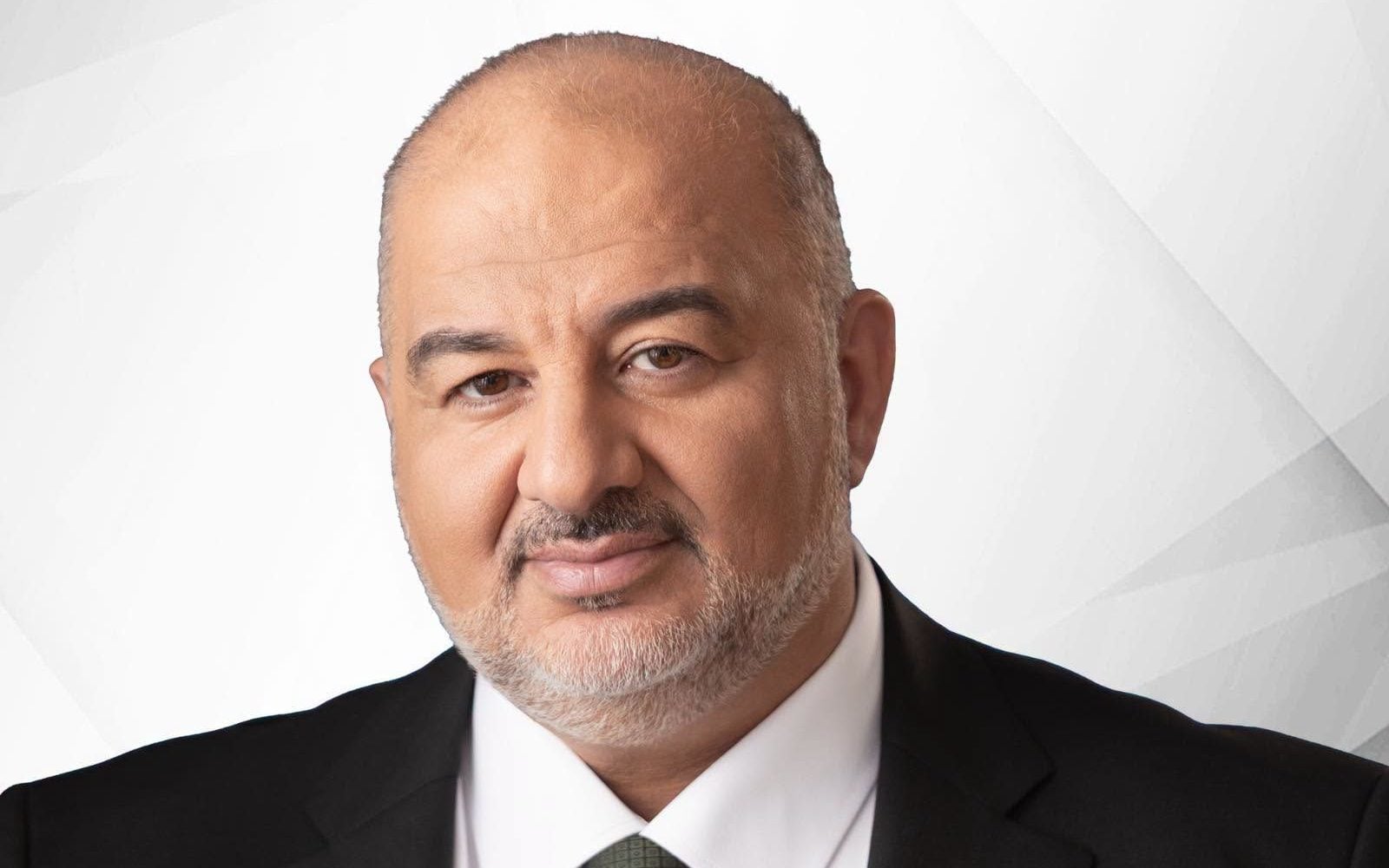
In June 2021, that changed. The secret sauce was Mansour Abbas, a portly, chatty dentist who looks like you and me and long has made it a point to emphasize that he has distanced Ra’am, which he leads, from the influence of its Islamist clerics. (Abbas was the “smugly satisfied Arab politician” depicted in the aforementioned Likud TV spot.)
It’s important to remember that not long ago, when Israel was bouncing from one inconclusive election to the next, Netanyahu wooed Abbas, albeit unsuccessfully. This heresy raised eyebrows among Bibi’s most hardcore supporters but otherwise failed to derail anyone’s train.
Perhaps this is because the Ra’am leader had been speaking warmly of coexistence, and even had acknowledged Jewish suffering in the Holocaust. And once he and his party joined the Naftali Bennett-Yair Lapid-led government that ran Israel from June 2021 through December 2022, he went so far as to use the term “Jewish state.”
“The State of Israel was born a Jewish state and will remain one,” Abbas asserted at a December 2021 conference sponsored by an Israeli media outlet. His remarks were not made on the Knesset floor, but they were enough to raise howls of indignation from other Arab parties.
And two months later, when asked whether Israel was an apartheid state during a teleconference hosted by the center-right Washington Institute for Near East Policy, Abbas responded: “I would not call it apartheid… If there is discrimination in a certain field, then we say that there is discrimination in that specific field.”
His words again angered many of his Arab colleagues in the Knesset, but they left a fuzzy warmth among many Israeli Jews.
Still, some of today’s opposition leaders have hinted broadly or stated flat out that this time around, they don’t want Abbas. What happened? Well, October 7 happened. That bloody, accursed day and its aftermath put the kibosh on most of what little Jewish enthusiasm there had been for peace, a two-state solution and even coexistence with the country’s Arabs.
It matters little that Abbas strongly and clearly condemned Hamas for October 7, calling it “an inhuman and unjustifiable act” and saying the brutal attacks and hostage-taking were “not representative of the Palestinian people.” Ditto his unprecedented appointment of Yoav Segalovich, a widely respected Jewish politician and retired senior police officer, as his Number 2.
This is unfortunate because prior to October 7, many Israelis had been coming around to the reality that the country’s Arabs were here to stay and needed to be welcomed into the inner circle of governance.
I’D LIKE TO HOPE THAT come October 27, there’s a landslide victory for the opposition, something that would return a bit of sanity to Israel. Short of this, I’d settle for a government of opposition parties beefed up by Ra’am.
Yes, Ra’am. The Arab party. This would be entirely sane in and of itself. We’re just going to have to initiate a paradigm shift in our political perceptions.
If we Jewish Israelis can overcome our longtime discomforts and even fears about the country’s Arabs and their parties, I’d be happy to open my eyes and ears to the blurred cacophony of political campaigning. (Well, not happy, but you know what I mean.)
I’d even listen to all the messages and consider all the positions. And I’d lose my cynicism. (Seriously.) So then, maybe, just maybe, I’d be much more willing to vote for a party on its individual merits rather than the level of its disdain for Bibi.
The exigencies of proper and fair governance require this. So does the fate of our country.