
TRAVEL FLASH TIPS ON THE TIMES OF ISRAEL
Chania: Venetian Charm Meets Luxury
Inside Greek Hospitality: Part 3
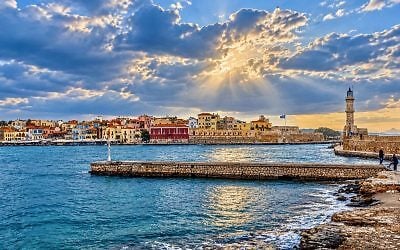
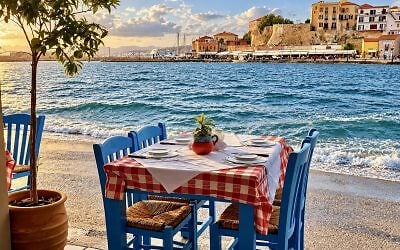
There is something irresistible about Chania. Perhaps it is the Venetian harbour, glowing in the afternoon fall wind and the stormy water. Maybe the narrow streets that twist through centuries of history, or the dramatic contrast between turquoise waters and the mountains rising behind the coast. Whatever the secret, this enchanting town on the northwestern coast of Crete island has become one of Greece most captivating destinations.
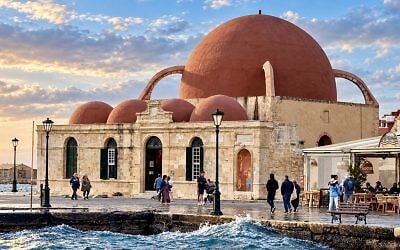
More than 400 years of Venetian rule left an unmistakable mark on Chania’s architecture. Colourful waterfront buildings, elegant balconies, historic churches and lively tavernas create an atmosphere in which the past feels remarkably present. Overlooking the old harbour stands the 17th-century Janissaries Mosque, with its distinctive pink dome, a reminder of the Ottoman conquest of Crete. Today, the former mosque serves as a cultural exhibition space. A short walk away, the 19th-century Greek Orthodox cathedral reflects another chapter in the island’s complex religious and cultural heritage. Yet Chania is more than an open-air history museum. Its boutiques, restaurants and bustling waterfront give the town a contemporary Mediterranean energy, attracting visitors who come for the history and stay for the atmosphere.
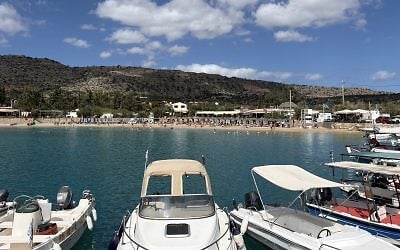
Some 17 kilometres from Chania lies Marathi, a small seaside village known for its two sheltered bays, sandy beaches and calm waters. Long favoured by local residents, particularly affluent families seeking a summer retreat, it offers a quieter alternative to the island’s busier resort destinations. It is here, overlooking the waters of Souda Bay, that one of Crete’s most ambitious new luxury hospitality projects has taken shape.
Opened last year the JW Marriott Crete Resort & Spa is the first JW Marriott property in Greece and the brand’s first Mediterranean beach resort. With 160 rooms, suites and villas, the resort introduces a sophisticated interpretation of coastal luxury, combining contemporary architecture, Cretan traditions and a strong emphasis on wellness.
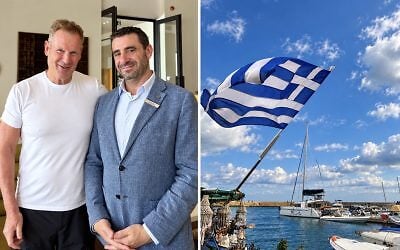
Behind the resort stands Cretan businessman Antonis Vasilakis, whose family company, Vasilakis SA, has roots in the island’s timber and construction industries dating back to 1912. But the story of the resort began with a far more personal dream. “Originally, the owner wanted to build his own summer home here,” explains Aris Moustakas, General Manager of JW Marriott Crete Resort & Spa, during our pleasant conversation. During our conversation, we discovered that we both worked for the same Dutch boss 30 years ago.
Marathi, he explains, has traditionally served as a summer retreat for Chania’s more affluent residents. Its sheltered beaches, peaceful atmosphere and proximity to the city made it a particularly desirable location for a private holiday home. “Before the COVID-19 pandemic, Vasilakis envisioned building his own residence on this spectacular coastal site”, says Moustakas. “During the pandemic, however, the idea evolved into something much more ambitious: creating a luxury resort that would combine international hospitality standards with a deep respect for the natural environment”.
What began as a private dream gradually became a major hospitality investment. For Vasilakis, the objective was not simply to build another luxury hotel. It was to create a destination that would celebrate Crete’s natural beauty while embracing environmental responsibility, architectural harmony and contemporary hospitality. The location offered an exceptional setting for that ambition: a rocky coastal landscape, panoramic sea views and a peaceful atmosphere, yet within easy reach of Chania and its international airport.

I was extremely intrigued by the decision to partner with the JW Marriott brand. While Ritz-Carlton is one of the world’s most instantly recognisable luxury hotel names, JW Marriott has traditionally enjoyed greater recognition in markets outside Europe. Both belong to Marriott International’s luxury portfolio, but they represent different interpretations of high-end hospitality. Ritz-Carlton is associated with classic luxury and highly personalised service. JW Marriott apparently places particular emphasis on well-being, mindful experiences and a connection with the surrounding environment. For a resort conceived around nature, wellness and understated luxury, the JW Marriott philosophy appears particularly appropriate. Vasilakis has explained publicly that the brand’s values matched his vision for the development. Although his precise reasons for choosing JW Marriott rather than Ritz-Carlton have not been established, the partnership reflects a shared emphasis on sophisticated, experience-driven hospitality.
The choice also provides access to Marriott International’s extensive global distribution network and its powerful Marriott Bonvoy loyalty programme. Since summer, Bonvoy has more than 295 million members worldwide, according to Marriott International’s latest quarterly report. And the impact is already visible. According to Moustakas, approximately one in three guests arriving at the resort is a Marriott Bonvoy member, while Americans represent the largest nationality among the hotel’s guests.
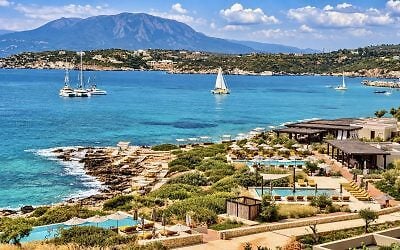
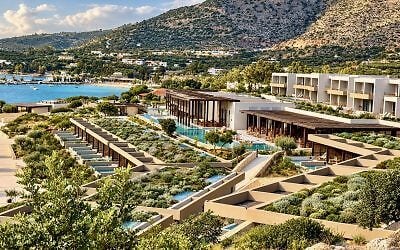
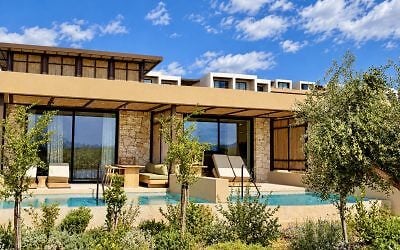
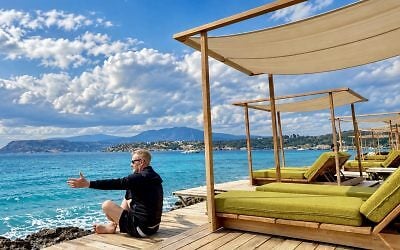
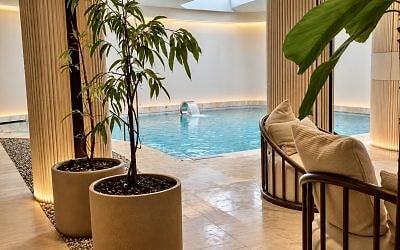
Israelis are another significant market. “About 15 percent of our guests are Israelis,” Moustakas reveals, highlighting the importance of the Israeli market to the resort. For Israeli travellers, the hotel offers optional practical advantages: kosher dining arrangements can be made with advance planning, subject to coordination with the resort. For those familiar with Six Senses Shaharut in Israel’s Negev Desert, the JW Marriott Crete may evoke a surprisingly familiar feeling. Both resorts share a distinctive architectural philosophy: luxury that emerges from the landscape rather than dominating it. The dramatic desert mountains of Shaharut are replaced here by the endless blue of the Cretan Sea. The resort’s architecture, created by the acclaimed Athens-based studio Block722, is among its most striking features. Rather than imposing a monumental hotel building on the coastline, the architects developed a collection of low structures integrated into the hillside, using natural materials and Mediterranean vegetation. The result is a resort that feels intimate despite its scale. Private terraces open towards the sea, while several outdoor swimming pools offer panoramic views across the coastline. Along the rocky shore, wooden walkways and platforms create inviting places to sunbathe, relax and descend directly into the crystal-clear waters.
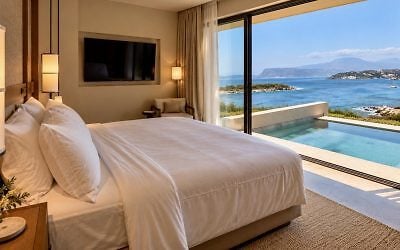
Our elegant suite featured a private pool on the balcony, overlooking the stunning resort and the beautiful bay beyond. But the real luxury was waking up tucked beneath the blankets, gazing straight from our bed at the breathtaking panorama of the resort, the sparkling sea and the Cretan coastline. A view so mesmerizing, it was almost impossible to get out of bed. And whenever we wished to explore the resort or return to our suite, a buggy was just a call away, whisking us around quickly and efficiently, adding another touch of effortless luxury to our stay.
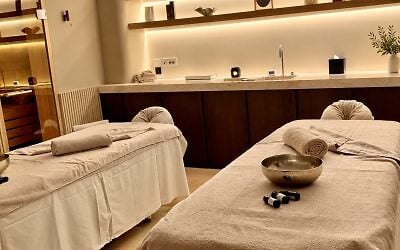
Wellness is central to the JW Marriott experience.The resort’s Anoisea Spa offers a peaceful retreat inspired by the island’s natural environment, complemented by a contemporary fitness and movement studio. Sunrise yoga, sound-healing sessions and other wellness rituals encourage guests to slow down and reconnect with their surroundings.
The culinary experience is equally memorable. At Anoee, traditional Cretan flavours are reinterpreted through open-fire cooking, creating a contemporary tribute to the island’s culinary heritage. A dinner the cherish. The beachfront Onelos restaurant offers another atmosphere entirely, with freshly prepared sushi, seafood and Mediterranean specialities served beside the water. That restaurant became our favorite venue and we cherish the amazing service there by the team members. Wine-tasting experiences introduce guests to the increasingly fascinating world of Greek wines. An evening with Sommelier Maria Psaroudaki was an experience to cherish.
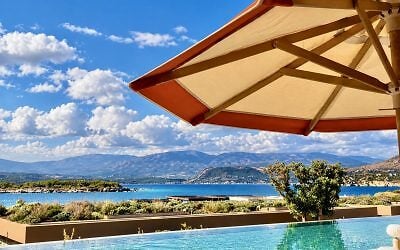
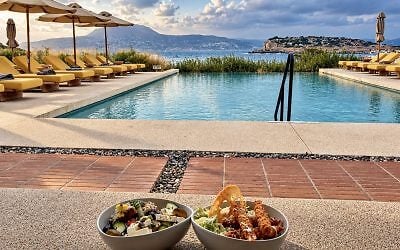


As evening approaches, the atmosphere changes once again. The last sunlight fades across the sea, the coastline gradually darkens, and a drink at the resort’s bar becomes the perfect conclusion to another day in Crete.
Crete has long attracted international visitors with its beaches, historical treasures and generous hospitality. But properties such as JW Marriott Crete Resort & Spa point towards another direction for the island’s tourism industry: exclusive, design-led resorts that offer an experience rooted in their natural and cultural surroundings. For travellers seeking more than a conventional beach holiday, the combination of Chania’s historic charm and Marathi’s contemporary luxury is particularly compelling. What began as one man’s dream of a private summer home has become a luxury destination attracting travellers from around the world.
Related Topics
Related Posts