


A Mermaid in Jerusalem
Chaos isn’t rebellion. It’s forgetting who we are
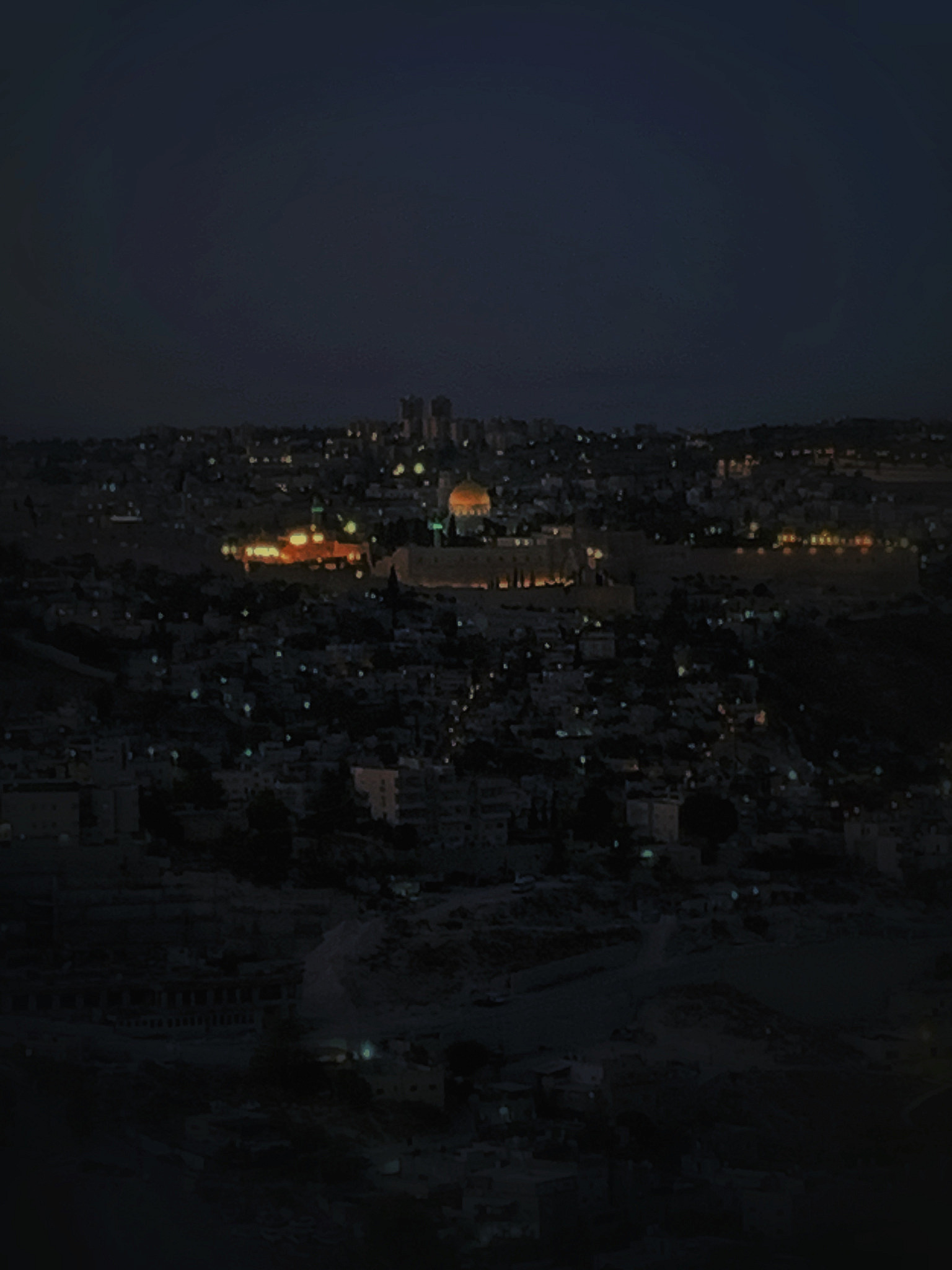
It’s the threshold of a new year, and we read Ha’azinu now, when the echoes of Kol Nidre are still in our ears and the gates of Yom Kippur have only just swung shut.
We read it in a time of war, when the world feels unsteady, and grief seeps into everything. And Moses gives us this song — fierce and raw, full of thunder and silence. A song that echoes the very act of creation.
“May my teaching fall like rain, my speech distill like dew,” Moses says. This is Genesis language — waters above, waters below, the trembling of life about to emerge from formless void. Heaven and earth are called as witnesses, nature quakes, God is Rock and Fire and Eagle and Breath. Like the story of creation, Ha’azinu moves between chaos and order, between unmaking and remaking. In Genesis, creation emerges from swirling waters and emptiness. In Ha’azinu, Israel’s chaos comes from forgetting, from idolatry and violence, from tumbling back into the abyss. And yet, even here, creation is promised again.
Ha’azinu is a second Genesis. It is a reminder that each generation, each crisis, each turning of the year is another chance to be reborn from chaos into something luminous. And perhaps this is why the portion always falls now, in this season of awe and trembling — because after the gates of Yom Kippur swing closed, we need to be reminded that we can still begin again.
But the chaos Moses names is not only cosmic.
It is human.
It is forgetting.
“You forgot the Rock who gave you birth.”
The opposite of covenant is not rebellion. The opposite of covenant is forgetting. Because rebellion, after all, is still relationship. Wrestling is inherently Jewish — our very name, Yisrael, means one who wrestles with God. To argue, to question, to demand answers, to hold multiple truths at once — this is part of who we are. Rebellion still keeps us in the story. Forgetting is what pulls us out of it.
And forgetting doesn’t always look like apostasy or idolatry. Sometimes it’s subtler. Sometimes it’s when we treat Judaism as something dusty and irrelevant, when we shrug off our own rituals because they feel too hard or too embarrassing or arcane. Sometimes it’s when we choose convenience over compassion, when we let politics or ego take precedence over people, when we forget that the mitzvot were always meant to stitch us closer to each other and to God.
Forgetting can be as simple as turning away from the story, as quiet as neglecting to tell it to our children, as easy as saying, “This doesn’t matter anymore.”
I was guilty of this. One reason I love my Torah study with the rabbis and comedians at our little café is because I am choosing to learn what I didn’t know I knew, and to find words for the memories I’ve carried in my DNA without realizing. Because Jewish memory is not just history — it’s inheritance.
This is why we don’t say, “THEY were slaves in Egypt.”
We say: WE were slaves in Egypt.
WE survived the Inquisition and the pogroms, both in Europe and in Arab lands, and the Holocaust, too.
WE were massacred on October 7.
WE were at the Tree of Life synagogue in Pittsburgh.
WE were at the shul in Manchester.
WE wept by the rivers of Babylon.
Because WE stood at Sinai together as one.
The Jewish story does not belong to some other people long ago. It belongs to us. It is us. When we remember, we bind ourselves back into covenant. When we forget, we risk being written out of it.
And grief, too, is memory — grief is the price of love, a price always worth paying. When we mourn our dead, when we hold the hostages in our prayers, when we whisper the names of places where joy turned to mourning — Kfar Aza, Nova, Pittsburgh, Manchester — we are keeping covenant. Because the act of remembering is what binds us: to God, to one another, to the broken world still waiting for repair.
Ha’azinu is Moses’ last song, but it is not a swan song. It is a creation song, a survival song. It insists that even in the ashes, redemption stirs. And it calls us to take up the work of memory — not just of our grief, but of our story, our covenant, our responsibility.
Because the covenant is not broken.
Not as long as we remember.