

Mathematics Teaching Professor, Author
Charleston’s historic Orthodox synagogue: Brith Sholom Beth Israel Synagogue
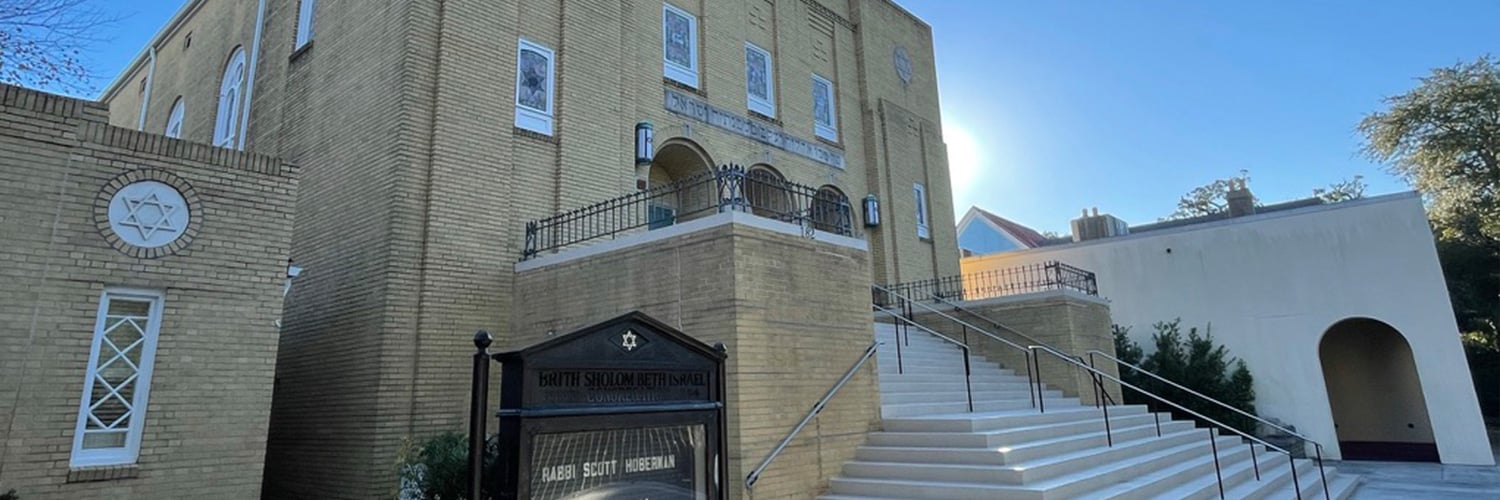
Brith Sholom Beth Israel Synagogue (Source: Brith Sholom Beth Israel Synagogue, Charleston, South Carolina)
Brith Sholom Beth Israel Synagogue (BSBI) is Charleston’s historic Orthodox synagogue and the oldest continuously operating Orthodox Ashkenazi congregation in the United States. Founded in 1854 by Jewish immigrants from Poland and Prussia, the congregation grew through successive waves of Eastern European arrivals who made their way to Charleston, South Carolina, throughout the nineteenth and twentieth centuries.
The character of BSBI reflects the people who built it: hardworking immigrants known for their toughness, determination, and strong emotions. As one description of the early congregation suggests, these were people who knew how to get things done when they set their minds to something. More than 170 years later, the synagogue remains in downtown Charleston, maintaining its historic urban presence and connection to the city.
Today, BSBI brings together longtime Charleston families, including members whose roots in the congregation extend seven and eight generations. Although the synagogue follows Orthodox tradition, its members come from a range of religious observances.
I would like to thank the esteemed Rabbi Yosef Bart and Stanley Baker, Board President of Brith Sholom Beth Israel (BSBI) Synagogue, for their guidance.
Synagogue
Brith Sholom Beth Israel (BSBI) Synagogue, located in Charleston, South Carolina, has served as a center of Orthodox Jewish life and worship since its establishment. The synagogue’s current building, which has been in use since 1948, features a distinctive brick façade that reflects both traditional design and the congregation’s enduring religious heritage.
The front entrance is framed by three brick arches, each featuring a concave keystone at its apex. Above the entrance doors, an inset stone inscription displays the opening words of Ma Tovu, a passage from Numbers 24.5, “Ma tovu ohalecha Yaakov, mishkenotecha Yisrael,” meaning, “How goodly are your tents, O Jacob, your dwelling places, O Israel!” The inscription expresses reverence for the sanctity of communal worship. Stained-glass windows adorn the upper and side portions of the façade, while multiple stone ornaments featuring the Star of David further emphasize the building’s Jewish identity.
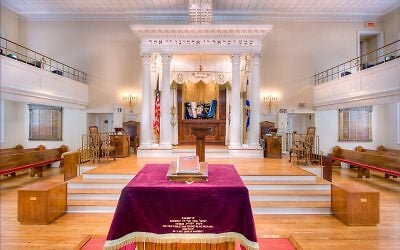
The synagogue’s interior also reflects a history of cooperation and mutual support within Charleston’s Jewish community. Among its notable features are a column on the bimah, the raised platform from which the Torah is read and services are led, and the Aron Kodesh, or Holy Ark, which houses the Torah scrolls. These items were gifts from Charleston’s Reform Temple. The Reform Temple and the Orthodox congregation shared matching columns, a detail that symbolizes the spirit of generosity and solidarity that connected members of the Jewish community. At a time when congregations sought to support one another, these gifts represented a meaningful expression of cooperation across denominational lines.
Religious Events
Brith Sholom Beth Israel (BSBI) Synagogue welcomes the entire Jewish community. The congregation holds daily services, including Shacharis, Mincha, and Ma’ariv, on weekdays, Shabbos, and Yom Tovim.
Jewish learning is an important part of synagogue life, with weekly classes in Talmud and the Torah portion. Its weekly Lunch and Learn began when congregant Nathan Rephan brought his brown-bag lunch and started studying, eventually inspiring others to join.
Beyond prayer and learning, BSBI is a place where families gather for Kiddush, share meals, and enjoy one another’s company. More than a synagogue, it is a home where relationships grow, community bonds strengthen, and people find support and belonging.
Education
Brith Sholom Beth Israel (BSBI) Synagogue offers opportunities for Jewish learning and fellowship through its weekly Parsha class, Lunch and Learn, and study of Pirkei Avot, a collection of ethical teachings from the Mishnah.
The congregation also fosters fellowship through Men’s Night Out, an informal gathering where members socialize over cigars, bourbon, and conversation. On November 3, members gathered to mark the 50th anniversary of the Entebbe raid, sharing stories and strengthening the bonds of friendship within the community.
Addlestone Hebrew Academy is historically connected to BSBI, but it is a separate school. The Charleston Hebrew Institute, established in 1956, grew out of the Orthodox Jewish community served by BSBI and Beth Israel. Today, Addlestone is a Jewish community day school serving families across Charleston’s Jewish community. Its campus follows kosher guidelines under the supervision of the BSBI rabbi.
Community
Brith Sholom Beth Israel (BSBI) Synagogue offers Shomer Shabbos visitors and community members a comfortable townhome just a two-minute walk from the synagogue, within the downtown Charleston Eruv. With 1,224 square feet of living space, the townhome accommodates up to eight guests in four bedrooms, with two full bathrooms and cozy living areas.
Amenities include a full kitchenette, water urn, Shabbos hot plate, and Shabbos lamps in each bedroom, providing families and individuals with the essentials for a restful Shabbos stay. BSBI also partners with Chef Linda Lieberman to offer kosher meals to go, providing convenient meal options for both local community members and visitors.
Historical Backgrounds
Jews first arrived in South Carolina in the late 17th century, with the earliest recorded Jewish resident in Charles Town, now Charleston, appearing in 1695. The Carolina Colony’s 1669 charter, co-written by John Locke, guaranteed liberty of conscience to “Jews, heathens, and dissenters,” helping encourage settlement. Many of the earliest Jewish arrivals were Sephardic Jews who came from London and the Netherlands by way of the West Indies.
Charleston became an important center of Jewish life, with an Orthodox synagogue established in 1749 that followed the Sephardic traditions of Spanish and Portuguese Jewry.
Jewish settlement later expanded to Columbia, where seven Jewish men from Charleston were among the first purchasers of town lots in 1786, following the city’s designation as South Carolina’s capital. By the 1790 census, several residents with Jewish-associated surnames, including Jacobs, Meyers, and Lyons, were recorded in the area.
Jewish residents in Columbia participated actively in civic and social life, serving in local militia companies, joining Masonic lodges, working in banking, and holding political office. Their involvement reflected the growing presence and contributions of Jewish communities throughout South Carolina.
Which brings us to 1852.
In 1852, the United States had 31 states, and Millard Fillmore served as the nation’s 13th president. The country was experiencing deep divisions over slavery amid westward expansion and growing political tensions.
That year, Harriet Beecher Stowe published Uncle Tom’s Cabin, an influential anti-slavery novel released on March 20, which heightened national debate over slavery and the Fugitive Slave Act. On July 5, Frederick Douglass delivered his celebrated speech, “What to the Slave Is the Fourth of July?” in Rochester, New York, challenging the nation to confront the contradiction between its founding ideals of liberty and the continued enslavement of African Americans.
In 1852, Columbia, South Carolina, was a growing commercial center experiencing railway expansion and industrial development. The Charlotte-Columbia railway strengthened connections to regional markets, while industrial enterprises on Arsenal Hill contributed to the city’s economic growth. Foundry operations established by William Glaze and James Boatwright became an important part of Columbia’s industrial history.
Columbia’s Jewish community was also well established by this time, with roots dating to 1786, shortly after the city was designated South Carolina’s state capital. Jewish residents participated in the city’s commercial, civic, and social life, contributing to its development during the antebellum period.
It was in that year, 1852, the history of Brith Sholom Beth Israel (BSBI) began when Jewish immigrants, primarily from Poland and Prussia, gathered in Charleston to worship according to the Ashkenazi traditions of Orthodox Judaism. Seeking to preserve the customs and Hebrew pronunciation of their upbringing, they formally organized a congregation in 1854 called Berith Shalome.
In 1855, the congregation elected its first board of officers, and some descendants of those early leaders remain members of BSBI today. The year 1856 marked several important milestones: the congregation acquired land for its first cemetery, dedicated its first synagogue, and received a charter of incorporation from the South Carolina legislature. These developments established a lasting foundation for Orthodox Jewish life in Charleston.
In 1861, as the Civil War began with the bombardment of Fort Sumter in Charleston Harbor, Berith Shalome acquired the land on which its synagogue stood. The deed recorded the purchase as taking place “in the year of the independence of the Confederate States of America.”
During the war, Charleston endured a prolonged siege and bombardment by Union forces, prompting many residents to flee. Amid these hardships, Brith Sholom was the only one of Charleston’s three synagogues to remain open throughout the conflict. The congregation continued serving its community by providing kosher meat and matzo for Passover. Its members served the Confederate cause, and several Confederate veterans were later buried in the congregation’s first cemetery.
Following the Civil War, an influx of Orthodox Jewish immigrants from Eastern Europe and Germany expanded Berith Shalome’s membership. In 1874, the congregation dedicated a new synagogue on its original site, celebrated by both Orthodox and Reform Jewish communities. K.K. Beth Elohim, Charleston’s Reform congregation, gifted the Aron Kodesh (Holy Ark), featuring magnificent white Corinthian columns that remain in BSBI’s sanctuary today.
By the late nineteenth century, Brith Sholom had become known as the “foremost Orthodox Synagogue in the South.” In 1911, following tensions between established members and newer Eastern European immigrants, a group formed a second Orthodox congregation, Beth Israel. For decades, Charleston’s Orthodox community was served by both Brith Sholom and Beth Israel.
In 1947, Brith Sholom members rejected a proposal to affiliate with Conservative Judaism, prompting some congregants to establish Emanu-El, a Conservative synagogue. The following year, Beth Israel dedicated a new synagogue on Rutledge Avenue.
Beth Israel dedicated its new Rutledge Avenue synagogue in 1948, with plans for a future social hall. According to congregational history, Shera Lee Berlin cast the decisive vote in favor of building the hall while her husband, Alvin Berlin, was dying.
In 1954, Brith Sholom and Beth Israel reunited to form Brith Sholom Beth Israel (BSBI). Two years later, the congregation rededicated its renovated synagogue and launched the Charleston Hebrew Institute as an Orthodox day school, now known as Addlestone Hebrew Academy.
Rabbi Nachum L. Rabinovitch served as the spiritual leader of Brith Sholom Beth Israel (BSBI) in Charleston, South Carolina, from 1955 to 1963. During his tenure, he played an important role in strengthening Jewish education in the community, helping establish the Charleston Hebrew Institute, the city’s first Jewish day school, where he also served as principal. Founded as an Orthodox day school, the institution continues its educational mission today as Addlestone Hebrew Academy, located on the BSBI property.
Beyond his work in Charleston, Rabbi Rabinovitch became internationally respected for his scholarship, particularly his expertise in the writings of the medieval Jewish philosopher and legal authority Maimonides. He authored numerous books and essays and is perhaps best known for Yad Peshuta (“Outstretched Hand”), his fourteen-volume commentary on Maimonides’ Mishneh Torah.
Among his most distinguished students was Rabbi Lord Jonathan Sacks, the former Chief Rabbi of the United Hebrew Congregations of the Commonwealth, who identified Rabinovitch as his primary role model and a profound influence on his religious thought and leadership. Rabbi Rabinovitch’s legacy therefore extends beyond Charleston, encompassing both Jewish education and generations of rabbinic scholarship.
Today, Brith Sholom Beth Israel continues to honor its rich history while serving Charleston’s Jewish community through worship, education, and fellowship. The continued membership of descendants of its founding families, including the Livingstains and Berlins, reflects the enduring legacy of those who helped establish the congregation and the generations who have sustained it. More than a century and a half after its founding, BSBI remains a testament to the strength of Jewish tradition, community, and continuity in Charleston.
Contact Information:
Brith Sholom Beth Israel Synagogue, 182 Rutledge Ave, Charleston, SC 29403
Phone: (843) 577-6599
Email: rabbi@bsbisynagogue.org
Website: https://www.bsbisynagogue.org/