
Claude Carlier Interview | Alexandre Gilbert #322
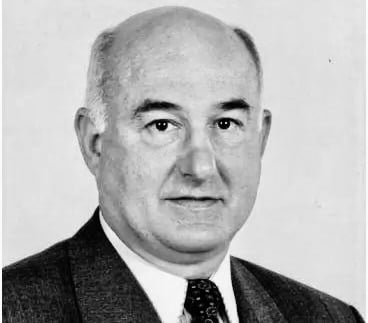
Claude Carlier (born January 11, 1944) is a French historian specializing in contemporary history and the history of aviation and aerospace. He holds a Doctorate of State in Letters and Human Sciences and serves as a professor of contemporary history at the University of the Sorbonne. He is also the director of the Center for the History of Aeronautics and Space and president of the Institute for the History of Contemporary Conflicts. Author of numerous works on aviation, aerospace, and military history, including The Development of French Military Aviation, 1958–1970 (1979), Marcel Dassault (1999), and Dassault: From Marcel to Serge (2017). His research spans the early days of aviation, the evolution of French aerospace programs, and the history of major industrial and military developments in the 20th century, he has also contributed extensively to journals such as Guerres Mondiales et Conflits Contemporains, producing scholarly articles on topics ranging from the Wright brothers in France to French military aviation during global conflicts.
You are one of our country’s leading aviation experts. What does the current era inspire in you?
CC: Exploration and progress are inherent to human nature. It took humanity millennia to conquer its planet—its land and seas—and only a few decades, with aviation, to conquer its atmosphere. At the start of the 20th century, aviation pioneer Clément Ader wrote, “He who masters the air will master the world.” Today, aviation has reached a highly advanced stage, in airframes, engines, equipment, and electronics. Civil and military aviation have become essential to the global economy and national security. Aviation dominated the 20th century and, by extending into space, now paves the way for humanity’s conquest of the universe.
Eighty years ago, France faced the critical challenge of developing a Franco-German interceptor under the constraints of occupation. Are we facing a comparable situation today?
CC: Aviation cooperation only works well when tasks are divided according to the needs and expertise of each partner. This is far from the case! The difficulties in the SCAF (Future Combat Air System) program are nearly impossible to resolve. How can agreement be reached when requirements differ so widely? A cooperative program that tries to satisfy all partners, both in studies and production, risks producing a substandard aircraft, with costs far exceeding the initial budget and schedules that are not met. Choosing the prime contractor is crucial for a program’s success and requires acceptance from all partners, though it should ultimately go to the most qualified. Leadership is earned through a team’s technical, industrial, and commercial experience, which must carry significant responsibilities and share its knowledge with cooperating partners. Military cooperation programs are generally driven by governments for political reasons; their sole advantage is that they are very difficult to cancel.
How did Dassault avoid this pitfall during World War II?
CC: During World War II, Marcel Dassault was imprisoned and deported to Buchenwald. Throughout his imprisonment and deportation, he consistently refused to work for Germany. (1)
What is your view on the surge in orders for Dassault Aviation?
CC: The Rafale, with its versatility and proven combat record, has attracted several countries unwilling to purchase American or Russian equipment. The current challenge is meeting the increased production pace, particularly across the program’s 400 subcontractors. A second assembly line is being considered in India to meet the country’s significant demand.
In your opinion, who in the family is best suited to take over the group?
CC: The Groupe Industriel Marcel Dassault and Dassault Aviation are chaired by Éric Trappier, with the family’s agreement. Succession is not currently an issue.
Are you preparing a new book on the lesser-known aspects of Marcel Dassault’s life?
CC: Not at the moment.
Does French aviation have a strategic role to play in Ukraine and in the Persian Gulf?
CC: France is not directly involved in the conflict in Ukraine or in the one in the Persian Gulf, and it does not wish to be. However, in cooperation with its allies, it can play a mediating role and help prevent the expansion of these conflicts.
What is your view of President Emmanuel Macron’s speech at Île Longue?
CC: The President of the Republic proposed extending France’s vital interests to other European countries. On such a sensitive issue, it is necessary to wait for the outcome of the negotiations. He specified that the order to deploy France’s strategic nuclear force remains solely under French control—namely that of the President of the Republic. For nuclear deterrence to remain credible, the nuclear button cannot be shared.
How can the use of a Falcon 8X escorted by four Rafales above Mont-Saint-Michel be explained?
CC: The President of the Republic was traveling to Île Longue to deliver a speech on the evolution of France’s nuclear strategy. Since he was flying there, it was decided that four Rafales would escort the aircraft, giving the trip a martial tone. As the President of the Republic is constitutionally the Commander-in-Chief of the Armed Forces, it was also an opportunity to highlight that role.
Note:
(1) On April 8, 1944, three months before the Liberation, Marcel Bloch was arrested. He was incarcerated at Riom prison (Puy-de-Dôme). His arrest occurred in a context where industrial figures—especially those linked to aviation—were under scrutiny and pressure. Bloch had long been a central actor in French aeronautics, and during the Occupation he became vulnerable both as an industrialist and as a Jew.
Claude de Cambronne was a collaborator and associate of Marcel Bloch who had already visited him in prison on several occasions. In a letter dated May 31, 1944, addressed to the “Ailes” (the aviation press or institutional authority connected to the sector), Cambronne refers to a “permanent and intermittent liaison” with Marcel Bloch, who had by then been imprisoned for nearly four years. This detail is important: it establishes that Cambronne maintained contact over an extended period and did not abandon Bloch during his detention.
The reasons invoked by the German authorities for Bloch’s imprisonment included a supposed offense described as “affront” and that Bloch had been denounced as “gaullist” to the Gestapo (Sicherheitsdienst / Einsatzstab Rosenberg). This suggests that Bloch’s political positioning—or at least the suspicion of Gaullist sympathies—played a role in his persecution. Cambronne’s correspondence demonstrates that Bloch had defenders within French industrial and military circles, even if their influence was limited.
Jean Théroigne’s article published in Au Pilori in September 1941, violently polemical, attacks Bloch under the title roughly translating to “We will nail Au Pilori, the broken vases.” The rhetoric is accusatory and hostile. It echoes antisemitic and nationalist narratives common in collaborationist publications of the time. The article questions whether legal procedures are necessary at all, suggesting that punishment should precede or even replace judgment. This passage illustrates the ideological climate in which Bloch’s case unfolded. The hostility did not arise solely from German pressure but was amplified by segments of French opinion.
The prison conditions are detailed and stark. After the invasion of the southern zone in November 1942, Montluc prison near Lyon came under German control. Overcrowded cells, minimal bedding (often a simple straw mattress), poor ventilation, and inadequate sanitation. Food consisted of thin soup and small quantities of bread. Hunger was constant. Prisoners lived in a state of permanent uncertainty.
When cell doors open abruptly and a name is called. Guards shout orders—sometimes in German (“Schnell! Raus!”). A prisoner has only seconds to step forward. Those remaining inside the cell are left in suspended dread, wondering whether the departure means interrogation, deportation, or execution. The sound of boots in the corridor, the metallic impact of doors, and the echoing silence afterward become part of the psychological architecture of fear.
The randomness and opacity of the system. A convoy assembled in the courtyard; prisoners were lined up and counted; trucks waited outside. Some detainees were transferred eastward. For many, this marked the final moment of visibility before disappearance. The account captures not only the physical harshness but the mental strain—the impossibility of planning, the reduction of time to fragments measured between inspections. Bloch did not agree to place his industrial expertise at the disposal of the occupying power.
Claude de Cambronne’s role, therefore, is not that of a persecutor but of a loyal intermediary and correspondent. His May 31, 1944 letter indicates active concern and ongoing engagement. By speaking of a “permanent and intermittent liaison,” he signals sustained contact under difficult conditions. This suggests that parts of the French aeronautical community remained attached to Bloch despite political pressures. Cambronne’s intervention situates him within a circle attempting, at minimum, to maintain solidarity. (source: Dassault de Marcel à Serge, Perrin, 2017)
See also:
*Après cette guerre : une lettre de Marcel Bloch (1940), de Patrick Fridenson
*Deborah K Cunningham Itw | Alexandre Gilbert #282.1
*Robbin Laird Itw | Alexandre Gilbert #310.1
*Volodymyr Yermolenko Itw | Alexandre Gilbert #318.1