Clean Hands
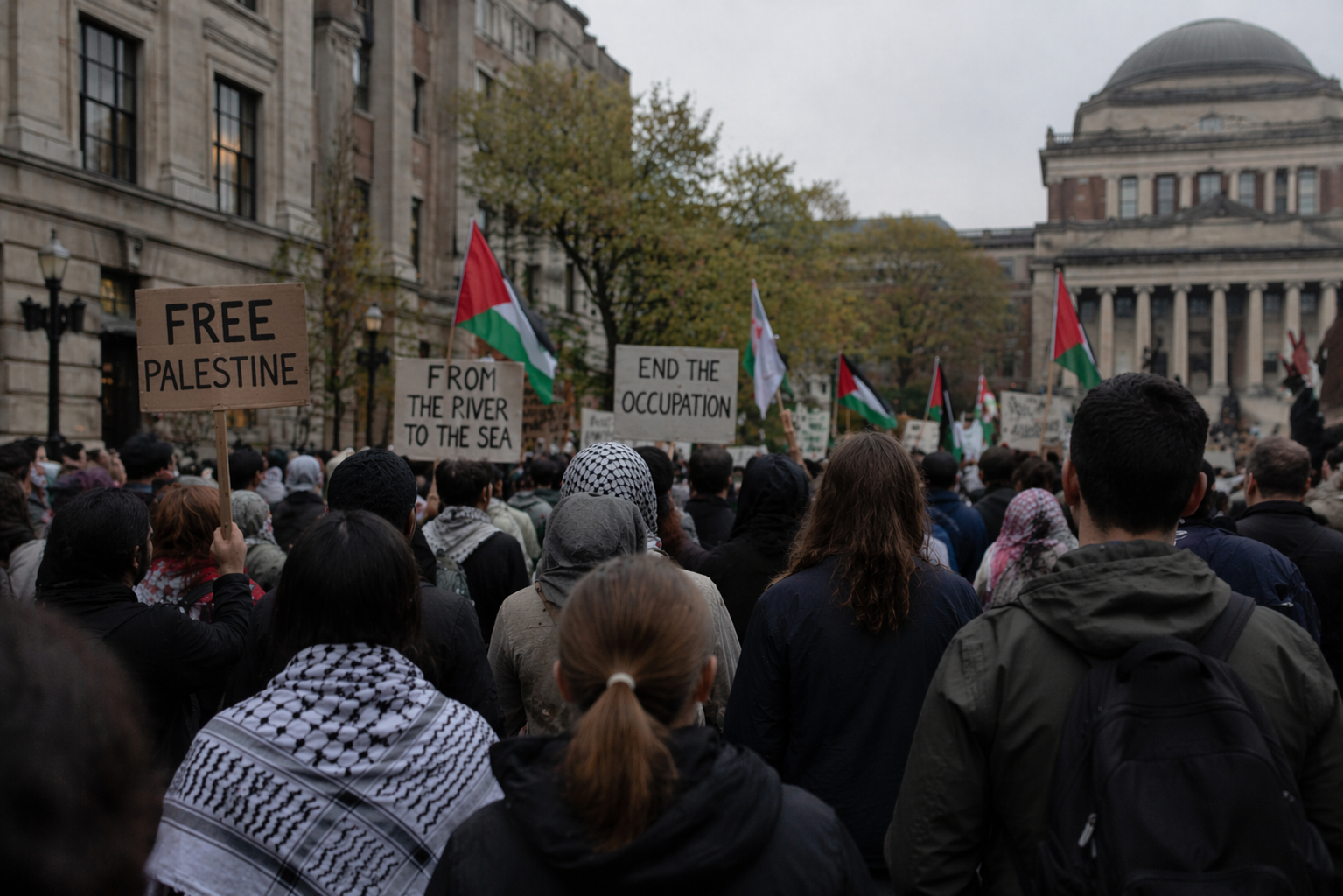
The 22-year-old grad student doesn’t hate Jews. Ask her directly and she’ll tell you. She’s anti-Zionist, not antisemitic. There’s a difference. She knows the difference because she was taught there is one.
Zionism is colonialism. Israel is an apartheid state. Resistance is justified. From the river to the sea.
She chants it at protests. Wears the keffiyeh. Shares the infographics. Signs the petitions. The language is already in place. It makes violence sound principled.
“Zionist” becomes the word that carries everything else. It strips Jews of protection. It makes targeting them feel justified. You march through a Jewish neighborhood shouting about Zionists. You demand Zionist students be removed from campus. You spray “Zionists not welcome” across a synagogue wall.
The word does the work.
You don’t have to name what you’re doing.
“From the river to the sea, Palestine will be free.”
It sounds like hope. It sounds like justice.
The river is the Jordan. The sea is the Mediterranean. Everything in between—seven million Jews. The phrase does not account for them.
Hamas uses it. Hezbollah uses it. So do protesters in Brooklyn, in London, in Berlin. It has been handed to them as the language of resistance. They repeat it without asking what it removes.
This is the mechanism.
You are not attacking Jews. You are resisting Zionism.
You are not calling for elimination. You are calling for liberation.
You leave the protest feeling clean.
Somewhere else, a synagogue burns. There is no connection.
Israel exists because there was nowhere else to go.
The Holocaust did not happen because Jews failed to integrate. It happened because every exit closed. They appealed to countries that turned them away. They depended on protections that dissolved. They waited for intervention that never came.
Six million Jews were murdered.
Sixteen million existed before the war. Fifteen point eight million exist today. The number never came back.
So a state was built. Armed. Made durable.
Not symbolic. Functional.
Strong enough that it cannot be erased by the next attempt.
That strength is what people react to.
It disrupts the expectation of vulnerability.
It reframes survival as something that can be resisted.
Twenty people killed in antisemitic attacks in 2025—the deadliest year in more than three decades¹. Not in Israel. In Australia. In Manchester. In Berlin. In Washington, D.C.
In the United States, 9,354 incidents in 2024—the highest level recorded in 46 years². Globally, a 340 percent surge in two years³.
Synagogues firebombed. Jewish students attacked. Chanukah gatherings targeted.
The violence moves because the language moves. It carries cleanly across borders. It does not require hatred. Only permission.
And “never again” was never meant to depend on permission.
–
¹ FOX 9
² Anti-Defamation League (ADL)
³ The Times of Israel