
Climate of Hope for the Middle East in Light of Peace Nobel Prize
In a few days, everyone will know whether President Trump’s peace efforts have yielded the Nobel Peace Prize he so desires. In days of cautious optimism like the present, it is safe to say that even if the prize is awarded to the USA president, it is too early to evaluate the survival of the agreement, if it is indeed agreed and implemented. And yet the sense of change in the air suggests that it is a feasible possibility, that leads us to quest ‘what is the relationship between climate, peace, and the Nobel Peace Prize?’.
In 2004, Oslo peace Nobel committee surprised conservative politicians with its unexpected choice of Ms. Maathai Wangari from Kenya for her environmental activity for Africa and improving the economic status of women in rural Kenya. The question that was raised at the time by cynics from the Northern European right “What between the environment and peace?” is even more relevant two decades later with “What for the climate and peace?”.
President Trump’s efforts to bring peace to the bloody region of the Middle East ‘for 3,000 years’ as addressed, are perhaps only equal to his tireless efforts to deny climate change. As he said at the recent UN General Assembly: ” I am telling you that if you do not get away from the ‘green energy’ scam, your country is going to fail’; and ‘Both the immigration and their suicidal energy ideas will be the death of Western Europe if something is not done immediately.’; “Europe loses more than 175,000 people to heat deaths each year because the cost is so expensive they can’t turn on an air conditioner. What is that all about? That’s not Europe. That’s not the Europe that I love and know. All in the name of pretending to stop the global warming hoax.”
Climate denial at a period when extreme climatic events have become commonplace, including a series of hot days well above average in the Mediterranean basin in the summer of 2025 and powerful and destructive wildfires, demonstrates that an ignoring of facts and the creation of an alternative, imaginary and delusional reality that forcibly humanity will pay the price of political foolish for generations to come. Furthermore, humanity is already paying.
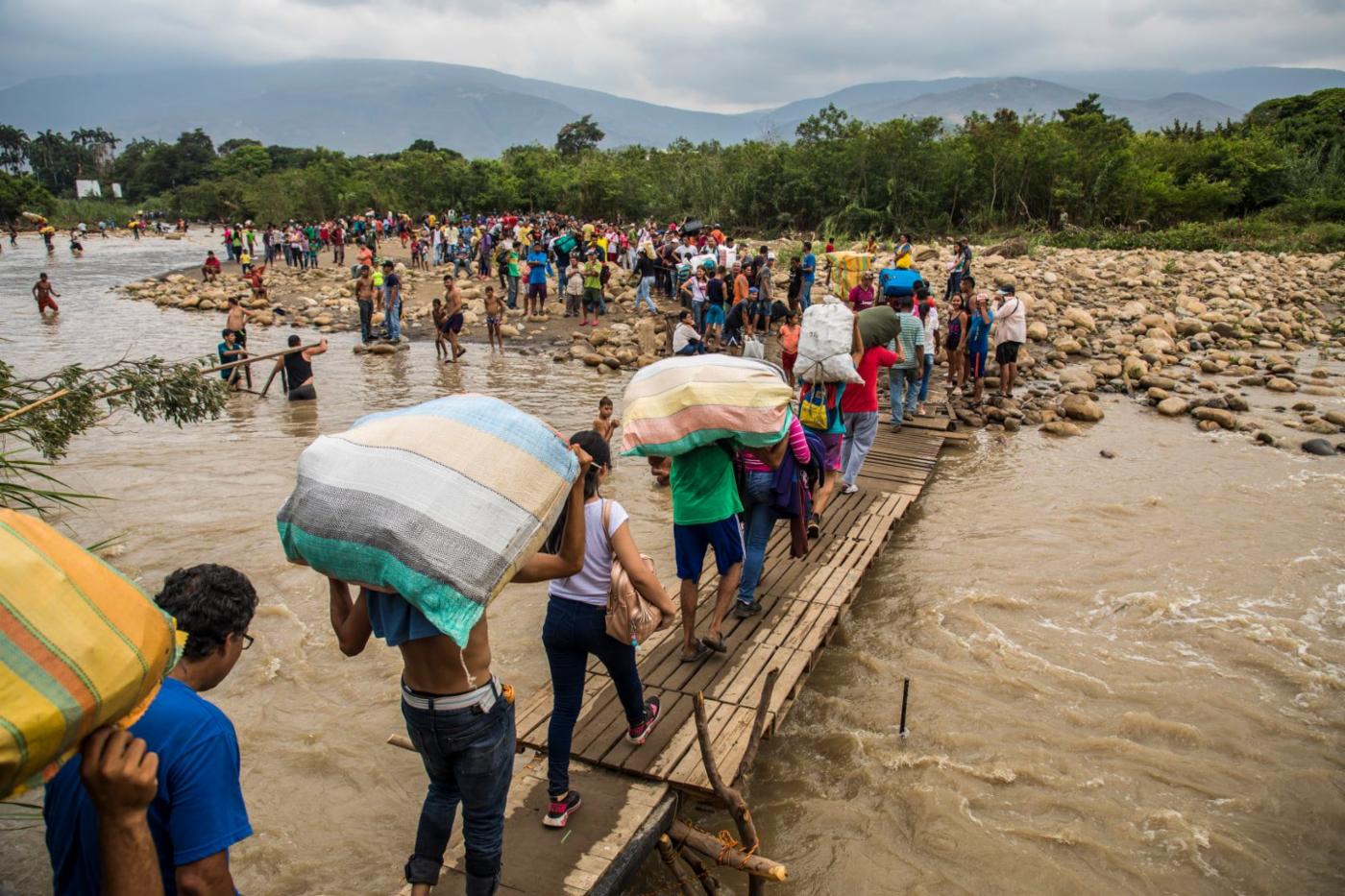
Just an example, a climate crisis in the Sahel region of Africa, which has drastically reduced water sources and grazing areas, is leading to bloody biblical scale conflict, only they do not receive headlines in the Media. A colleague and friend of the Tahadhari Center (which I am affiliated with) Prof. Daniel Gwary from Nigeria, who is among the esteemed group of scientists who was awarded the Nobel Peace Prize for their efforts in the field of climate change, presented at a conference we held the scale of forced migration waves on a climate background, in a term that illustrates the change in the migration discourse in Africa from “climate refugees” to “climate victims”. Millions of people who are forcibly displaced from their villages, due to the severe climate crisis.
The Tahadhari Center, a word that means Alert in Swahili language, was established in Brussels, targeting to put on the agenda today these two issues that, according to the founders of the center are the most pressing issues facing the world, after establishing a regional sustainable arrangement in the Middle East and resolving the crisis in Ukraine against the backdrop of Russia’s invasion of it. A crisis that created waves of refugees in Europe and reduced the countries’ commitments under the climate Paris agreement, considering the energy crisis.
The issues of migration, climate, energy, as well as socio-political processes of right-wing extremism and xenophobia are intertwined. Therefore, the solutions also require an integrative vision on the part of European countries, which marks goals far beyond the borders of the old continent: The EU’s climate policy strategy requires a spotlight on Africa for economic development and job creation – in contrary to Trump’s doctrine, jobs development in the green energy sector. Solutions that would include, among other things, investments, plagued by unemployment and lacking centers of innovation in the energy and climate fields, and would reduce the migration processes of young people who leave to build a better economic future for themselves in Western countries.
In a study that the Tahadhari Center conducted and was funded by the Anna Lindh Foundation, we analyzed parameters relating to the climate performance of the region’s governments and parameters from the field of social and economic resilience in Euro-Med region. The study findings indicate on the advantages of coping with the climate crisis, which its impact goes beyond the geophysical borders of a single country, through regional cooperation.
Another study by the Tahadhari Center, the findings of which were presented at a conference on the UN resolution 1325 relating integration of women in decision-making processes on political and security last year in Armenia, shows an inverse correlation between state budget allocation for military cause and population well-being as reflected in various indicators, including in the field of the environment and social resilience.
At the time of writing this piece of article, betting on Nobel Peace Prize candidates is at its peak. it is not yet clear whether President Trump has won the Prize. The hope is that his sincere efforts will finally greatly lead to establish a sustainable regional settlement, for the sake of the current generation and for the justice of future generations. And as Trump said in his speech at the UN General Assembly a few weeks ago: “A dramatically better future is within our reach — but to get there, we must reject the failed approaches of the past and work together to confront some of the greatest threats in history”.