
Collective Healing Is the Foundation for Israeli Resilience
As we look ahead to the new year, it is a time when we naturally search for optimism and better things to come. For Israelis and Jews around the world who have lived and lost through the devastating experience of October 7th and the Iron Swords War, it can seem hard to find a starting point. Yet, research from mental health professionals shows that it begins with a commitment to healing as a collective community. We know that together we can create a powerful sense of peer and community support for a process that must happen if Israel is to overcome the hidden emotional toll and measurable economic impact.
The Foundations of Resilience Starts With Understanding Collective Healing
At a recent seminar titled “Resilience Under Pressure,” Prof. Rivka Tuval-Mashiach shared her view about how the current situation is distinct from previous cycles of conflict. Israel has been navigating continuously, what NATAL’s Chief Psychologist Dr. Boaz Shalgi has coined, “rolling trauma,” defined by the unrelenting multiplicity of ongoing events.
The scale and duration of this collective injury relies on an evolution in mental health treatment services to deal with scale and urgency. We must shift from individual treatment to the work of collective healing, because national resilience must be built upon a healed collective consciousness to restore social trust.
Rebuilding the collective narrative is the path to growth
While the collective wound is deep, the human spirit’s capacity for positive change, known as Post-Traumatic Growth (PTG), offers a powerful way forward. PTG is defined as “Positive psychological change experienced as a result of the struggle with highly challenging life circumstances” (Tedeschi & Calhoun, 2004).
Achieving true Collective PTG demands more than individual gains, because it requires the reconstruction of a shared language and narrative for the entire nation. This means intentionally creating new rituals and mutual support systems to contain the immense collective pain when the old national container is fractured. This focus on the collective is critical: while scores for personal and community resilience are encouragingly high, the national resilience score remains comparatively low. This tells us that the most essential work for growth must now target the highest, societal level.
The good news is that we see potential for positive change, even when there is a high level of pain. The data on individual PTG confirms this. Data from NATAL shared at the seminar shows that approximately 34% of people report high levels of personal growth, finding strength in things like a deeper “appreciation of life” and discovering “new possibilities.” We learn from experts like Shamai (2015), who said that, “Communities can also grow from trauma by reconstructing shared meanings, rituals, and mutual support systems.”
This collective growth happens when a community wisely prioritizes healing, makes space to acknowledge all the diverse experiences and narratives, and allows new strengths and communal initiatives to take root.
The Challenge of Finding Witnesses and Containment
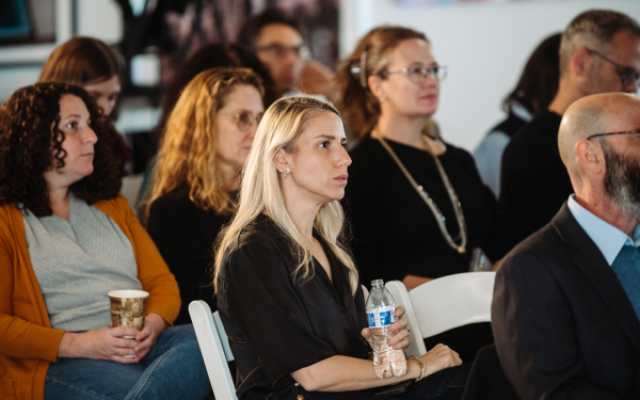
In individual trauma, the person requires a witness in order to heal. Witnessing is a vital stage in trauma processing. The central problem now is that when the entire society is traumatized, there are no “free witnesses.” Literally everyone is part of the story, and everyone is hurting. We find ourselves in echo chambers of pain, with many voices of suffering but little mutual listening. This leads to a struggle over narrative: who suffered more, who is right, or who may speak for all. The result is pain without containment, precisely because the collective container, the community itself, has been fractured.
The Path Forward Lies in Reconstructing A Shared Story
Ultimately, the process where the meaning and power of the community are shared among the population, is the driver that can transform fragmented individual pain into a unified collective future.
There are so many questions to ask. Where and how do we continue from here as a society? As a nation? How and what should we remember? What values will guide us? What will our leadership look like? And what future can truly be imagined?
The answers lie in the collective story that we tell. Culture is meant to provide the moral and ideological interpretation of events, defining what must be remembered, what may be forgotten, what should be acknowledged, and what should remain unspoken. The responsibility for remembering belongs to all of us, both Israelis and Jews around the world, but the process of building that new collective narrative is challenging.
Conditions for Communal Healing that Hold Different Truths
For a positive healing process to unfold, we must intentionally create the right conditions. This starts with the recognition of diverse responses and creating new spaces of listening to develop new witnesses within our communities. We need to work toward a shared, yet flexible, narrative that can hold different truths. Creative and ritualistic expressions are essential: new rituals, art, and educational initiatives, like communities organizing memorial services or dialogue circles between different groups, provide the necessary framework for containment and connection.
The Unique Role of Mental Health Professionals
In this fractured landscape, mental health professionals have a unique and vital role in collective healing, especially through the act of “Witnessing” (Eshel, 2023). At NATAL and for other mental health professionals, the role is to provide validation for the immense pain and to act as containers. These are spaces where we hold room for the varied, complex, and sometimes conflicting narratives that emerge. By offering a stable, compassionate presence, therapists help transform fragmented experiences into a coherent, meaningful shared reality, thereby aiding the collective in taking its first steps toward a resilient future.
A Shared Global Responsibility
Our collective wound is real and measurable. The path to resilience is by creating spaces for listening, and weaving a new story creates collective healing and the foundation for Israeli resilience, and for Jews around the world. It’s a resolution for the new year that we can build a better future together.