


Confronting a Hemispheric Threat: Trump’s Venezuela Decision Explained
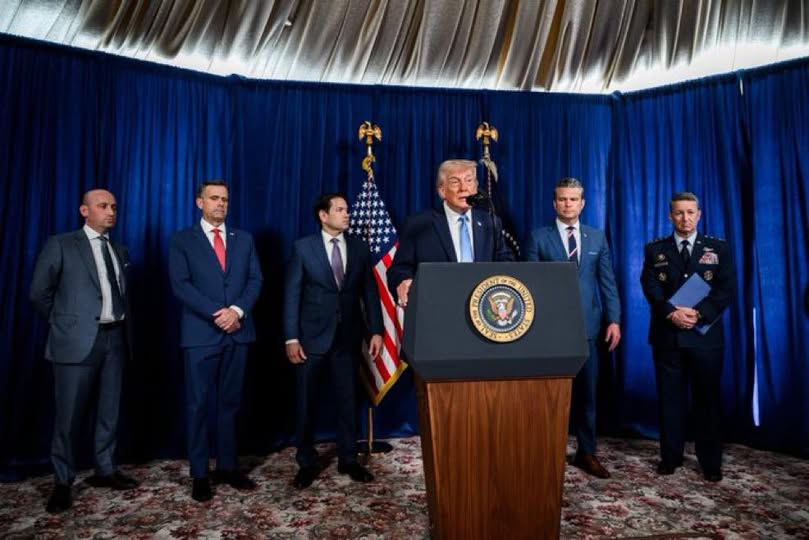
The world’s reaction to the U.S. operation in Venezuela has once again brought to light a recurring issue in international dialogue: outrage that is often selective, ideologically driven, and frequently disconnected from the facts. Critics have slammed President Donald Trump’s decision to authorize a targeted mission that led to Nicolás Maduro’s arrest, calling it illegal and reckless. Yet, much of this backlash fails to consider the long history of policies that paved the way for this operation and the harsh realities of Maduro’s governance.
“Other Presidents may have lacked the courage… to defend America, but I will never allow terrorists or criminals to operate with impunity against the United States.” – President Donald J. Trump
President Trump is a man of action.
If you don’t know, now you know. pic.twitter.com/G8DH20m9Dm
— Department of State (@StateDept) January 3, 2026
This debate didn’t conclude with Maduro’s removal; it simply transitioned into a new chapter. If Selective Outrage and Hard Truths highlighted the contradictions surrounding Trump’s decision, the administration’s follow-up explanation—most clearly articulated by Secretary of State Marco Rubio—has clarified something even more fundamental. This wasn’t a war against Venezuela; it was a direct response to a regional threat that had been allowed to grow unchecked for years.
Operation Absolute Resolve. pic.twitter.com/KOtW0C0V1O
— The White House (@WhiteHouse) January 3, 2026
In a string of media appearances, Rubio was refreshingly candid. “There’s not a war,” he declared. “We are at war against drug trafficking organizations—not a war against Venezuela.” That distinction is significant. For far too long, critics have mixed up the difference between targeted security operations and open-ended military interventions. Rubio outright rejected that framing, emphasizing that U.S. forces were only on the ground for a brief period, with a single aim: to apprehend someone already indicted on serious charges. There was no occupation, no bombing, and no civilian casualties.
I hope people now understand. The President of the United States is not a game player. When he tells you he's going to do something and address a problem, he means it. pic.twitter.com/bVhtqcoPWP
— Secretary Marco Rubio (@SecRubio) January 3, 2026
Rubio’s argument fits neatly within the framework of Trump’s foreign policy approach. He highlighted that the Western Hemisphere is not a neutral playground for hostile powers. It’s America’s immediate neighborhood. Allowing drug cartels, Iranian proxies, or rival states to gain a foothold in the region isn’t just a theoretical geopolitical concern—it’s a direct threat to national security. What happens in Venezuela doesn’t stay in Venezuela; it impacts American cities through drugs, gang networks, illegal migration, and transnational crime.
.@SecRubio's message to those criticizing President Trump for Maduro's arrest: pic.twitter.com/enwpBfKCR5
— Department of State (@StateDept) January 4, 2026
This perspective also counters the idea that Venezuela was targeted solely for its oil. Rubio points out that the administration’s goals are clear: breaking down drug trafficking networks, removing Iranian and Hezbollah operatives, and stopping the misuse of energy resources to fund U.S. adversaries. While oil plays a role in the regional dynamics, it’s not the main reason. Security is the priority.
Legal obligations have also taken center stage in the criticism, especially the argument that congressional approval was necessary. Rubio brushed this off as a misunderstanding. This isn’t an invasion or a prolonged military operation. Thanks to long-standing executive authority, specific counter-narcotics and law enforcement actions don’t need prior congressional approval, although Congress is informed as needed. Presidents from both parties have used similar powers when urgent threats called for quick responses.
What stood out most in Rubio’s remarks was his clear rejection of the usual comparisons to Iraq, Afghanistan, or Libya. “This isn’t the Middle East,” he stated. “Our mission here is quite different. This is the Western Hemisphere.” Proximity is key. Instability in this region has direct consequences for the United States, and ignoring that fact has been one of Washington’s most costly illusions.
The administration has also been upfront about its priorities: it’s all about outcomes, not just talk. The key question is simple: Are we stopping the flow of drugs? Is Iranian influence being curbed? Is Venezuela no longer acting as a base for criminal and hostile activities? Until we see substantial changes, the pressure—through sanctions, maritime seizures, and diplomatic isolation—will persist.
Rubio also pointed out a glaring inconsistency in policy that has persisted for years. Past administrations publicly offered a multimillion-dollar bounty for Maduro’s capture, recognizing his involvement in drug trafficking, yet they never followed through. “So we had a reward for his capture,” Rubio remarked, “but we weren’t going to enforce it?” He emphasized that President Trump opted for action instead of mere symbolism.
.@SecRubio: "He [Maduro] suckered the Biden administration into stupid deals. He's made a career out of not keeping deals and figuring out how to save himself by buying time … President Trump was not going to fall into that trap." pic.twitter.com/7n8ht1JYPw
— Department of State (@StateDept) January 4, 2026
Equally important is Rubio’s insistence on precision in language. Maduro, he said, was not a legitimate head of state. He forfeited that claim when he stole elections, dismantled democratic institutions, and turned the Venezuelan state into a criminal enterprise. Referring to him reflexively as “President Maduro” obscures that reality.
This position aligns closely with what Anila Ali, President and CEO of the American Muslim & Multifaith Women’s Empowerment Council, has emphasized. The operation did not emerge overnight. Sanctions, negotiations, and regional engagement began during Trump’s first term. Diplomatic avenues were pursued repeatedly, but Maduro refused reform. Trump was equally clear during his re-election campaign that international drug networks exporting violence and narcotics would no longer be tolerated. The operation was the culmination of sustained pressure, not an impulsive gamble.
The moral case against Maduro remains overwhelming. United Nations investigations have documented torture, arbitrary arrests, extrajudicial killings, and sexual violence under his regime. Nearly eight million Venezuelans were forced to flee their country, one of the largest mass displacements in recent history. Journalists have reported police killings carried out in plain sight, met with silence born of fear. Criminal gangs operated openly, often with state protection.
Yet despite this record, critics rushed to invoke international law. Many of the same voices, however, were silent—or even approving—when Russia invaded Ukraine, devastating cities and displacing millions. This double standard reveals that much of the outrage directed at Washington is not rooted in principle, but in habitual anti-Americanism.
????Update: Supreme Commanding General Dan “Raising” Caine, Supreme Commander of the US Military, briefing on Operation Absolute Resolve was as perfect as the execution of the mission itself.
Details:
????More than 150 aircraft deployed, drones included
????Flown from more than… pic.twitter.com/vnes5P7REY
— US Homeland Security News (@defense_civil25) January 5, 2026
Russia and China’s condemnation of the U.S. move is equally predictable. Both have strategic interests in shielding authoritarian allies and limiting American influence, particularly in energy-rich regions. Their objections are geopolitical calculations, not moral judgments.
The silence on Venezuelan streets following Maduro’s arrest has also been misread. Societies traumatized by years of repression do not erupt into celebration on cue. Silence can reflect shock, caution, and the first fragile moment of relief after decades of fear.
Leadership is rarely comfortable, and decisive action almost always invites backlash. But the central truth remains unchanged. Nicolás Maduro devastated his country, brutalized his people, and presided over a criminal regime that destabilized an entire region. President Trump chose action over paralysis and accountability over empty condemnation.
Confronting a hemispheric threat is never neat or universally applauded. But history has little patience for selective outrage. It tends to favor those who recognize danger close to home—and act before denial becomes disaster.