

Mathematics Teaching Professor, Author
Congregation Beth Israel: A Century of Jewish Life in Bellingham, Washington
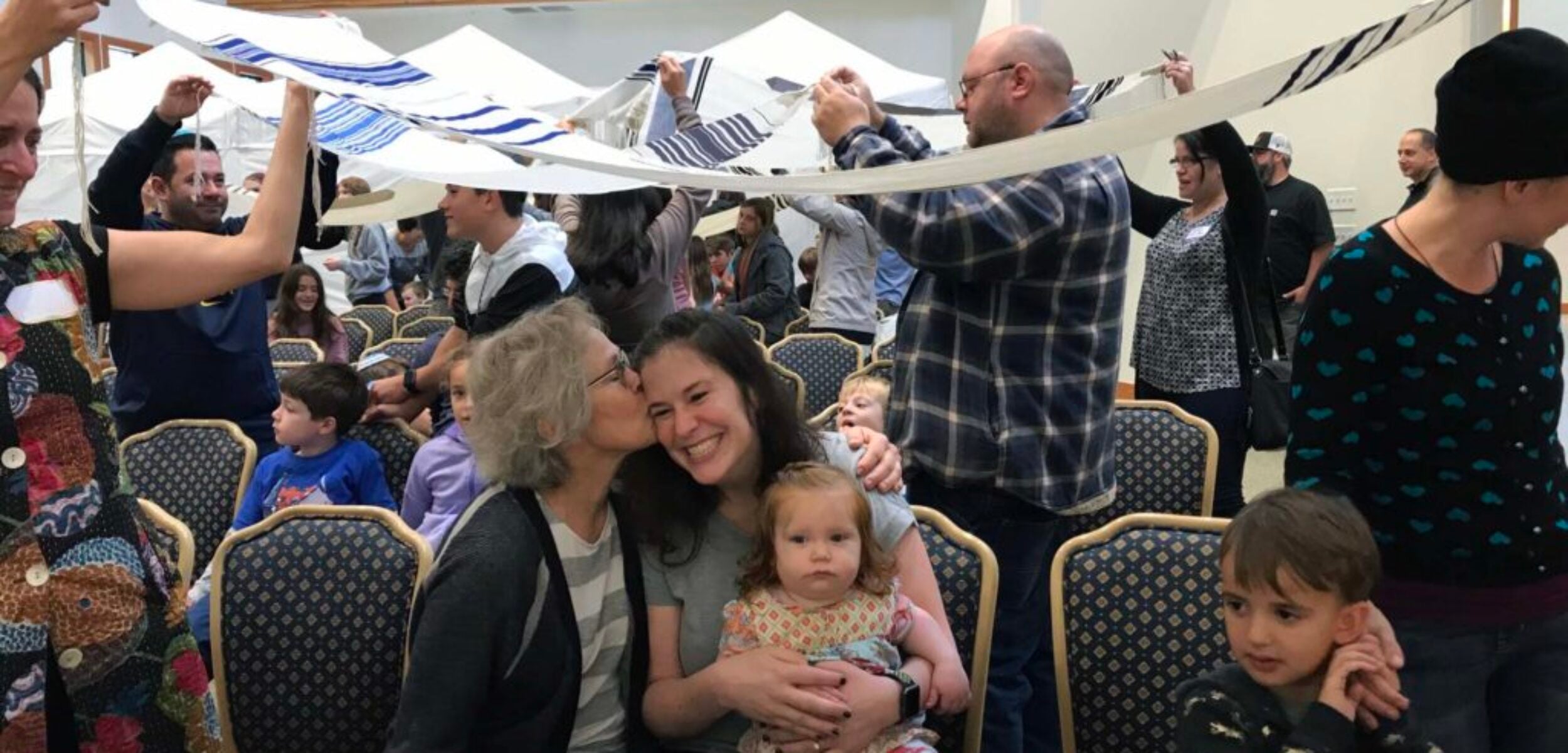
First Day Kesher 2019 (Source: Congregation Beth Israel in Bellingham, Washington)
Congregation Beth Israel has been an important part of Bellingham, Washington’s Jewish community for more than a century. Founded in the early 1900s by Jewish immigrants, the congregation began with an Orthodox tradition that shaped its early religious practices and community life. Over time, Beth Israel gradually became more liberal and inclusive, moving toward Conservative practices and eventually affiliating with the Reform movement. This evolution reflects the changing needs, values, and traditions of Bellingham’s Jewish community while maintaining a strong commitment to Jewish learning, worship, and community.
I would like to thank the esteemed Rabbi Samuels for his support and guidance.
Religious Events
Congregation Beth Israel in Bellingham, Washington, celebrates Shabbat each week with Friday evening and Saturday morning services, along with weekly Torah study. Friday services include a Family Service and vegetarian potluck on the first Friday, while the fourth Friday features a musical service in the round with a musical ensemble called Shabbat Shira led by Cantorial Soloist Andrea Shupack. Saturday services vary throughout the month and include contemplative, Reform, children’s, and Conservative-style services, often followed by a community potluck lunch.
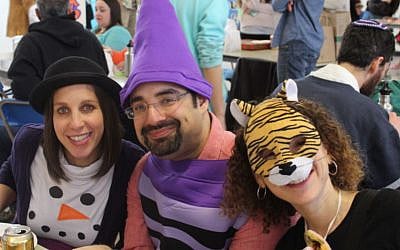
The congregation also celebrates major Jewish holidays with community-focused events. Purim festivities include costumes, face painting, carnival games, a costume contest, Megillat Esther chanting, trivia, hamantaschen, and other festive foods.
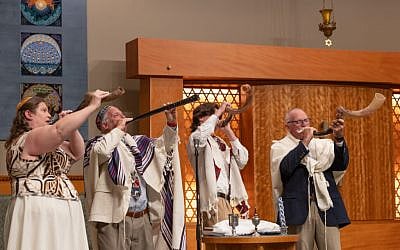
During Passover, Beth Israel hosts a Community Seder on the second night. High Holy Day programming includes family services, a Shofar Blast, and Yom Kippur music led by Cantorial Soloist Andrea Shupack.
Youth Programs
Congregation Beth Israel’s Kesher Center for Jewish Learning offers an experiential and values-based Religious School for students ages 0 to 16 and their families. The program helps students connect Judaism to their everyday lives, develop Jewish knowledge and identity, and engage with Jewish values and traditions. It also encourages family participation and prepares students to become confident prayer leaders and Torah teachers for their b’nei mitzvah.
The seventh grade B’nei Mitzvah program is taught by Rabbi Joshua Samuels, Leah Bordman, and guest teachers. The two-year Confirmation program, which culminates in a student led Confirmation service, explores advocacy and social justice through contemporary and Jewish perspectives as well as topics related to Israel and antisemitism. Kesher also offers a Madrichim leadership program for ninth and tenth grade students enrolled in Confirmation.
Adult Programs
Congregation Beth Israel offers a variety of programs and resources for adults and families. Torah study is held nearly every Shabbat morning and welcomes everyone’s participation, providing opportunities for discussion, learning, and reflection.
The congregation’s Care Committee provides support to members experiencing illness, loss, or major life changes, following the Jewish tradition of Bikur Cholim. Beth Israel also maintains the Max Glass Library for the congregation, along with a youth library located on the Kesher level.
The congregation welcomes interfaith couples and recognizes that interfaith relationships and experiences can affect entire families. Its programming seeks to support and include members of diverse family backgrounds.
Life Cycle Events
Congregation Beth Israel supports members through important Jewish life cycle events and major moments in life. Baby namings and B’rit Milah ceremonies welcome newborns into the Jewish covenant and celebrate the giving of a Hebrew name.
During Simchat Torah, Consecration marks the beginning of formal Jewish education for the congregation’s youngest members with a special blessing and gift. The seventh-grade B’nei Mitzvah program, taught by Rabbi Joshua Samuels, Leah Bordman, and guest teachers, prepares students for this significant Jewish milestone.
The rabbi works with couples from diverse backgrounds to create meaningful wedding celebrations. Beth Israel also provides support during illness through rabbinical visits and the Caring Committee, which offers hospital and home visits. For those preparing for the end of life, the Care Committee provides workshops on end-of-life planning and bereavement resources.
Historical Backgrounds
Jewish settlement in Washington began in the late 1840s, with Adolph Friedman recognized as the earliest known Jewish settler. During the 1850s, German-speaking Jewish immigrants arrived and worked mainly as merchants and traders. By the 1860s and 1870s, Jewish communities had grown in Seattle and Olympia.
Jewish immigrants began arriving in Bellingham in the late 1800s. In 1898 or 1899, families from northeastern Lithuania settled there, possibly drawn by economic opportunities connected to the Klondike Gold Rush. Around the same time, German Jewish merchants established businesses in downtown Bellingham.
The German and Lithuanian Jewish communities had different backgrounds and occupations but worked together to establish a Jewish community. Lithuanian families often operated small shops or worked as peddlers, while German Jewish families were generally more established business owners.
The first recorded community-wide services were held in 1903 for the High Holy Days. By 1906, the Jewish population had grown to nearly 100 people, and the community purchased a former church building near F Street and Astor for $950. In 1907, Rabbi Joseph Polakoff was hired, helping create a more organized Jewish congregation.
Which brings us to 1908.
In 1908, the United States had 46 states and was led by President Theodore Roosevelt. The country was rapidly modernizing, with expanding industries and growing cities, while significant social and economic inequalities remained. More than half of Americans still lived in rural areas, even as cities grew and skyscrapers began transforming the urban landscape. Daily life was also very different from today: average life expectancy was about 47 years, most births took place at home, and only a small percentage of homes had bathtubs.
In 1908, Washington State built its first railroad bridge across the Columbia River. The state also participated in the U.S. presidential election, where Republican candidate William Howard Taft won Washington by a wide margin.
In Bellingham, 1908 was a year of notable development. The city opened its first downtown Carnegie public library and began construction of the Flatiron Building, which became Bellingham’s first skyscraper. The Barnum and Bailey Circus also came to town during its seasonal tour, attracting large crowds of local residents.
It was in that year, 1908, that a synagogue was legally incorporated as Congregation Beth Israel. The trustees listed on the incorporation papers were L. Jacobs, P. Brenner, L. Lobe, E. Schuman, L. Schwartz, I. Schuman, and A. Levin, with L. Jacobs serving as president. These men are recognized as the founding fathers of Bellingham’s Jewish community, marking an important milestone in the establishment of Congregation Beth Israel.
Rabbi Polakoff was followed by several rabbis, including Rabbi Benjamin Cohen, who was hired in 1913 and served for at least four years. During this period, the congregation’s Orthodox traditions continued, with a cheder serving at least 31 students and organizations such as B’nai B’rith, the Sisters of Israel Society, and the Ladies Hebrew Benevolent Society being established. In 1925, a new synagogue was dedicated at Broadway and Irving to serve about 45 Jewish families. More than 400 people attended the dedication, where Torah scrolls were carried under a canopy to the new building. Rabbi Max Gottlieb, who had recently arrived from Oakland, became the congregation’s new rabbi and served alongside his wife, Sarah, for the next 10 years.
In 1925, Congregation Beth Israel dedicated a new synagogue at Broadway and Irving to serve about 45 Jewish families in Bellingham. More than 400 people attended the dedication, where Torah scrolls were carried under a canopy to the new building. Rabbi Max Gottlieb and his wife, Sarah, served the congregation for 10 years. The Great Depression brought economic hardship, causing many young Jewish residents to leave Bellingham for work elsewhere. In the early 1940s, Rabbi Henry Okolica served the community, followed by a decade of lay-led services and visiting rabbis. In the early 1950s, cantor Fred Gartner moved to Bellingham and became the community’s rabbi, serving for more than 30 years.
Under Rabbi Gartner, synagogue life grew and gradually became more modern and inclusive. Women became increasingly involved, and the Sisterhood was organized in 1952. The congregation also shifted from an Orthodox orientation toward Conservative Judaism and became active in interfaith outreach. After Gartner’s retirement in 1982, the congregation eventually affiliated with the Reform movement in 1986 and hired Rabbi Michael Oblath in 1987. Growing membership led to long-range planning for a larger facility, while debates over Jewish identity and participation led a small group to establish Conservative Congregation Eytz Chaim in 1993. After Rabbi Oblath’s departure in 1996, Rabbi Yossi Liebowitz served until 2002, followed by Rabbi Yossi Zylberberg from 2002 to 2005.
Rabbi Cindy Enger served as rabbi from 2005 to 2012, during which Congregation Beth Israel grew to more than 175 households and expanded its worship and learning opportunities. Construction of a new synagogue also began during her tenure.
Today, the congregation continues to grow and serves more than 315 family units. It maintains an active religious school, youth groups, Sisterhood and Brotherhood organizations, as well as numerous committees and study groups, reflecting the continued vitality of Bellingham’s Jewish community.
Contact Information:
Congregation Beth Israel, 751 San Juan Blvd, Bellingham, Washington 98229
Phone: (360) 733-8890
Email: rabbi@bethisraelbellingham.org
Website: https://bethisraelbellingham.org/