


Mathematics Teaching Professor, Author
Congregation B’nai Israel: A Historic Jewish Legacy in Jackson, Tennessee
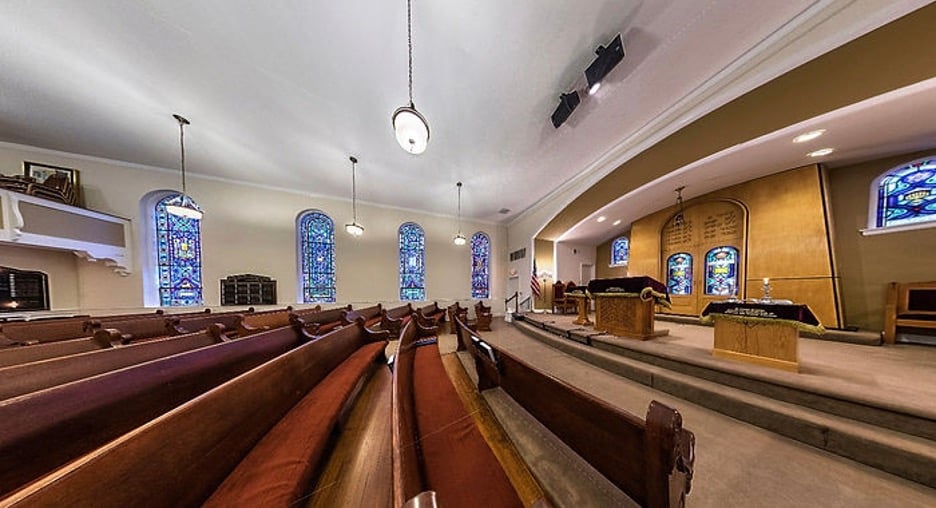
Inside the synagogue, Congregation B’nai Israel (Source: B’nai Israel Synagogue Jackson TN)
Congregation B’nai Israel in Jackson, Tennessee, has been an important part of the local Jewish community since its founding in 1885. Over the past 130 years, the congregation has preserved its Jewish traditions while contributing to the history, culture, and community of Jackson. Its historic synagogue, religious practices, and strong sense of community continue to reflect its lasting importance.
I would like to extend my gratitude to David Cohen, President of the Congregation B’nai Israel, for his guidance in the preparation of this article.
Synagogue
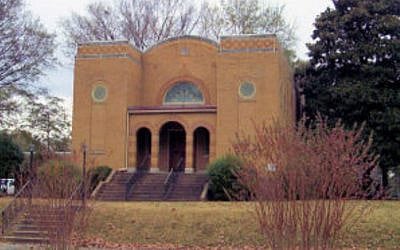
Congregation B’nai Israel has been a landmark in this historic neighborhood since the 1940s and is significant for both its Jewish heritage and distinctive architecture. The synagogue is one of the few properties in the state listed on the National Register of Historic Places for its significance to Jewish heritage. Its brick design combines Romanesque and Art Deco influences, seen in features such as the arched entryways, windows, articulated walls, towers, curves, and geometric rectangular forms.
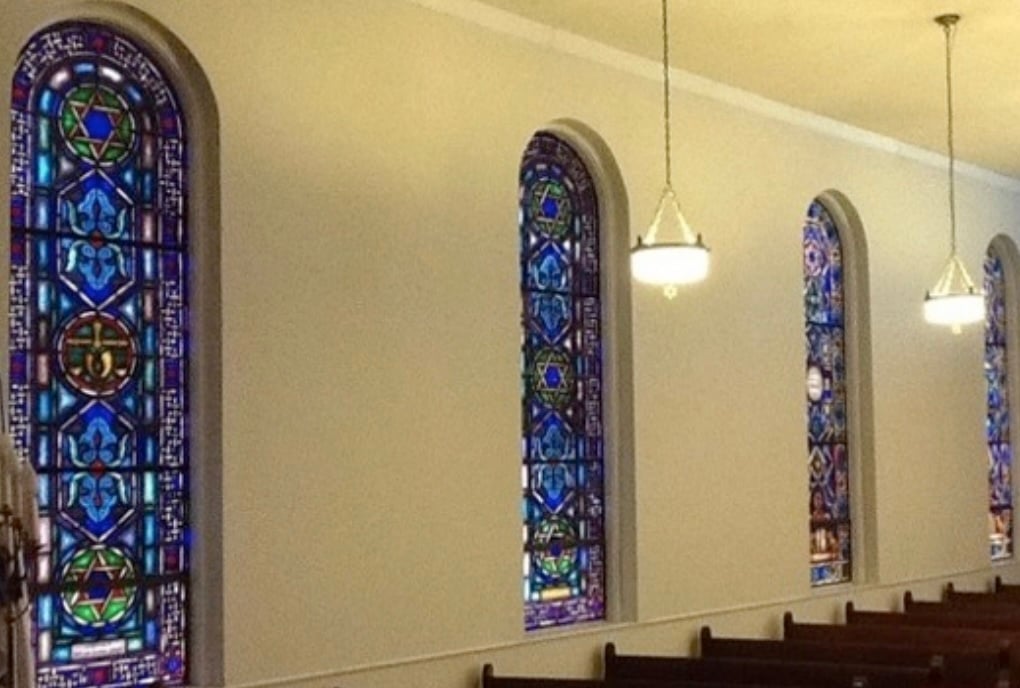
One of the building’s most notable features is its 25 beautiful stained-glass windows, each serving as a memorial to a former member of the congregation. The windows were designed by an artist who later worked for the Laukhuff Glass Company of Memphis.
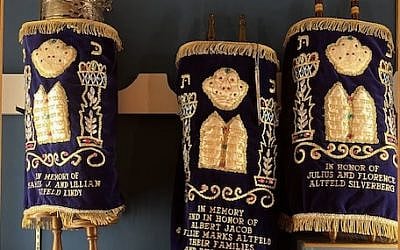
The synagogue also houses three European Torahs dating from the 1800s, including two smaller Torahs donated by A.J. Altfeld and a larger Torah donated by Philip and Mary Levy Marks. Following the 2014 unification of the Jewish Center of Union City and Congregation B’nai Israel, another Torah from the Union City Jewish Center was relocated to the synagogue.
Another distinctive feature is the use of pews from the original Cumberland Presbyterian Church building, which are approximately 150 to 170 years old and were preserved and installed in the synagogue. Classrooms were later added to the building in 1962, further contributing to its long history as an important center of Jewish life and community in the area.
Community and Values
B’nai Israel Synagogue in Jackson, Tennessee, practices Reform Judaism with an emphasis on inclusiveness, openness, and acceptance. The congregation welcomes individuals and families from all backgrounds and works to create a strong sense of community, friendship, and belonging. Membership is accessible to everyone, and no one is excluded because of financial circumstances.
According to Mike Silver, who served as president of the congregation from 2007 to 2015, the members of B’nai Israel are like-minded and supportive, providing one another with an opportunity to worship and communicate with God in their own individual ways. The congregation’s focus on acceptance and personal expression helps make B’nai Israel a welcoming and meaningful part of the Jackson, Tennessee, community.
Religious Events
B’nai Israel Synagogue in Jackson, Tennessee, holds a variety of religious events that bring the congregation together for worship, learning, and fellowship. Worship services are conducted in both Hebrew and English, and the congregation encourages lifelong Jewish learning, especially for children, who are taught the values and teachings of the Torah. Members are also encouraged to develop a personal and meaningful relationship with G-d.
One of the most important religious observances is Shabbat, the Jewish Sabbath, which is a weekly day of rest, joy, and holiness. Shabbat begins at sundown on Friday with the lighting of candles and ends on Saturday evening with the appearance of three stars and the recitation of Havdalah, a ceremony marking the separation between Shabbat and the new week. Shabbat services at B’nai Israel are held on Friday evenings in the sanctuary, which was refurbished in 2014. Following the service, members gather for an informal dinner at a local restaurant, combining religious worship with friendship, community, and fellowship.
Beliefs and Principles
B’nai Israel Synagogue in Jackson, Tennessee, follows the central principles of Judaism, including God, Torah, and Israel. The congregation views the Torah as the foundation of its religious life and as an important source of guidance for its members. B’nai Israel also embraces the Jewish concept of Tikkun Olam, which means “repairing the world.” This principle encourages members to make the world a better place through ethical behavior, charity, helping others, and participating in social action. Through these beliefs, the congregation emphasizes not only faith and worship but also responsibility toward the wider community and the world.
Cemetery
B’nai Israel Cemetery in Jackson, Tennessee, dates back to 1896 and is located on Hollywood Drive, next to Hollywood Cemetery. The cemetery is an important part of the history of the Jewish community in Jackson. Burials from an earlier Jewish cemetery established in 1873 were moved to the current location.
Sam Baum, a longtime member of the congregation, documented much of the history of Jackson’s Jewish population and served as superintendent of the cemetery from 1911 to 1962. In recognition of his many years of service, Baum was memorialized with a marble inscription on the right brick entrance column. The cemetery continues to preserve the memory and history of generations of members of Jackson’s Jewish community.
Historical Backrounds
Jews began arriving in Tennessee in the late 18th and early 19th centuries. Although a few Jewish traders may have traveled through the eastern part of the state as early as 1778, David Hart, who arrived in Memphis in 1838, is recognized as the first recorded Jewish settler in Tennessee. His arrival marked an important beginning in the development of organized Jewish communities across the state.
Jewish settlement in Jackson, Tennessee, began in the early to mid-19th century, with the community growing more significantly after the Civil War. Jewish immigrants, particularly merchants, traders, and craftsmen, were attracted to Jackson because of its growing economy and importance as a railroad and commercial center. In the 1840s, a new group of Jewish settlers arrived, many of them immigrants from Germany who established themselves as merchants and traders.
Between 1824 and 1855, Jackson’s Jewish population remained relatively small and did not yet form an organized community. Early Jewish residents were often traveling peddlers, small merchants, and craftsmen from Central Europe who became part of Jackson’s developing agricultural and commercial economy. Over time, these individual settlers established stronger connections with one another, laying the foundation for the organized Jewish community that would eventually develop in Jackson.
In 1867, two years after the Civil War ended, another influx of Jewish settlers came to the region. Among the earliest was Julius Friedlob, who traveled on horseback from Memphis in 1867 to open a dry goods store. By 1872, there were 21 Jewish merchants in Jackson. The town’s growth as a railroad hub encouraged continued Jewish immigration, and in 1885, Congregation B’nai Israel was officially chartered.
Which brings us to 1885.
In 1885, the United States consisted of 38 states and was undergoing major changes during the Gilded Age. The country was rapidly developing from an primarily agricultural society into an increasingly industrial nation. New inventions, expanding railroads, growing cities, and economic development contributed to the nation’s transformation. In that year, Grover Cleveland was inaugurated as the 22nd president of the United States, marking the return of the Democratic Party to the White House for the first time since before the Civil War. The United States was also experiencing territorial expansion and significant cultural and technological developments, reflecting the country’s rapid growth and changing identity.
In 1885, Tennessee was a state undergoing significant changes as it continued to recover from the effects of the Civil War and the devastating yellow fever epidemics of 1878. The state’s economy was largely based on agriculture, but railroads were expanding and helping connect communities and markets throughout Tennessee. Early industrialization was also beginning to develop, bringing economic and social changes to the state. At the same time, Tennessee experienced important cultural and community developments as towns and cities rebuilt and established stronger civic, religious, and social institutions.
In 1885, Jackson, Tennessee, was a rapidly growing railroad and agricultural center in West Tennessee. As the city emerged from the Reconstruction era, it continued to expand its infrastructure and economy. The growth of the railroad helped Jackson become an important center for transportation and trade, while its agricultural economy supported the surrounding region. During this period, the city was also developing its cultural, religious, and civic institutions, creating a stronger sense of community and laying the foundation for continued growth.Jews in Jackson Tennessee in 1885
It was in that year, 1885, the Jewish community in Jackson, Tennessee, established its first formal Jewish congregation, Congregation B’nai Israel. Jewish settlers had lived in Jackson since as early as the 1820s, with many working as merchants and contributing to the city’s growing economy and civic life. The congregation was officially chartered in 1885, marking an important milestone in the development of Jackson’s Jewish community.
During its early years, members held worship services in their homes and in rented spaces, including a hall above M. Tuchfeld’s store, which later became known as Kisber’s Department Store. That same year, the congregation purchased a lot on North Cumberland Street for $500, providing the community with a permanent location for its future growth and religious activities.
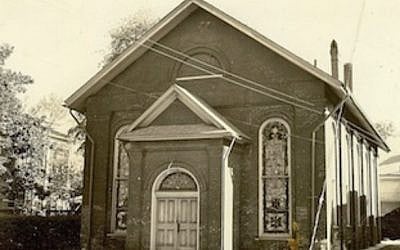
In 1897, Congregation B’nai Israel exchanged its property on North Cumberland Street, along with an additional $600, for the former Cumberland Presbyterian Church building on College Street. The congregation converted the building into a synagogue, giving the Jewish community in Jackson its first permanent place of worship. In 1907, B’nai Israel officially affiliated with Reform Judaism and became a member of the Union of American Hebrew Congregations. The congregation remained in the former church building for several decades. In 1924, members began raising money for a new synagogue, which was designed by Memphis architect Carl Heyer. The new synagogue was completed in 1941, and the congregation held its first service there on Rosh Hashanah Eve, September 12, 1941.
The current building later became recognized for its historical and architectural significance and was added to the National Register of Historic Places on July 16, 2008.
Congregation B’nai Israel has played an important role in the history of Jackson, Tennessee, for more than a century. Established in 1885, the congregation grew from a small group of Jewish settlers into a welcoming Reform Jewish community that has preserved its faith, traditions, and heritage through generations.
Its historic synagogue reflects both the architectural history of Jackson and the lasting contributions of the Jewish community to the city. From its early services in members’ homes and rented spaces to its present-day congregation, B’nai Israel has remained a place of worship, learning, remembrance, and fellowship. Its stained-glass windows, historic Torahs, cemetery, and preserved architectural features connect the present congregation to those who came before.
Today, B’nai Israel continues to honor its history while embracing inclusiveness, community, and the Jewish principle of Tikkun Olam, demonstrating the enduring importance of faith, heritage, and community in Jackson, Tennessee.
Contact Information:
Congregation B’nai Israel, 401 West Grand, Jackson, Tennessee 38308
Phone: PO Box 10906, Jackson, Tennessee 38308
Email: bnai.israel.jackson@gmail.com
Website: congregationbnai-israel.org/