


Mathematics Teaching Professor, Author
Congregation Brith Sholem Ogden: Utah’s Oldest Continuously Active Synagogue
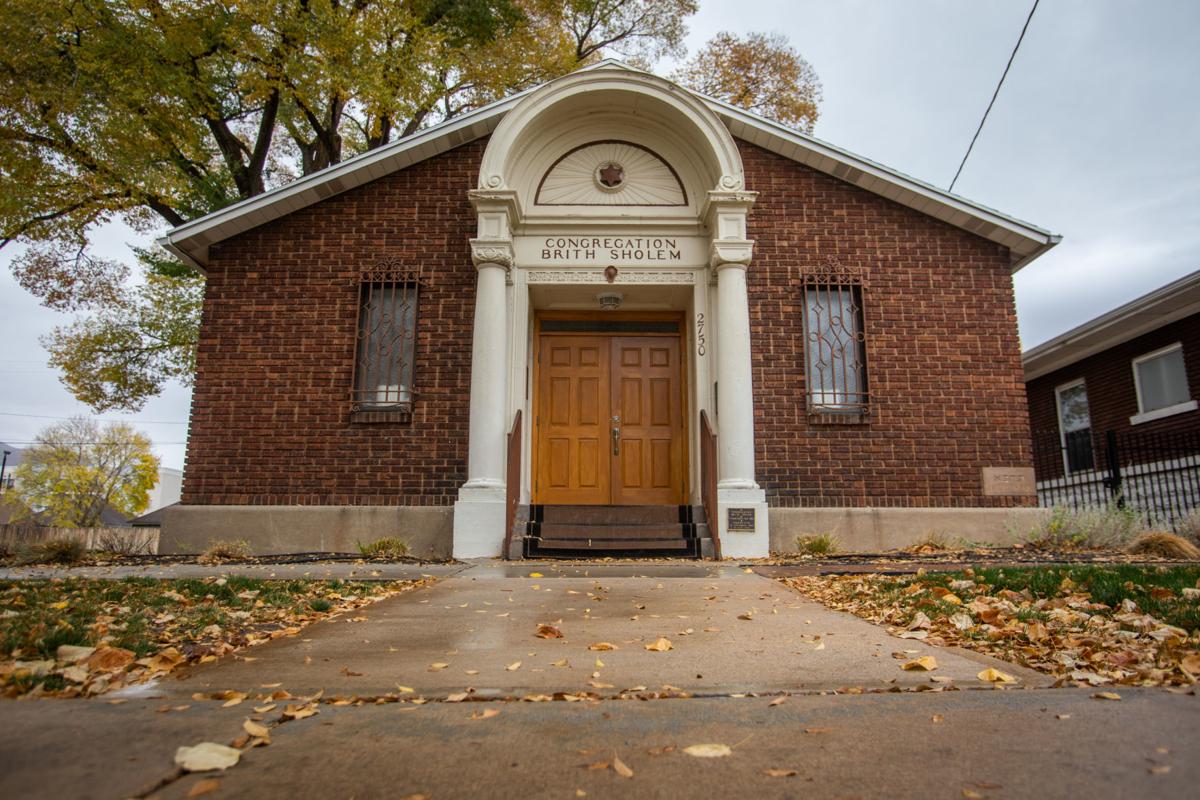
Congregation Brith Sholem (Source: Congregation Brith Sholem Ogden Utah)
Built in the fall of 1921, Congregation Brith Sholem of Ogden, Utah, is the oldest continuously active synagogue in the state. Today, the congregation continues to serve as a spiritual and cultural home, drawing congregants from Northern Utah to Southern Idaho through weekly worship services, educational programs, and community gatherings. Reflecting its enduring legacy, the synagogue’s historic beauty is showcased in its remarkable architectural details, including its Byzantine-inspired entrance, intricate stonework, and symbols that reflect the faith and traditions of generations past. More than a historic landmark, Congregation Brith Sholem remains a living testament to resilience, community, and the enduring presence of Jewish life in Utah.
I would like to thank the esteemed Janice Ward, President, Congregation Brith Sholem, for her support and guidance.
Synagogue
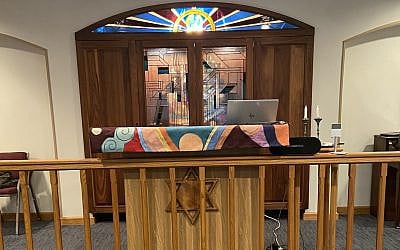
Congregation Brith Sholem is housed in a distinctive single-story brick synagogue in Ogden. The building features gable ends facing east and west. On the west façade, three steps lead to the main entrance, where recessed double doors are framed by an elaborate stone surround.
The entrance is flanked by two Byzantine-style columns that support a broad stone frieze and a projecting semicircular pediment. Carved into the tympanum is a Star of David radiating outward with sunburst-like rays. The stone frieze bears the inscription “Congregation Brith Sholem,” while the lintel above the doors is engraved with the welcoming message: “May the doors of this synagogue be wide enough for all to enter.”
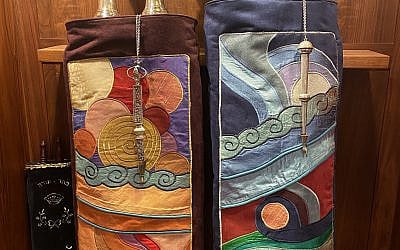
At the eastern end of the building, a semicircular projection houses the ark, the sacred cabinet where the Torah scrolls are kept.
Recognizing its architectural and historical significance, the synagogue was listed on the National Register of Historic Places in 1985.
Religious Events
Congregation Brith Sholem serves the Jewish community of Ogden and the surrounding region with worship services that are informal, welcoming, and rich in song and tradition. Friday evening services begin at 7:00 p.m. and typically last about an hour, while Saturday morning services are held periodically throughout the year and include the reading of the Torah. Services are led primarily by volunteer members of the congregation, with a student rabbi conducting worship once each month, reflecting the congregation’s strong spirit of community participation.
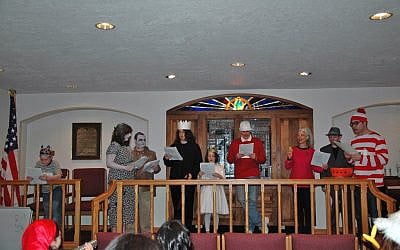
Throughout the year, Congregation Brith Sholem follows the traditional Jewish calendar by celebrating major religious holidays and festivals together. Among these are Sukkot, the eight-day Festival of Booths that follows the High Holidays; Pesach (Passover), commemorating the Israelites’ Exodus from Egypt with the traditional Seder meal and the observance of avoiding leavened foods for eight days; Shavuot, celebrating the giving of the Torah at Mount Sinai; and Hanukkah, marking the Maccabees’ victory and the rededication of the Temple. The congregation also celebrates Purim, honoring the story of Queen Esther and the Jewish people’s deliverance from Haman, and Tu B’Shevat, the “New Year of the Trees.”
Religious School
Congregation Brith Sholem is committed to Jewish education for both children and adults through its religious school and ongoing learning opportunities. The parents teach the weekly Religious School classes for children while also leading regular adult education sessions that explore Jewish history, traditions, and contemporary topics of interest.
For the 2025–2026 school year, the Religious School offers three age-based classes for children under five, ages six to nine, and ages ten to thirteen. Bar and Bat Mitzvah preparation classes are taught by our worship and ritual chair, Judi Amsel, and they are also available for pre-teen children of congregation members, with instruction offered according to the number of eligible students each year. Judi Amsel also teaches the conversion classes.
Adult education is an important part of congregational life as well to the congregation, with the student rabbi leading a monthly study session focused on a specific aspect of Jewish faith, culture, or practice. These educational programs help members of all ages deepen their understanding of Judaism while strengthening the congregation’s sense of community and shared heritage.
Life Cycle Events
Congregation Brith Sholem observes the major milestones of Jewish life, supporting members from birth through the end of life with traditional ceremonies and pastoral care. These life-cycle events strengthen family bonds, preserve Jewish heritage, and connect each generation to the congregation’s shared faith.
The congregation recognizes Brit Milah (bris), the covenantal circumcision ceremony for newborn boys; Bar and Bat Mitzvah, marking a young person’s assumption of Jewish religious responsibilities; and marriage, celebrated as a sacred covenant that builds family and community. Congregation B’rith Sholem also honors Jewish funeral and mourning traditions, emphasizing respect for the deceased and compassionate support for grieving families through rituals that provide comfort and remembrance.
Historical Background
During the 1849 California Gold Rush, the Utah Territory became a vital crossroads for thousands of fortune-seekers traveling west. An estimated 26,000 gold rushers, roughly one-third of all “fortyniners”, passed through the Salt Lake Valley in 1849 and 1850, making the region an important resupply point. Among these travelers were the first Jewish pioneers and merchants, who arrived in small numbers to trade with emigrants and establish businesses along the overland routes.
Ogden, founded in 1845, also played an important role as a resupply stop on the Salt Lake Cutoff, where travelers purchased provisions, traded worn-out livestock, and rested before continuing across the western deserts.
Despite this steady flow of migrants, Jewish life in the Utah Territory remained minimal between 1849 and 1854, consisting mainly of transient merchants, prospectors, and immigrants, with no organized Jewish community until the arrival of the territory’s first permanent Jewish families.
Before the construction of its synagogue, Ogden’s Jewish community gathered for worship and religious events in private homes, businesses, and community halls. Jewish communal life in the city formally began in 1890 with the establishment of Congregation Ohab Sholem (“Love of Peace”), providing the area’s growing Jewish population with its first organized congregation.
By 1911, the community had grown significantly. More than 150 people attended a Purim celebration where members of the congregation announced plans to build a permanent synagogue. The congregation was later renamed Congregation B’rith Sholem in 1917, although some historical sources date the name change or the congregation’s reorganization to 1916.
Which brings us to 1921.
In 1921, when Warren G. Harding assumed the presidency, the United States was entering a period of renewed optimism after the hardships of World War I. Harding promised a “return to normalcy,” encouraging stability, economic growth, and a focus on domestic prosperity. The nation soon entered the era known as the “Roaring Twenties”, a decade marked by rapid economic expansion, technological innovation, and changing social attitudes.
In 1921, Utah was a young and developing state whose economy was shifting from its agricultural roots toward mining, railroads, and other industries. Most of the state’s population was concentrated along the Wasatch Front, while many rural communities continued to recover from the economic challenges that followed World War I.
Utah’s Jewish community had also become firmly established by 1921. Although Salt Lake City remained the state’s largest Jewish center, Ogden was home to a thriving Jewish business district. The city’s famous 25th Street became known as “Little Jerusalem” because of its concentration of Jewish-owned stores, hotels, and businesses that served railroad workers, travelers, and local residents.
It was in this year, 1921, that Ogden’s Jewish community reached a significant milestone with the construction and dedication of Congregation Brith Sholem. The historic Reform Jewish synagogue, built three decades after the city’s first Jewish residents began gathering at Ben Oppman’s Clothing Store on 25th Street, represented the growth, permanence, and prosperity of Jewish life in northern Utah.
On August 21, 1921, more than 2,000 people of different faiths and backgrounds gathered at 2750 Grant Avenue between Twenty-Seventh and Twenty-Eighth Streets in Ogden for the laying of the synagogue’s cornerstone. The celebration brought together Jewish community members, LDS leaders, Protestant ministers, and civic officials in a rare display of unity. Former Utah Governor Simon Bamberger, the first Jewish governor of Utah, delivered the principal address, followed by remarks from Mayor Frank Francis and other community and religious leaders. The event reflected not only the establishment of a permanent synagogue but also the growing acceptance and influence of Ogden’s Jewish community within the broader civic life of Utah.
In 1989, Congregation Brith Sholem experienced one of the most challenging events in its history when a devastating fire severely damaged the synagogue’s interior. The blaze destroyed much of the sanctuary, including historic furnishings and religious materials, leaving the congregation with the difficult task of restoring its historic home. Despite the destruction, the fire brought the Ogden community together, with support coming from both Jewish and non-Jewish neighbors who helped preserve the synagogue’s legacy.
The congregation chose to rebuild, restoring the interior while maintaining the character and significance of the 1921 building. The rededication of the synagogue marked not only the recovery of a historic landmark but also the resilience, unity, and enduring commitment of Congregation B’rith Sholem’s members to continue Jewish worship and community life in Ogden.
More than one hundred years after its founding, Congregation B’rith Sholem continues to stand as the oldest continuously active Jewish synagogue in Utah. Through the stories of its founding in 1890, the devastating 1989 fire that destroyed much of the synagogue’s interior, its religious education programs, and the lives of the seven in-house rabbis who served the congregation between 1914 and 1931, the exhibit highlights the people and events that have shaped Congregation Brith Sholem’s legacy. Today, it remains a cherished landmark and a lasting symbol of Jewish heritage, community, and perseverance in Ogden and throughout Utah.
Contact Information:
Congregation Brith Sholem 2750 Grant Ave, Ogden, Utah 84401
Phone: 801-436-7268
Email: congregationbrithsholem@gmail.com
Website: https://brithsholem.org/