


Mathematics Teaching Professor, Author
Congregation Kol Ami, Salt Lake City, Utah: From Pioneers to Present Day
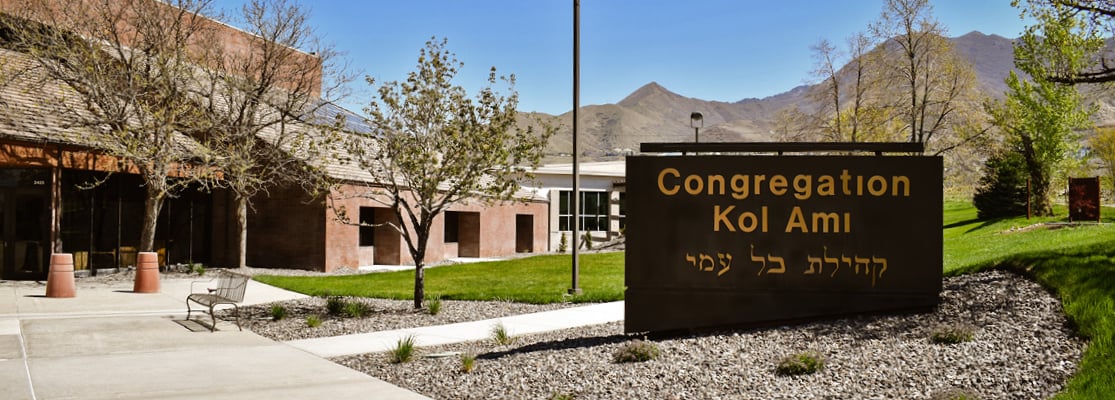
Congregation Kol Ami (Source: Congregation Kol Ami Salt Lake City)
Congregation Kol Ami is a vibrant, inclusive synagogue in Salt Lake City that serves as a center for Jewish worship, learning, service, and community connection. As a home for Jews by birth, Jews by choice, and interfaith families, the congregation welcomes individuals from diverse backgrounds while honoring the traditions and values of Judaism.
The Kol Ami synagogue is the largest synagogue in Utah, highlighting its significant role within the state’s Jewish community. With deep historical roots and a commitment to the future, Congregation Kol Ami continues to strengthen Jewish life through meaningful engagement, education, and shared experiences.
I would like to thank the esteemed Rabbi Samuel L. Spector for his support and guidance.
Torah Scrolls
Congregation Kol Ami owns 10 Torah scrolls as a result of the merger between Congregation Montefiore and Temple B’nai Israel. One of these Torah scrolls, known as the “Dutch Torah,” is a Kabbalistic scroll that is more than 400 years old and was written by Portuguese Jews who relocated to Amsterdam after the Inquisition.
Religious Events
As a joint Conservative and Reform congregation, Congregation Kol Ami offers weekly Friday evening and Saturday morning worship services, along with Torah chanting resources to support participation in Jewish ritual. The synagogue also guides members through every stage of Jewish life, including baby namings, Brit Milah, B’nai Mitzvah celebrations, weddings, and yahrzeit commemorations, providing meaningful opportunities to celebrate milestones and honor loved ones within a caring community.
Religious School
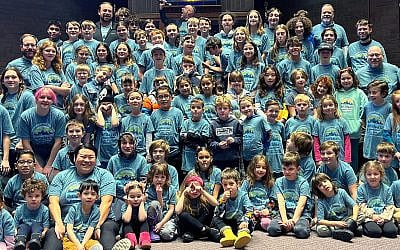
Congregation Kol Ami’s Rafi Schwartz Religious School offers a dynamic Jewish education that inspires a lifelong love of learning, community, and tradition. Serving students from infancy through high school, the school provides age-appropriate experiences that nurture Jewish identity, build leadership skills, and encourage active participation in Jewish life.
The journey begins in early childhood, where the youngest learners and their families explore Judaism together. Through the monthly Training Wheels program for infants and toddlers and the weekly Yeladim Pre-K classes for children ages 3 through 2nd grade, students discover Torah stories, Hebrew, Jewish values, and holidays while building friendships and a strong connection to the Jewish community.
As students enter grades 3 through 7, they attend classes twice each week to strengthen their understanding of Jewish traditions, Hebrew, and ritual while preparing for B’nai Mitzvah. Leadership skills are developed through class Shabbat services, holiday celebrations, social action projects, and participation in Kol Ami Jewish Youth (KAJY), helping students become confident and engaged members of the congregation.
Learning continues throughout the high school years with courses that encourage students to explore Jewish history, ethics, and contemporary issues. Students study subjects such as Zionism, comparative religions, the Holocaust, and Jewish ethical teachings, while 10th-grade Confirmation students culminate their studies with a trip to Washington, D.C. Older teens continue meeting regularly for thoughtful discussions, reinforcing a lifelong commitment to Jewish learning and community involvement.
Adult Education
Congregation Kol Ami is dedicated to lifelong Jewish learning, offering a variety of educational opportunities for adults at every level of knowledge and experience. Whether someone is exploring Judaism for the first time or seeking more advanced study, the congregation provides engaging classes both in person and via Zoom.
Current offerings include the ongoing Introduction to Jewish Life course, which welcomes new participants throughout the year, as well as Beginner Biblical Hebrew, Conversational Modern Hebrew, and Sunday Study Sessions exploring topics such as Antisemitism Rising: From the Ottoman Empire to the Birth of Israel. Seasonal Lunch & Learn programs also provide meaningful discussions centered on Jewish holidays, including Sukkot, Chanukah, Passover, and Shavuot.
Kashrut
Congregation Kol Ami is committed to honoring Jewish dietary traditions by maintaining separate kosher dairy and meat kitchens, as well as a kosher style youth lounge. The congregation requires kosher-certified ingredients for food prepared in its kitchens, observes separate standards for meat and dairy, and welcomes members with varying levels of kashrut observance. These practices reflect Kol Ami’s dedication to creating an inclusive community where everyone can gather, celebrate, and share meals with confidence and respect for Jewish tradition.
Culture
Utah is home to a vibrant and active Jewish community, with organizations such as the I.J. & Jeanne Wagner Jewish Community Center, the United Jewish Federation of Utah, Jewish Family Service, the United Jewish Endowment Fund of Utah, the McGillis School, and local chapters of Hadassah, the National Council of Jewish Women, AIPAC, and the Utah Jewish Genealogical Society enriching Jewish life throughout the state.
Within this thriving community, Congregation Kol Ami offers a variety of programs that foster connection across generations. Kol Ami Jewish Youth (KAJY) brings young people together through lounge nights, holiday celebrations, field trips, and social justice projects, while adults can find community through groups such as the Rosh Chodesh Women’s Group, Kol Amigos for men ages 21 and older, and Kol Ami Outdoors, which combines fellowship with a shared appreciation for nature. Together, these programs create meaningful opportunities for friendship, service, and lifelong engagement in Jewish life.
Cemetery
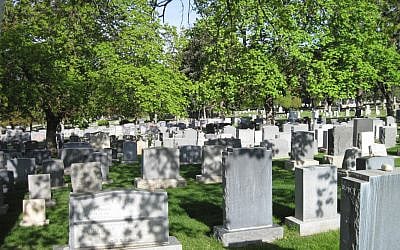
Under the umbrella of Congregation Kol Ami, the Kol Ami Cemetery Association is dedicated to preserving and caring for Jewish burial traditions in the Salt Lake City community. Six trustees oversee the management of three cemeteries through an irrevocable trust, ensuring the continued stewardship of these sacred spaces. In accordance with Association guidelines, burial in the Montefiore and Shaare Tzedek cemeteries is reserved for Jews by birth and individuals who have formally converted to Judaism.
Historical Backgrounds
Jews first arrived in Utah Jewish pioneers and merchants first arrived in Utah in small numbers during the 1849 California Gold Rush, using the territory as a vital supply stop.
Between 1849 and 1854, Jewish life in the isolated Utah Territory was virtually non-existent, defined primarily by transient prospectors, European refugees, and the arrival of the territory’s first permanent Jewish family. While a few Jewish traders and mountain men had passed through the area earlier, organized community life had not yet begun.
Which brings us to 1854.
In 1854, the United States was a rapidly expanding agrarian nation of 31 states under the leadership of President Franklin Pierce. The country was increasingly divided over the issue of slavery, and tensions surrounding westward expansion were reshaping the political landscape, eventually contributing to the formation of the anti-slavery Republican Party.
Utah was not yet a state in 1854 but an organized territory governed by the federal government. Remote and rugged, the Utah Territory was characterized by growing settlements, isolation, and conflict. Mormon communities were navigating the aftermath of the Walker War, while encounters with U.S. Army surveying expeditions and ongoing tensions with Indigenous peoples, particularly the Ute, shaped life in the region.
It was in that year, 1854, that the first permanent Jewish family, Julius and Fannie Brooks, settled in Salt Lake City, establishing a millinery business and marking the true foundation of the local Jewish community. Their arrival began a new chapter in Utah’s Jewish history, as early Jewish settlers who were primarily merchants and entrepreneurs of German and Hungarian descent opened vital brick and mortar businesses and supply shops in downtown Salt Lake City.
The present-day Congregation Kol Ami was formed through the successful 1972 merger of two historic Salt Lake City congregations: Congregation B’nai Israel, a Reform congregation founded in 1891, and Congregation Montefiore, a Conservative congregation founded in 1899. Today, Utah’s Jewish community includes approximately 5,000 people, with Kol Ami serving about 350 family units, nearly a quarter of the state’s Jewish population. As a congregation affiliated with both the United Synagogue of Conservative Judaism and the Union for Reform Judaism, Kol Ami embraces a unique approach to Jewish life, honoring shared traditions while exploring meaningful and evolving expressions of faith.
Utah’s Jewish community has also played an important role in the state’s history. In 1916, Simon Bamberger became the first Jewish governor of Utah, and in 1932, Louis Marcus became the first Jewish mayor in the state. Today, Congregation Kol Ami continues a longstanding tradition of community engagement, maintaining a strong and respectful relationship with Utah’s Mormon community built on mutual appreciation and cooperation.
Today, Congregation Kol Ami stands as a testament to the enduring strength, diversity, and vitality of Jewish life in Utah. From its historic roots in the 19th century to its thriving programs of worship, education, service, and community engagement, Kol Ami continues to provide a welcoming home for generations of Jewish families and individuals. By honoring tradition while embracing new opportunities for connection and learning, the congregation carries forward a legacy of inclusion, compassion, and commitment, thus ensuring that Jewish life in Utah remains vibrant for generations to come.
Contact Information:
Congregation Kol Ami, 2425 East Heritage Way, Salt Lake City, Utah 84109
Phone: 801-484-1501
Email: info@conkolami.org
Website: https://www.conkolami.org/