


Mathematics Teaching Professor, Author
Congregation Mikveh Israel, Philadelphia: Synagogue of the American Revolution
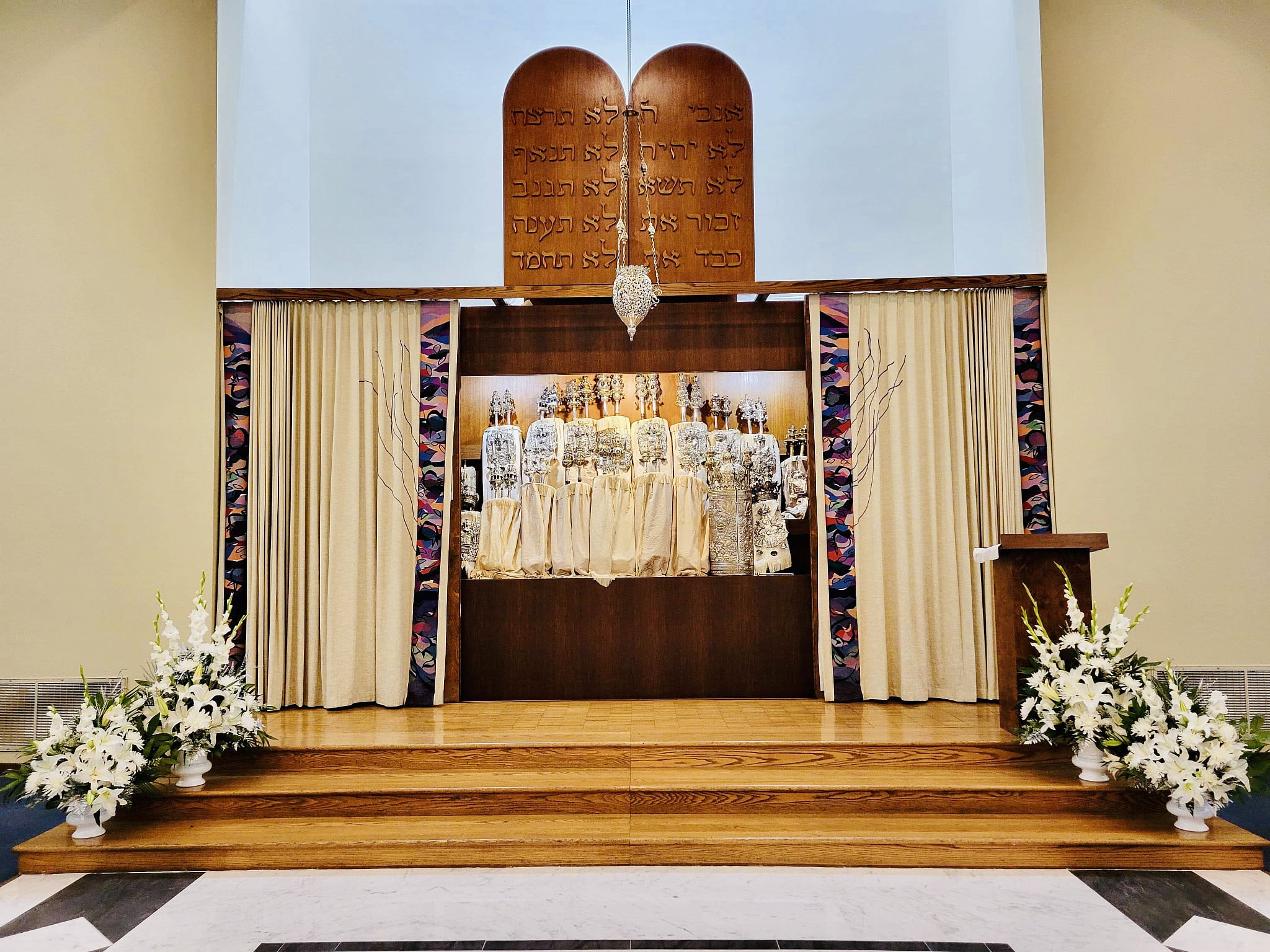
Torah Ark (Source- Congregation Mikveh Israel in Philadelphia)
Congregation Mikveh Israel in Philadelphia, known as the “Synagogue of the American Revolution,” was founded in 1740 and is the oldest continuous synagogue and the second oldest Jewish congregation in the United States.
The congregation’s revolutionary ties run incredibly deep: its early roots connect back to 1752 as Nathan Levy owned the merchant ship that transported the Liberty Bell to America. Later, during the War of Independence, during a dire moment for the 13 Colonies, Haym Salomon used his personal fortune to heavily fund the Continental Army.
I would like to thank the distinguished Rabbi Yosef Zarnighian for his insight and support of this article.
Synagogue
Located in the heart of Philadelphia’s Old City, adjacent to the very building where the Founding Fathers debated and signed both the Declaration of Independence in 1776, Independence Hall, lies Congregation Mikveh Israel, “Synagogue of the American Revolution”. The synagogue building is a modern multi-story red-brick structure building designed by architects Harbeson, Hough, Livingston & Larson. Dedicated in 1976.
Inside the synagogue, the main sanctuary is designed in accordance with the congregation’s traditional Sephardic liturgical practices. The men’s wooden seating benches are positioned along the north and south walls, facing inward toward the center and the women’s seating is in raised wooden galleries looking down into the main prayer space. This design describes the quintessential Spanish-Portuguese Sephardic architectural layout. By positioning the benches along the north and south walls, the congregation faces inward to the central Bimah (Tebah). This U-shape formation leaves the middle open, creating a majestic solemnity.
Congregation
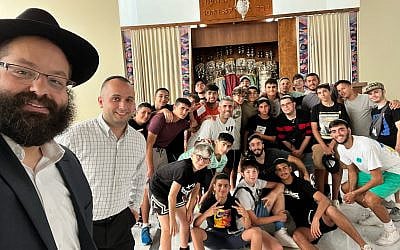
Philadelphia’s Congregation Mikveh Israel seamlessly bridges 18th-century Spanish-Portuguese traditions with a dynamic, modern Jewish community. The historic Center City synagogue continues to practice the exact Sephardic rites established by its founders. While deeply rooted in these centuries-old traditions, Mikveh Israel embraces an inclusive, diverse membership today.
Cemetery
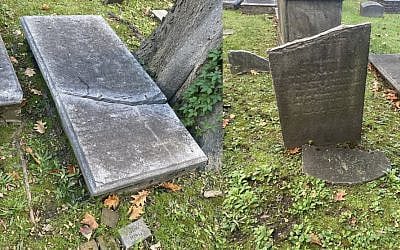
The congregation’s cemetery is now the oldest tangible evidence of Jewish communal life in Philadelphia, dating back to 1740. The cemetery serves as the final resting place for 21 Jewish soldiers of the Revolutionary War.
Events

The synagogue hosts classes regularly on a variety of topics, including Spanish and Portuguese liturgical tradition, Jewish history and Jewish law Halakhah. There are after school classes for kids to learn Hebrew. Shabbat and holiday meals bring the congregation and visitors together for meals.
Night at the Museum is an event at Congregation Mikveh Israel showcasing the “Faith & Freedom” exhibition. It uses historic artifacts and immersive displays to explore the American Jewish experience during the Revolutionary War.
Historical Background
In 1650, the territory that is now the United States was a fragmented region. Far from being a single nation, the land was predominantly governed by independent Native American tribes. In was in that year, 1650, that the first Jews arrived in Philadelphia.
By 1737, the United States still did not yet exist. The region by now was a collection of 13 separate British colonies. The landscape was characterized by a patchwork of small coastal settlements, farmlands, and frontiers that were deeply intertwined with the institution of slavery and frequent conflicts with Native American tribes. In was in that year, 1937, Jewish brothers Nathan and Isaac Levy arrived in Philadelphia to form a dry goods and shipping business. They were from a well-established merchant family in New York.
The following year marked the true birth of Philadelphia’s organized Jewish community. Although Congregation Mikveh Israel would not be officially established for several decades, it traces its earliest roots back to a tragedy in 1738. Grieving the heartbreaking loss of his son, Nathan Levy appealed to Thomas Penn—William Penn’s son and Chief of Pennsylvania’s Proprietary Government—to purchase a plot of land for a proper burial. Granted a small plot on the north side of Walnut Street, this private grave quickly evolved into Pennsylvania’s first communal Jewish cemetery. This sacred ground laid the foundation for Jewish communal life in Philadelphia, and Mikveh Israel still proudly dates its beginnings to its establishment.
Early services for Congregation Mikveh Israel began as minyans in private homes, notably that of Nathan Levy. The congregation later moved to rented spaces on Sterling Alley, which is now Orianna Street, and Cherry Street, where a commemorative marker now stands.
Nathan Levy went on to become a highly successful merchant who operated a shipping firm alongside his business partner, David Franks. In 1752, his merchant ship, the Myrtilla, transported the newly cast Liberty Bell from London to Philadelphia.
This is only the beginning of notable members of the congregation throughout history. Early members of Congregation Mikveh Israel were deeply embedded in the fight for American independence.
In 1765, many Philadelphia citizens signed the Non-Importation Resolutions, pledging to boycott British goods until the Stamp Act was repealed. Among the prominent signers were Mikveh Israel members and merchants Mathias Bush, Moses Mordecai, and Barnard Gratz, demonstrating the congregation’s early commitment to the American revolutionary cause.
Another example of a congregation member who was deeply rooted the fight for Independence is that of Haym Salomon. Between 1781 and 1784, Salomon leveraged his financial expertise and personal credit to bankroll the struggling Continental Army. The most critical moment came in August 1781, when the Continental Congress was sent bankrupt, and General George Washington’s troops were facing starvation and imminent mutiny over unpaid wages. Washington calculated that he required $20,000 to march his army south to trap British General Cornwallis at Yorktown. Washington famously declared, “Send for Haym Salomon”. Salomon immediately generated the $20,000, providing the exact funding needed to launch the decisive Yorktown Campaign that ultimately won the Revolutionary War.
During the War of Independence, Jewish refugees from New York, Virginia, and South Carolina fled to Philadelphia. In 1780, Rev. Gershom Mendes Seixas arrived from New York to lead the congregation, where he established the Spanish-Portuguese liturgical and organizational structures that Mikveh Israel still follows today.
Following the war, the congregation faced significant debt and reached out to the broader community for assistance. Notable contributors included founding father Benjamin Franklin, signer of the Declaration of Independence Thomas McKean and a framer of the U.S. Constitution Thomas Fitzsimons.
In 1790, Manuel Josephson, President of Mikveh Israel, presented a letter of congratulations to George Washington on behalf of the Jewish congregations in Philadelphia, New York, Charleston, and Richmond. Facsimiles of Josephson’s homage and Washington’s reply are displayed in the synagogue’s lobby.
In 1838, congregation member Rebecca Gratz was a pioneering 19th-century Philadelphia philanthropist who founded the first Hebrew Sunday School in America.
Commodore Uriah Phillips Levy, the first Jewish commodore in the US Navy, was instrumental in ending the Navy’s practice of flogging. His advocacy led to the 1850 Congressional act abolishing corporal punishment in the U.S. Navy. Born in Philadelphia, he had deep ties to Mikveh Israel, where he celebrated his bar mitzvah in 1807. The US Naval Academy has a chapel named after him, the Commodore Uriah P. Levy Chapel. The synagogue was essential in dedicating the Commodore Uriah P. Levy Chapel, as it honors the first Jewish Commodore in the U.S. Navy.
Known as the “Synagogue of the American Revolution”, Mikveh Israel, Synagogue was established in 1740. It is the oldest formal congregation in Philadelphia and the second oldest in the U.S Congregation. Today, Congregation Mikveh Israel stands as a profound testament to the enduring intersection of Jewish heritage and American democratic ideals. From its 1740 founding through its pivotal role in the American Revolution, the congregation has not only preserved the Spanish and Portuguese Sephardic tradition but also championed the cause of religious liberty. Mikveh Israel continues to serve as a living monument to the “Faith & Freedom” that helped shape the United States.
Contact Information:
Congregation Mikveh Israel, Synagogue of the American Revolution
44 N. 4th St., Philadelphia, PA 19106
Phone: 215-922-5446
Email: yzarnighian@mikvehisrael.org
Website: https://www.mikvehisrael.org/