


Mathematics Teaching Professor, Author
Congregation Montefiore Las Vegas, The First Jewish Congregation in New Mexico
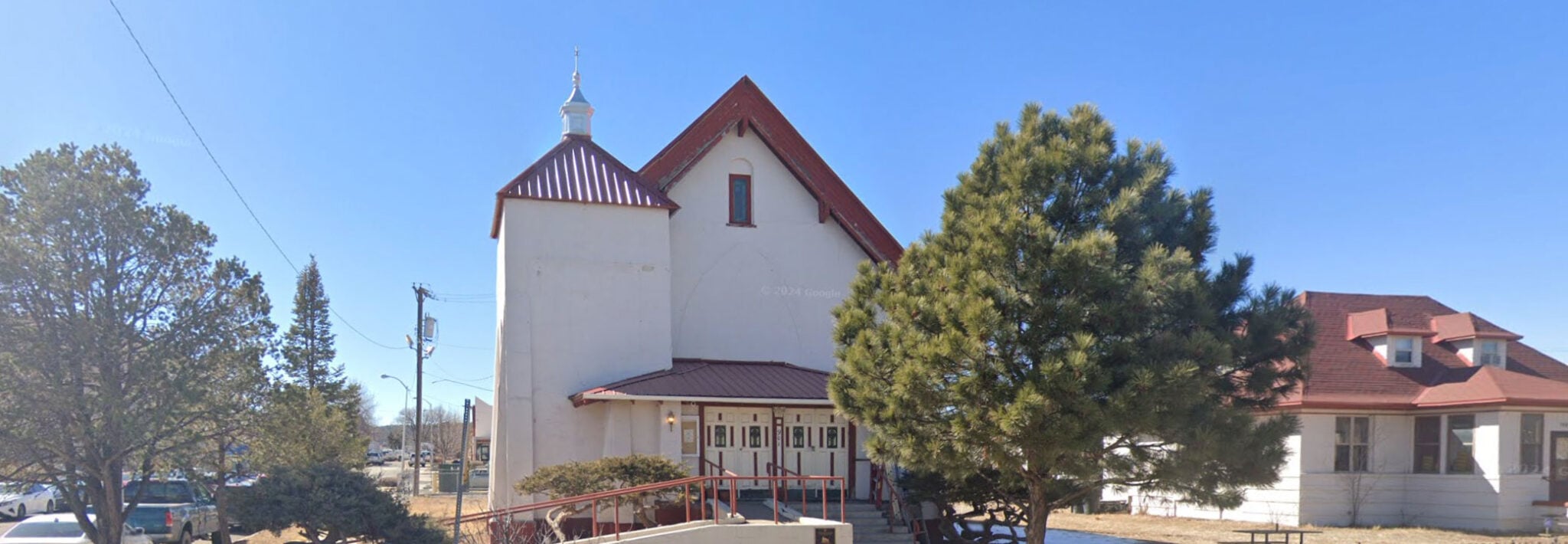
Temple Montefiore (Source: Congregation Montefiore Las Vegas, New Mexico)
Temple Montefiore in Las Vegas, New Mexico, stands as a powerful symbol of the enduring legacy of the Jewish community in the American Southwest. Through decades of change, the synagogue has remained a place of resilience, memory, and renewal, preserving the stories of those who helped shape New Mexico’s history. Today, Temple Montefiore continues to serve as a welcoming community space where people can learn about Judaism, celebrate its heritage, and appreciate the unique history of Jews in Las Vegas.
Synagogue
Temple Montefiore in Las Vegas, New Mexico, is a historic, single-story wood-frame synagogue designed in the Carpenter Gothic style. Dedicated in 1886 as New Mexico’s first Jewish house of worship, the building is one of the state’s most significant surviving examples of nineteenth-century Jewish religious architecture.
The vernacular Victorian structure features a pitched gabled roof, pointed-arch windows, many originally fitted with stained glass, and a symmetrical façade centered on the main entrance. It’s simple rectangular sanctuary, wood clapboard siding, and restrained decorative detailing exemplify the adaptation of Gothic Revival forms to frontier construction methods.
In 1922, the building was relocated on rollers to its present location at 901 Eighth Street, where it has been preserved as an important cultural and architectural landmark reflecting the early Jewish community of territorial New Mexico.
Religious Events
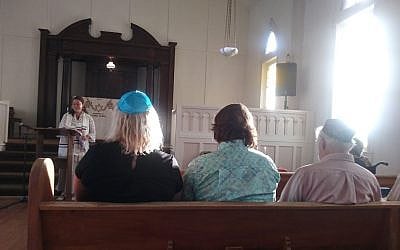
As the oldest Jewish synagogue in New Mexico, Temple Montefiore continues to serve as the spiritual and cultural center for the local Jewish community following its recent reacquisition. The congregation has focused on restoring the historic building while expanding its outreach through a variety of religious, educational, and community events.
This past year, monthly Shabbat services were held throughout the year with rabbis from across New Mexico, including Rabbi Jack Shlachter as well as Rabbi Citrin from Albuquerque and others around the state, providing regular opportunities for worship and fellowship. The community also celebrated Purim with friends and students from the United World College, while Neal Behrendt, whose Bar Mitzvah was held at Temple Montefiore in 2002, led a full Passover Seder.
The congregation welcomed Andrew Cole as a student rabbi-in-residence to assist with religious leadership and educational programming. High Holiday services for Rosh Hashanah and Yom Kippur were led by Rabbi Darah Lerner, with assistance from Andrew Cole, providing a meaningful opportunity for the community to observe Judaism’s holiest days together.
Additional celebrations included a joyful Hanukkah gathering, a Shavuot Shabbat service, and a Shavuot potluck dinner, all of which strengthened community ties and honored Jewish traditions. Through these accomplishments, Temple Montefiore has continued to preserve its historic legacy while fostering a vibrant congregation dedicated to serving both its members and the broader Las Vegas, New Mexico, community.
Educational Events
Congregation Montefiore continued to expand its educational programming through events that promoted Jewish learning and community engagement. Highlights included a Yiddish music concert by Jordan Wax, a presentation by Rabbi Van Zaan on Jewish perspectives on death and dying, a talk by author and activist Shuli Dichter on sharing the Promised Land, and ongoing Torah study featuring the Book of Ruth. These programs enriched congregational life while welcoming the broader Las Vegas community.
Historical Backgrounds
In 1590, New Mexico was a rugged, isolated frontier entirely defined by ancestral Puebloan societies, lacking any permanent European settlements. The first unauthorized, temporary Spanish expedition into the region occurred this year, led by conquistador Gaspar Castaño de Sosa, which resulted in quick failure and the expulsion of the colonizers.
It was in this year, 1590, that Jews first arrived in New Mexico as he earliest documented Jewish presence in New Mexico dates to 1590, when Gaspar Castaño de Sosa, a Spanish explorer of Portuguese-Jewish descent, led an unauthorized expedition into the region. Many members of the party were conversos (New Christians), Jews who had converted to Christianity, often under pressure, but who sometimes continued to practice Judaism in secret while seeking refuge from the Spanish Inquisition on New Spain’s northern frontier.
Jews first settled in Las Vegas, New Mexico, during the 1840s and 1850s, arriving via the Santa Fe Trail. Most were German and Eastern European Ashkenazi immigrants who established successful mercantile and banking businesses. Prominent families, including the Spiegelbergs, Charles Ilfeld, and the Rosenwalds, played a significant role in the city’s commercial development and helped shape the economic growth of territorial New Mexico.
By 1880, Las Vegas, New Mexico, was home to one of the largest Jewish communities in the Southwest. Many Jewish merchants had arrived via the Santa Fe Trail and became prominent business and civic leaders throughout northern New Mexico.
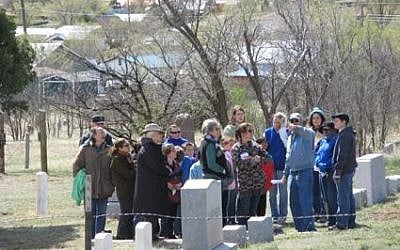
In 1881, the community established Montefiore Cemetery, one of the oldest Jewish cemeteries west of the Mississippi. Many of the cemetery’s distinctive headstones bear symbols of Masonic and other fraternal organizations, reflecting the active civic involvement of the community’s Jewish residents. Its creation reflected the permanence and growth of the Jewish community in Las Vegas and remains an enduring testament to the region’s early Jewish heritage.
Which brings us to 1884.
In 1884, the United States had 38 states. Chester A. Arthur served as president for most of the year until Grover Cleveland won the November election. Cleveland’s victory made him the first Democrat to win the presidency since 1856, sparking major shifts in federal policy.
The American West in 1884 was a rapidly transforming frontier. It was the peak of the great cattle drives and the open range, dominated by cowboys, mining booms, and the expansion of transcontinental railroads. However, the region was also defined by the violent displacement of Native Americans and the rise of fenced-in, corporate ranching.
Now in 1884, New Mexico not a state, but a remote, rugged U.S. territory transitioning from a wild frontier into an era of booming mining and railroad expansion. Towns were defined by a mix of Native American, Hispanic, and Anglo cultures, heavily shaped by silver booms, cattle drives, and violent clashes between residents and incoming cowboys.
By 1884, Las Vegas, New Mexico, had become a booming, lawless frontier hub where “Sin City” met Victorian elegance. Known as wickeder than Dodge City, the town was divided: the traditional adobe “Old Town” contrasted with the bustling, modern “New Town” near the railroad depot, featuring grand brick buildings and newly paved grids. It was a notorious hideout for famous figures like Doc Holliday, who ran a saloon in town, Mysterious Dave Mather, and members of the Dodge City Gang. Shootouts in the streets and saloon brawls were common occurrences.
It was in that year, 1884, that the Jewish community organized Congregation Montefiore, the first Jewish congregation in New Mexico. Named in honor of the renowned British philanthropist Sir Moses Montefiore, the congregation was primarily established by prominent German-Jewish merchants who traveled west along the Santa Fe Trail and helped build a thriving Jewish community in Las Vegas.
The congregation began raising funds in 1886 to build a permanent synagogue in Las Vegas. More than half of the original donations came from nonmembers, reflecting the respect and support the local community had for its Jewish neighbors. The synagogue was completed and dedicated on September 26, 1886, with Joseph Glueck serving as the congregation’s first rabbi. The building became the first permanent Jewish house of worship in the New Mexico Territory.
It was in 1922 that the synagogue was moved four blocks uphill to its present location at 901 Eighth Street. For many years, Congregation Montefiore remained a vibrant Reform congregation; however, as the Jewish population of Las Vegas declined, the congregation was dissolved in 1955.
The building was sold in 1957 to the Bible Church and later transferred to the Catholic Church, where it served for many years as a Newman Center. Despite these changes, the synagogue remained an enduring symbol of the pioneering Jewish community that helped shape Las Vegas and northern New Mexico.
Then in the 1990s, the Jewish community of Las Vegas began to regroup, gathering in homes and occasionally renting the Newman Center for special events while maintaining the hope of one day returning to Temple Montefiore. In August 2022, the building was offered for sale by the Catholic Diocese, and through a dedicated fundraising effort, Las Vegas Jewish Community, Inc. purchased the historic synagogue. A formal rededication ceremony was held during Hanukkah 2022, marking the return of Temple Montefiore to the Jewish community after decades of transition.
For nearly 140 years, Congregation Montefiore has stood as a testament to the resilience, faith, and enduring legacy of the Jewish community in Las Vegas, New Mexico. From its founding by pioneer Jewish merchants in the nineteenth century to its role as the first Jewish congregation in New Mexico, the synagogue has reflected the determination of generations who built a vibrant community on the frontier.
Through periods of growth, decline, transition, and renewal, Temple Montefiore has remained a place of connection, worship, learning, and cultural preservation. Its historic building, cemetery, and ongoing programs continue to honor the contributions of the Jewish families who helped shape northern New Mexico. The return of Temple Montefiore to the Jewish community in 2022 marks not only a restoration of a historic landmark but also a new chapter in its continuing story, one that is rooted in tradition, community, and hope for future generations.
The congregation welcomes all visitors and attendees at services and appreciates support to keep the synagogue functioning.
Contact Information:
Congregation Montefiore, 901 8th Street, Las Vegas, NM 87701
Phone: 505-450-2758
Email: nterr87122@gmail.com
Website: https://templemontefiore.org/